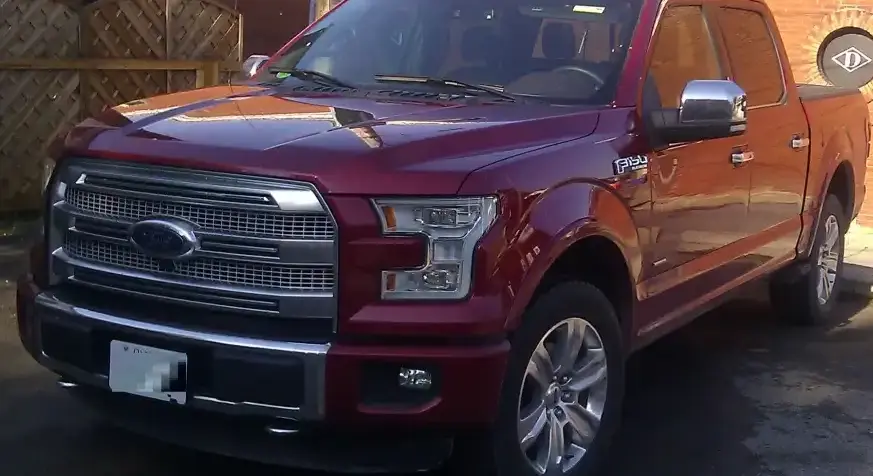
The Ford F-150 is a full-size pickup truck manufactured by Ford Motor Company, and has been the best-selling vehicle in the United States for over four decades. The thirteenth generation, produced from 2015 to 2017, represented a significant shift in F-150 design and construction, notably utilizing a high-strength, military-grade aluminum alloy body on a fully boxed steel frame. Within this generation, the SuperCrew configuration, paired with the 3.5-liter V6 engine producing 282 horsepower and a six-speed automatic transmission with four-wheel drive, occupied a prominent position in the lineup, offering a balance of capability, comfort, and fuel efficiency. This variant aimed to appeal to buyers needing a versatile truck for both work and family use.
Technical Specifications
| Brand | Ford |
| Model | F-Series F-150 |
| Generation | F-Series F-150 XIII SuperCrew |
| Type (Engine) | 3.5 V6 (282 Hp) 4×4 Automatic |
| Start of production | 2015 |
| End of production | 2017 |
| Powertrain Architecture | Internal Combustion engine |
| Body type | Pick-up |
| Seats | 5-6 |
| Doors | 4 |
| Fuel consumption (urban) | 13.8 l/100 km (17 US mpg, 20.5 UK mpg, 7.2 km/l) |
| Fuel consumption (extra urban) | 10.2 l/100 km (23.1 US mpg, 27.7 UK mpg, 9.8 km/l) |
| Fuel consumption (combined) | 12.4 l/100 km (19 US mpg, 22.8 UK mpg, 8.1 km/l) |
| Fuel Type | Petrol (Gasoline) |
| Weight-to-power ratio | 7.6 kg/Hp, 131.5 Hp/tonne |
| Weight-to-torque ratio | 6.3 kg/Nm, 159.9 Nm/tonne |
| Power | 282 Hp @ 6250 rpm |
| Power per litre | 80.3 Hp/l |
| Torque | 343 Nm @ 4250 rpm (252.98 lb.-ft. @ 4250 rpm) |
| Engine layout | Front, Longitudinal |
| Engine displacement | 3514 cm3 (214.44 cu. in.) |
| Number of cylinders | 6 |
| Engine configuration | V-engine |
| Cylinder Bore | 92.4 mm (3.64 in.) |
| Piston Stroke | 87.6 mm (3.45 in.) |
| Compression ratio | 10.8:1 |
| Number of valves per cylinder | 4 |
| Fuel injection system | Multi-port manifold injection |
| Engine aspiration | Naturally aspirated engine |
| Engine oil capacity | 6 l (6.34 US qt | 5.28 UK qt) |
| Coolant | 14.25 l (15.06 US qt | 12.54 UK qt) |
| Kerb Weight | 2145 kg (4728.92 lbs.) |
| Trunk (boot) space – minimum | 1495 l (52.8 cu. ft.) |
| Trunk (boot) space – maximum | 2200 l (77.69 cu. ft.) |
| Fuel tank capacity | 87 l (22.98 US gal | 19.14 UK gal) |
| Length | 5890-6190 mm (231.89 – 243.7 in.) |
| Width | 2029 mm (79.88 in.) |
| Width with mirrors folded | 2121 mm (83.5 in.) |
| Width including mirrors | 2459 mm (96.81 in.) |
| Height | 1961-1963 mm (77.2 – 77.28 in.) |
| Wheelbase | 3683-3983 mm (145 – 156.81 in.) |
| Front track | 1717 mm (67.6 in.) |
| Rear (Back) track | 1717 mm (67.6 in.) |
| Front overhang | 960 mm (37.8 in.) |
| Rear overhang | 1247 mm (49.09 in.) |
| Ride height (ground clearance) | 236-239 mm (9.29 – 9.41 in.) |
| Approach angle | 25.5° |
| Departure angle | 26.0-26.4° |
| Ramp-over (brakeover) angle | 19.7-21.0° |
| Drive wheel | All wheel drive (4×4) |
| Number of gears and type of gearbox | 6 gears, automatic transmission |
| Front suspension | Double wishbone |
| Rear suspension | Leaf spring |
| Front brakes | Ventilated discs |
| Rear brakes | Ventilated discs |
| Assisting systems | ABS (Anti-lock braking system) |
| Steering type | Steering rack and pinion |
| Power steering | Electric Steering |
| Tires size | 265/70 R17 |
| Wheel rims size | 17 |
Powertrain & Engine Architecture
The 3.5-liter Ti-VCT V6 engine, designated as the third generation of Ford’s “EcoBoost” family, is a naturally aspirated engine. It features a 60-degree V-angle, aluminum engine block and cylinder heads, and dual overhead camshafts (DOHC) with four valves per cylinder. The engine utilizes multi-port fuel injection, delivering fuel directly into the intake ports. This engine produced 282 horsepower at 6,250 rpm and 253 lb-ft of torque at 4,250 rpm. The six-speed automatic transmission, a staple in Ford trucks for years, was calibrated to provide smooth shifts and optimize fuel economy. The 4×4 system employed an electronic shift-on-the-fly mechanism, allowing the driver to seamlessly switch between two-wheel drive and four-wheel drive modes depending on road conditions.
Driving Characteristics
The 3.5L V6 with the six-speed automatic provided adequate, though not exceptional, performance for the F-150 SuperCrew. Acceleration was reasonable for everyday driving and hauling moderate loads. Compared to the higher-output 3.5L EcoBoost (turbocharged) or the 5.0L V8 options, this configuration felt less powerful, particularly when fully loaded or towing. The automatic transmission’s gear ratios were tuned for a balance of fuel efficiency and usability, with a focus on providing sufficient torque for towing and hauling. The ride quality was generally comfortable, thanks to the independent front suspension and leaf spring rear suspension, but the truck’s substantial weight was noticeable, especially over rough roads.
Equipment & Trim Levels
The 282 hp 3.5L V6 4×4 Automatic typically came standard in the XLT trim level, representing a mid-range offering. Standard features included air conditioning, power windows and locks, a basic audio system, and cloth upholstery. Popular optional extras included the SYNC infotainment system, a rearview camera, upgraded audio systems, leather upholstery, power-adjustable seats, and various driver-assistance features. The SuperCrew configuration offered a spacious cabin with seating for up to six passengers, making it a popular choice for families.
Chassis & Braking
The F-150’s chassis featured a fully boxed steel frame, contributing to its strength and rigidity. The front suspension utilized an independent double-wishbone design, while the rear suspension employed a traditional leaf spring setup. This combination provided a good balance of ride comfort and load-carrying capacity. Braking duties were handled by ventilated discs on all four wheels, coupled with an Anti-lock Braking System (ABS) for enhanced safety. The steering system was a rack-and-pinion setup with electric power steering, providing responsive and precise handling.
Market Reception & Comparison
The 3.5L V6/automatic F-150 was generally well-received by critics as a practical and affordable option. It offered a good balance of capability and fuel economy, making it a popular choice for buyers who didn’t require the extra power of the EcoBoost or V8 engines. Fuel economy figures averaged around 19 mpg combined, which was competitive for a full-size pickup truck at the time. Compared to the 5.0L V8, the 3.5L V6 offered slightly better fuel economy but less overall power. The 3.5L EcoBoost provided significantly more power and torque but came at a higher price point.
Legacy
The 3.5L V6 engine proved to be a reliable and durable powertrain in the F-150. While not as sought-after as the EcoBoost or V8 models, the 3.5L V6 remains a viable option in the used car market, offering a good value for buyers seeking a capable and affordable full-size pickup truck. Common maintenance items include regular oil changes, fluid checks, and brake service. The aluminum body, while innovative, can be more susceptible to corrosion in certain climates, so thorough inspections are recommended when purchasing a used model. Overall, the 2015-2017 Ford F-150 SuperCrew 3.5L V6 4×4 Automatic represents a solid and dependable truck that continues to serve owners well today.