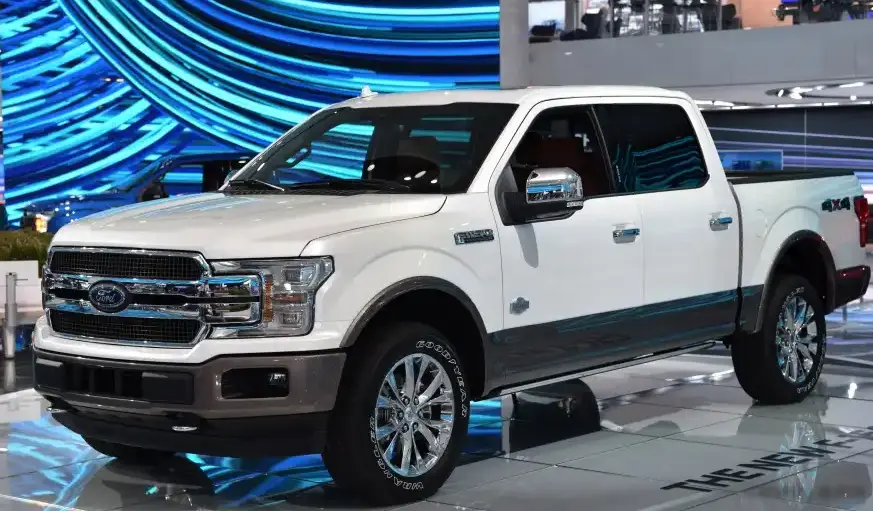
The Ford F-150, consistently the best-selling full-size pickup truck in the United States, underwent a significant facelift for the 2018 model year, representing the thirteenth generation of the iconic series. Among the various engine and drivetrain options offered, the 2.7L EcoBoost V6 paired with a 10-speed automatic transmission emerged as a popular choice, balancing capability with improved fuel efficiency. This configuration was available from 2018 through October 2020, primarily in the SuperCrew body style, and positioned itself as a mid-range offering within the extensive F-150 lineup, appealing to buyers seeking a versatile and capable truck without the higher price tag of the larger displacement engines.
Technical Specifications
| Brand | Ford |
| Model | F-Series F-150 |
| Generation | F-Series F-150 XIII SuperCrew (facelift 2018) |
| Type (Engine) | 2.7 V6 (325 Hp) Automatic |
| Start of production | 2018 |
| End of production | October, 2020 |
| Powertrain Architecture | Internal Combustion engine |
| Body type | Pick-up |
| Seats | 5-6 |
| Doors | 4 |
| Fuel consumption (urban) | 11.8 l/100 km (19.9 US mpg) |
| Fuel consumption (extra urban) | 9 l/100 km (26.1 US mpg) |
| Fuel consumption (combined) | 10.7 l/100 km (22 US mpg) |
| Fuel Type | Petrol (Gasoline) |
| Power | 325 Hp @ 5000 rpm |
| Torque | 542 Nm @ 2750 rpm (399.76 lb.-ft. @ 2750 rpm) |
| Engine layout | Front, Longitudinal |
| Engine displacement | 2689 cm3 (164.09 cu. in.) |
| Number of cylinders | 6 |
| Engine configuration | V-engine |
| Number of valves per cylinder | 4 |
| Fuel injection system | Direct injection |
| Engine aspiration | Twin-Turbo, Intercooler |
| Engine oil capacity | 5.7 l (6.02 US qt | 5.02 UK qt) |
| Coolant capacity | 14.3 l (15.11 US qt | 12.58 UK qt) |
| Trunk (boot) space (minimum) | 2192 l (77.41 cu. ft.) |
| Fuel tank capacity | 87 l (22.98 US gal | 19.14 UK gal) |
| Length | 5890-6190 mm (231.89 – 243.7 in.) |
| Width | 2029 mm (79.88 in.) |
| Width with mirrors folded | 2121 mm (83.5 in.) |
| Width including mirrors | 2459 mm (96.81 in.) |
| Height | 1920-1923 mm (75.59 – 75.71 in.) |
| Wheelbase | 3683-3983 mm (145 – 156.81 in.) |
| Ride height (ground clearance) | 213-216 mm (8.39 – 8.5 in.) |
| Drivetrain Architecture | Rear wheel drive |
| Number of gears and type of gearbox | 10 gears, automatic transmission |
| Front suspension | Independent coil spring |
| Rear suspension | Leaf spring |
| Front brakes | Ventilated discs |
| Rear brakes | Ventilated discs |
| Steering type | Steering rack and pinion |
| Power steering | Electric Steering |
| Tires size | 245/70 R17; 265/60 R18 |
| Wheel rims size | 17; 18 |
Powertrain & Engine Architecture
The heart of this F-150 variant is the 2.7-liter EcoBoost V6 engine, internally designated as the third-generation of this powerplant. This engine utilizes a compact graphite iron (CGI) block for increased strength and reduced weight. The key feature is its twin-turbocharger setup, employing low-inertia turbines to minimize turbo lag and provide a broad torque curve. Direct fuel injection is employed, optimizing combustion efficiency and power output. The engine produces 325 horsepower at 5000 rpm and 400 lb-ft of torque at 3000 rpm. The 10-speed automatic transmission, co-developed with General Motors, is a crucial component, offering a wide gear ratio spread for both improved acceleration and fuel economy. This transmission allows the engine to operate within its optimal power band more frequently.
Driving Characteristics
The 2.7L EcoBoost F-150 delivers a noticeably different driving experience compared to the larger 3.5L EcoBoost or the 5.0L V8 options. While not offering the outright acceleration of those engines, the 2.7L provides ample power for everyday driving and towing. The 10-speed transmission is well-tuned, providing smooth and responsive shifts. The lower weight of the 2.7L engine compared to the V8 contributes to improved handling and a more comfortable ride. The gear ratios are optimized for both low-end torque for hauling and higher gears for efficient highway cruising. Compared to a manual transmission equipped F-150, the automatic offers convenience and ease of use, particularly in stop-and-go traffic, but may sacrifice some driver engagement.
Equipment & Trim Levels
The 2.7L EcoBoost engine was offered across several F-150 trim levels, including XL, XLT, Lariat, and King Ranch. The base XL trim typically featured standard amenities such as air conditioning, a basic infotainment system, and steel wheels. Moving up to the XLT added features like alloy wheels, a more advanced infotainment system, and power windows/locks. Lariat trims included leather upholstery, heated and ventilated front seats, and a premium sound system. The King Ranch offered even more luxurious appointments, including unique exterior styling and upgraded interior materials. Optional extras available across all trims included a tow package, a 360-degree camera system, and various driver-assistance technologies.
Chassis & Braking
The 2018 F-150 utilizes a fully boxed frame constructed from high-strength steel, contributing to its impressive strength and rigidity. The front suspension features independent coil springs, while the rear suspension employs a leaf spring design. Braking duties are handled by ventilated discs on all four wheels, providing ample stopping power. Anti-lock brakes (ABS) are standard. The specific brake rotor size and stabilizer bar thickness can vary depending on the trim level and optional equipment. The rear-wheel-drive configuration is standard, with four-wheel drive available as an option.
Market Reception & Comparison
The 2.7L EcoBoost F-150 received generally positive reviews from automotive critics. It was praised for its blend of power, fuel efficiency, and capability. Compared to the 3.5L EcoBoost, the 2.7L offered a more affordable entry point into the EcoBoost family, while still providing sufficient power for most buyers. Fuel economy figures were competitive, averaging around 22 mpg combined. Reliability reports have been generally favorable, with the 2.7L EcoBoost engine proving to be a durable and dependable powerplant. However, some owners have reported issues with the automatic transmission, particularly early in its production run.
Legacy
The 2.7L EcoBoost engine has become a mainstay in the Ford F-150 lineup, and the 2018-2020 iteration paired with the 10-speed automatic continues to be a popular choice in the used car market. Its combination of performance, efficiency, and reliability has made it a well-regarded option for truck buyers. The powertrain’s longevity and relatively low maintenance costs contribute to its continued appeal. As the automotive industry shifts towards electrification, the 2.7L EcoBoost represents a transitional technology, offering a balance between traditional internal combustion and modern efficiency.