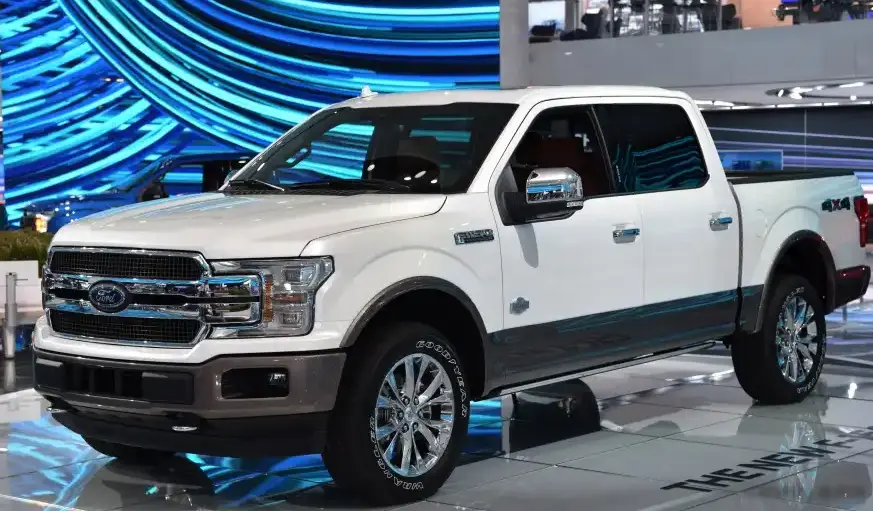
The Ford F-150 Raptor, specifically the 2018-2020 facelift model equipped with the 3.5-liter V6 EcoBoost engine producing 450 horsepower and paired with a 10-speed automatic transmission, represents a significant evolution in the high-performance pickup truck segment. Introduced as a direct competitor to off-road focused trucks like the Ram Power Wagon and Toyota TRD Pro, the Raptor aimed to deliver uncompromising capability both on and off-road. This variant sat at the very top of the F-150 lineup, representing the most extreme and performance-oriented version available.
Technical Specifications
| Brand | Ford |
| Model | F-Series F-150 |
| Generation | F-Series F-150 XIII SuperCrew (facelift 2018) |
| Type (Engine) | Raptor 3.5 V6 (450 Hp) 4×4 Automatic |
| Start of production | 2018 |
| End of production | October, 2020 |
| Powertrain Architecture | Internal Combustion engine |
| Body type | Pick-up |
| Seats | 5-6 |
| Doors | 4 |
| Fuel consumption (urban) | 15.7 l/100 km (15 US mpg, 18 UK mpg, 6.4 km/l) |
| Fuel consumption (extra urban) | 13.1 l/100 km (18 US mpg, 21.6 UK mpg, 7.6 km/l) |
| Fuel consumption (combined) | 14.7 l/100 km (16 US mpg, 19.2 UK mpg, 6.8 km/l) |
| Fuel Type | Petrol (Gasoline) |
| Weight-to-power ratio | 5.7 kg/Hp, 174.1 Hp/tonne |
| Weight-to-torque ratio | 3.7 kg/Nm, 267.4 Nm/tonne |
| Power | 450 Hp @ 5000 rpm |
| Power per litre | 128.9 Hp/l |
| Torque | 691 Nm @ 3500 rpm (509.66 lb.-ft. @ 3500 rpm) |
| Engine layout | Front, Longitudinal |
| Engine displacement | 3490 cm3 (212.97 cu. in.) |
| Number of cylinders | 6 |
| Engine configuration | V-engine |
| Cylinder Bore | 92.4 mm (3.64 in.) |
| Piston Stroke | 86.6 mm (3.41 in.) |
| Compression ratio | 10:1 |
| Number of valves per cylinder | 4 |
| Fuel injection system | Direct injection |
| Engine aspiration | Twin-Turbo, Intercooler |
| Engine oil capacity | 6.6 l (6.97 US qt | 5.81 UK qt) |
| Coolant | 14.35 l (15.16 US qt | 12.63 UK qt) |
| Kerb Weight | 2584 kg (5696.74 lbs.) |
| Trunk (boot) space – minimum | 1495 l (52.8 cu. ft.) |
| Fuel tank capacity | 87 l (22.98 US gal | 19.14 UK gal) |
| Length | 5890 mm (231.89 in.) |
| Width | 2192 mm (86.3 in.) |
| Width with mirrors folded | 2192 mm (86.3 in.) |
| Width including mirrors | 2459 mm (96.81 in.) |
| Height | 1994 mm (78.5 in.) |
| Wheelbase | 3708 mm (145.98 in.) |
| Front track | 1877 mm (73.9 in.) |
| Rear (Back) track | 1869 mm (73.58 in.) |
| Front overhang | 942 mm (37.09 in.) |
| Rear overhang | 1240 mm (48.82 in.) |
| Ride height (ground clearance) | 292 mm (11.5 in.) |
| Approach angle | 30.2° |
| Departure angle | 23.0° |
| Ramp-over (brakeover) angle | 21.8° |
| Drive wheel | All wheel drive (4×4) |
| Number of gears and type of gearbox | 10 gears, automatic transmission |
| Front suspension | Independent coil spring |
| Rear suspension | Leaf spring |
| Front brakes | Ventilated discs |
| Rear brakes | Ventilated discs |
| Assisting systems | ABS (Anti-lock braking system) |
| Steering type | Steering rack and pinion |
| Power steering | Electric Steering |
| Tires size | 265/70 R17 |
| Wheel rims size | 17 |
INTRODUCTION
The 2018-2020 Ford F-150 Raptor, a member of the thirteenth generation F-Series, represented a significant departure from previous Raptor models. While earlier Raptors utilized a naturally aspirated 6.2-liter V8, the 2017 and subsequent models adopted the 3.5-liter EcoBoost V6, a move that sparked debate among enthusiasts but ultimately resulted in increased power and improved efficiency. Built on the F-150 SuperCrew chassis, the Raptor was designed for high-speed off-road performance, featuring a unique suspension, aggressive styling, and a host of specialized components. This facelift version, introduced in 2018, refined the design and added further technological enhancements.
Powertrain & Engine Architecture
At the heart of the 2018-2020 Raptor lies the 3.5-liter EcoBoost V6, internally designated as the third-generation EcoBoost. This engine utilizes a twin-turbocharger setup with cast stainless steel exhaust manifolds, optimized for low-inertia spools and rapid response. Direct fuel injection, combined with port fuel injection, contributes to efficient combustion and power delivery. The engine boasts a 10:1 compression ratio and produces 450 horsepower at 5000 rpm and 691 lb-ft of torque at 3500 rpm. The 10-speed automatic transmission, co-developed with General Motors, is a crucial component of the Raptor’s performance. Its wide gear ratio spread allows for both rapid acceleration and efficient cruising. The transmission features a robust torque converter and sophisticated control logic to manage the engine’s substantial output.
Driving Characteristics
The Raptor’s driving experience is markedly different from standard F-150s. The specialized suspension, featuring Fox Racing 2.5-inch internal bypass shocks with Live Valve technology, provides exceptional damping and control over rough terrain. The 10-speed transmission allows for quick shifts and keeps the engine in its optimal power band. While the Raptor is capable on pavement, its true strength lies in its off-road prowess. The combination of the powerful engine, advanced suspension, and four-wheel drive system allows it to tackle challenging obstacles with confidence. Compared to the earlier V8-powered Raptors, the EcoBoost version offers a broader torque curve and improved fuel economy, although the fuel economy remains relatively low at 16 mpg combined.
Equipment & Trim Levels
The Raptor came standard with a comprehensive list of features, including a Terrain Management System with selectable drive modes (Normal, Sport, Weather, Mud/Sand, Baja, and Rock Crawl), a locking rear differential, and skid plates protecting vital underbody components. Interior appointments included unique cloth or leather upholstery with Raptor-specific badging, aluminum pedals, and a premium sound system. Optional extras included a panoramic sunroof, power-adjustable pedals, and various appearance packages. The SuperCrew configuration provided seating for five or six passengers, depending on the configuration.
Chassis & Braking
The Raptor’s chassis is heavily modified compared to a standard F-150. It features a high-strength steel frame and a wider track, providing increased stability and improved handling. The front suspension utilizes an independent coil-spring setup with upgraded upper and lower control arms, while the rear suspension employs a leaf-spring design with custom-tuned leaf springs. Braking duties are handled by ventilated discs at all four corners, providing ample stopping power. The ABS system is tuned to work effectively both on and off-road.
Market Reception & Comparison
The 2018-2020 Ford F-150 Raptor received generally positive reviews from automotive critics. It was praised for its exceptional off-road capability, powerful engine, and comfortable interior. However, some critics noted its high price and relatively poor fuel economy. Compared to other F-150 trims, the Raptor represented a significant premium in terms of cost and performance. While the standard F-150 offered a wider range of engine options and configurations, the Raptor was specifically designed for extreme off-road use and high-performance driving.
Legacy
The 2018-2020 Ford F-150 Raptor has established itself as a benchmark in the high-performance pickup truck segment. Its innovative suspension, powerful engine, and aggressive styling have made it a popular choice among off-road enthusiasts. While the EcoBoost engine initially faced some skepticism, it has proven to be a reliable and capable powerplant. On the used car market, Raptors from this generation command a premium price due to their desirability and limited production numbers. The Raptor continues to evolve with each new generation, but the 2018-2020 model remains a significant milestone in the truck’s history.