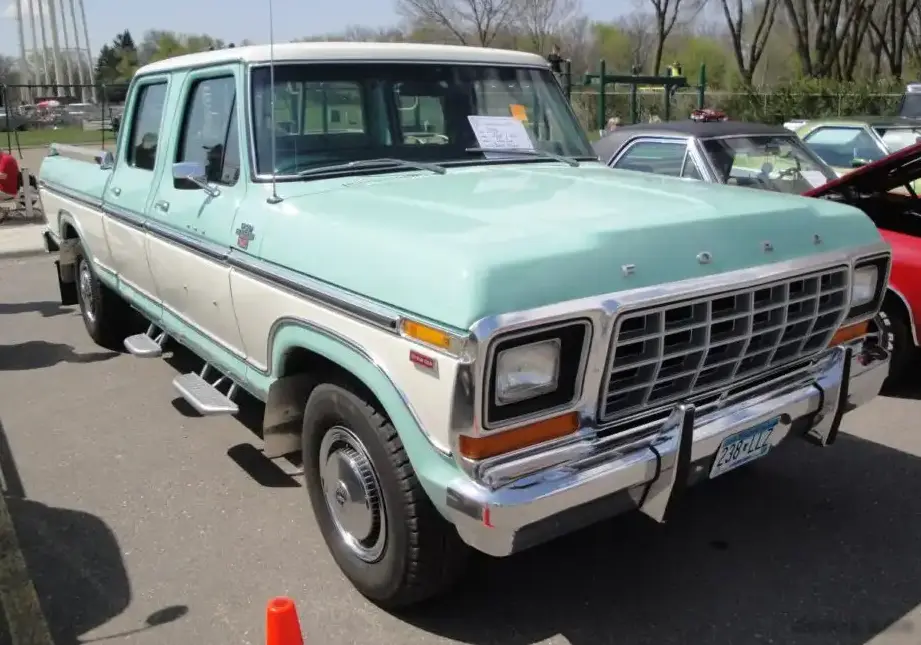
The Ford F-250 VI Crew Cab, specifically equipped with the 5.9-liter (360 cubic inch) V8 engine producing 145 horsepower and paired with an automatic transmission, represents a significant iteration in Ford’s long-running F-Series pickup truck lineage. Produced for a relatively short period, from 1975 to 1976, this variant occupied a unique position within the sixth generation (1973-1979) of the F-Series, offering a balance between work capability and passenger comfort. It was a transitional model, bridging the gap between the more utilitarian trucks of the early 70s and the increasingly feature-rich pickups that would follow.
Technical Specifications
| Brand | Ford |
| Model | F-Series F-250 |
| Generation | F-Series F-250 VI Crew Cab |
| Engine Type | 5.9 360 V8 (145 Hp) Automatic |
| Production Years | 1975-1976 |
| Powertrain Architecture | Internal Combustion Engine |
| Body Type | Pick-up |
| Seats | 6 |
| Doors | 4 |
| Fuel Type | Petrol (Gasoline) |
| Power | 145 Hp |
| Power per Liter | 24.6 Hp/l |
| Engine Displacement | 5899 cm3 / 359.98 cu. in. |
| Number of Cylinders | 8 |
| Engine Configuration | V-engine |
| Cylinder Bore | 102.87 mm / 4.05 in. |
| Piston Stroke | 88.9 mm / 3.5 in. |
| Valves per Cylinder | 2 |
| Fuel Injection System | Carburetor |
| Engine Aspiration | Naturally Aspirated |
| Max. Weight | 3402 kg / 7500.13 lbs. |
| Trunk (boot) Space (minimum) | 1727 l / 60.99 cu. ft. |
| Length | 5652 mm / 222.52 in. |
| Wheelbase | 3810 mm / 150 in. |
| Wading Depth | 673 mm / 26.5 in. |
| Drivetrain | Rear Wheel Drive |
| Gearbox | Automatic Transmission Cruise-O-Matic |
| Front Suspension | Independent Coil Spring |
| Rear Suspension | Leaf Spring |
| Front Brakes | Disc |
| Rear Brakes | Drum |
| Power Steering | Electric Steering |
| Tire Size | 215/85 R16.5 |
| Wheel Rim Size | 6J x 16.5 |
Powertrain & Engine Architecture
The heart of this F-250 variant was the 360 cubic inch (5.9-liter) Ford Windsor V8 engine. This engine, designated within Ford as the 360 FE, was a robust and relatively simple design, utilizing a cast iron block and cylinder heads. It featured a two-valve per cylinder configuration and relied on a two-barrel carburetor for fuel delivery. While 145 horsepower might seem modest by modern standards, it was considered adequate for the truck’s intended purpose – hauling and towing – during the mid-1970s. The engine’s longitudinal front-engine layout was standard for Ford trucks of this era. The Cruise-O-Matic automatic transmission, a three-speed unit, was the sole transmission option for this configuration. It was known for its durability, but its shift points were optimized for fuel economy and smooth operation rather than outright performance. The Cruise-O-Matic was a torque converter automatic, providing smooth engagement and multiplication of engine torque, crucial for heavy-duty applications.
Driving Characteristics
The 145 hp, automatic transmission combination resulted in a driving experience focused on usability rather than speed. Acceleration was leisurely, and the truck wasn’t designed for quick maneuvers. The Cruise-O-Matic transmission’s gear ratios were geared towards providing sufficient torque for towing and hauling, sacrificing responsiveness in everyday driving. Compared to the available manual transmissions or the larger 390 cubic inch V8 option, this F-250 felt noticeably slower. However, the automatic transmission made it more accessible to a wider range of drivers, particularly those unfamiliar with manual transmissions or those who frequently operated the truck in stop-and-go traffic. The leaf spring rear suspension provided a firm ride, especially when unladen, but it was well-suited for carrying heavy loads. Steering feel was relatively heavy, even with optional power steering, typical of trucks of this era. The overall driving experience prioritized functionality and durability over sporty handling.
Equipment & Trim Levels
The F-250 Crew Cab was positioned as a more comfortable and versatile option within the Ford truck lineup. The “Crew Cab” designation indicated a larger rear passenger area, offering seating for up to six occupants. Standard features for this variant typically included a basic vinyl interior, a heater, and a simple instrument cluster. Optional extras could include air conditioning, an upgraded radio, power steering (as noted in the specifications), and various trim packages. The level of interior refinement was relatively basic compared to modern trucks, but it represented a step up from the more spartan work trucks. The exterior trim was generally minimal, with brightwork limited to the grille, bumpers, and window frames. The availability of features like a sliding rear window and different exterior color options allowed for some degree of personalization.
Chassis & Braking
The F-250 chassis was a traditional body-on-frame construction, providing a robust and durable platform. The front suspension utilized independent coil springs, offering a degree of ride comfort, while the rear suspension employed leaf springs, designed to handle heavy loads. The braking system featured disc brakes on the front wheels and drum brakes on the rear. Power steering was available as an option, making maneuvering the large truck easier, particularly at low speeds. The 16.5-inch wheels were fitted with 215/85 R16.5 tires, providing a balance between load-carrying capacity and ride quality. The frame itself was heavily reinforced to withstand the stresses of regular towing and hauling. The overall chassis design prioritized strength and durability over sophisticated handling characteristics.
Market Reception & Comparison
The 1975-1976 Ford F-250 Crew Cab with the 360 V8 and automatic transmission was generally well-received as a practical and versatile work truck. Critics acknowledged its comfortable cabin and adequate power for most tasks. However, some reviewers noted the engine’s lack of outright performance compared to larger displacement options. Compared to the F-150, the F-250 offered a higher payload and towing capacity, while the F-350 provided even greater capability. Fuel economy, even by 1970s standards, was not a strong point, averaging around 10-12 miles per gallon. Reliability was generally good, although the carburetor required periodic maintenance. The Crew Cab configuration, while more expensive, appealed to those who needed to transport passengers in addition to cargo.
Legacy
The 1975-1976 Ford F-250 Crew Cab 360 V8 Automatic holds a place as a representative example of the transitional period in truck design. While not the most powerful or fuel-efficient variant, it offered a compelling combination of capability, comfort, and accessibility. Today, these trucks are sought after by collectors and enthusiasts, particularly those looking for a classic American pickup with a unique character. The 360 Windsor V8 is known for its durability and relative simplicity, making it a relatively easy engine to maintain and repair. However, finding well-preserved examples can be challenging, as many were used extensively as work trucks and subjected to hard use. Parts availability is generally good, thanks to the widespread use of the 360 engine in other Ford vehicles of the era. The enduring popularity of the F-Series trucks, and the relative simplicity of this generation, ensures continued interest in this particular variant for years to come.