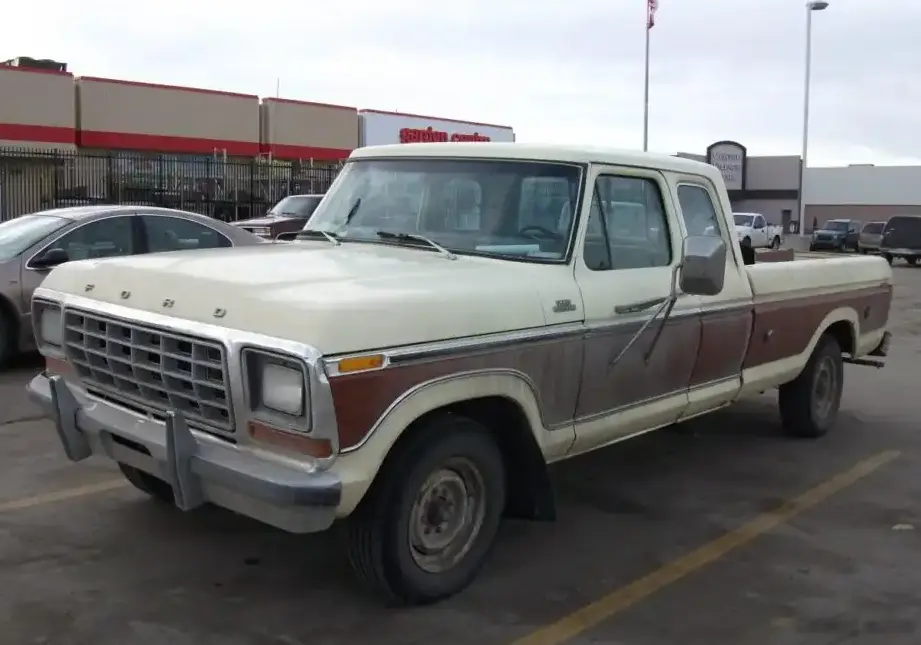
The Ford F-Series F-250 VI SuperCab, equipped with the 5.8-liter (351 cubic inch) V8 engine producing 160 horsepower, represents a significant iteration in Ford’s long-running and immensely popular F-Series pickup truck line. Produced from 1977 through 1979, this variant occupied a middle ground within the F-250 range, offering a balance between capability and affordability. It was part of the sixth generation (1973-1979) of the F-Series, known for its increased size and emphasis on comfort compared to earlier models. The SuperCab designation indicated an extended cab configuration, providing additional seating space beyond the standard two-door layout.
Technical Specifications
| Brand | Ford |
| Model | F-Series F-250 |
| Generation | F-Series F-250 VI SuperCab |
| Type (Engine) | 5.8 351 V8 (160 Hp) |
| Start of production | 1977 |
| End of production | 1979 |
| Powertrain Architecture | Internal Combustion engine |
| Body type | Pick-up |
| Seats | 6 |
| Doors | 2 |
| Fuel Type | Petrol (Gasoline) |
| Power | 160 Hp |
| Power per litre | 27.8 Hp/l |
| Engine displacement | 5752 cm3 |
| Engine displacement (cu. in.) | 351.01 cu. in. |
| Number of cylinders | 8 |
| Engine configuration | V-engine |
| Cylinder Bore | 101.6 mm (4 in.) |
| Piston Stroke | 88.9 mm (3.5 in.) |
| Number of valves per cylinder | 2 |
| Fuel injection system | Carburettor |
| Engine aspiration | Naturally aspirated engine |
| Max. weight | 3674 kg (8099.78 lbs.) |
| Trunk (boot) space – minimum | 1727-2084 l (60.99 – 73.6 cu. ft.) |
| Fuel tank capacity | 73 l (19.28 US gal | 16.06 UK gal) |
| Length | 5362-5773 mm (211.1 – 227.28 in.) |
| Wheelbase | 3531-3937 mm (139.02 – 155 in.) |
| Wading depth | 673-678 mm (26.5 – 26.69 in.) |
| Drivetrain Architecture | The Internal combustion engine (ICE) drives the rear wheels of the vehicle. |
| Drive wheel | Rear wheel drive |
| Number of gears and type of gearbox | 3 gears, manual transmission |
| Front suspension | Independent coil spring, Transverse stabilizer |
| Rear suspension | Transverse stabilizer, Leaf spring |
| Front brakes | Disc |
| Rear brakes | Drum |
| Power steering | Electric Steering |
| Tires size | 215/85 R16.5 |
| Wheel rims size | 6J x 16.5 |
Powertrain & Engine Architecture
The heart of this F-250 variant was the 5.8-liter (351 cubic inch) Ford Windsor V8 engine. This engine, designated as the 351W, was a mainstay of Ford’s lineup for many years, known for its relatively compact size and robust construction. The 160 horsepower output was achieved through a two-barrel carburetor, a relatively simple fuel delivery system for the era. The engine featured a cast iron block and cylinder heads, with a 9.2:1 compression ratio. The valvetrain utilized a traditional pushrod design with two valves per cylinder. The engine’s longitudinal front-engine layout was typical for American trucks of the time. The standard transmission was a three-speed manual, although a three-speed automatic transmission was available as an option. The 351W was known for its low-end torque, making it suitable for hauling and towing, even with the relatively modest horsepower figure.
Driving Characteristics
The 160 hp 5.8L engine, paired with the standard three-speed manual transmission, provided adequate, but not exhilarating, performance. Acceleration was leisurely, and passing maneuvers required careful planning. The truck’s strength lay in its ability to handle heavy loads. The gear ratios were optimized for towing and hauling, prioritizing torque over outright speed. Compared to the optional larger engines (like the 6.6L 351M or 7.5L 460 V8), this variant offered less power but better fuel economy. The manual transmission provided a more direct connection to the engine, allowing the driver to better control the truck’s power delivery. However, the shift quality could be somewhat notchy, typical of manual transmissions of that era. The SuperCab configuration added weight, slightly impacting overall performance compared to the standard cab F-250.
Equipment & Trim Levels
The F-250 SuperCab 5.8 offered a step up in comfort and convenience compared to the base F-250 models. Standard features included a vinyl bench seat, basic instrumentation (speedometer, fuel gauge, temperature gauge), and a heater. The SuperCab added a rear bench seat, increasing passenger capacity to six. Optional equipment included air conditioning, an AM/FM radio, upgraded interior trim, and various towing packages. The trim level was relatively basic, reflecting the truck’s positioning as a work-oriented vehicle. Exterior options included different paint colors and chrome trim packages. The interior was functional and durable, designed to withstand the rigors of daily use.
Chassis & Braking
The F-250 chassis was built for durability and load-carrying capacity. It featured a heavy-duty frame and a solid rear axle. The front suspension utilized independent coil springs, providing a relatively comfortable ride for a truck of its size. A transverse stabilizer bar helped to reduce body roll. The rear suspension consisted of leaf springs, designed to handle heavy loads. Braking was accomplished via disc brakes on the front wheels and drum brakes on the rear. Power steering was available as an option, making the truck easier to maneuver, especially when loaded. Tire size was typically 215/85R16.5, providing a good balance between traction and ride comfort.
Market Reception & Comparison
The F-250 SuperCab 5.8 was generally well-received by buyers who needed a capable and versatile truck without the expense of the larger engine options. Critics noted its adequate power for most tasks, its comfortable SuperCab configuration, and its relatively affordable price. Compared to the larger-engined F-250s, it offered better fuel economy, although fuel economy was still relatively poor by modern standards. Compared to lighter-duty trucks like the F-150, the F-250 provided significantly greater towing and hauling capacity. The 351W engine was considered reliable, but required regular maintenance to ensure optimal performance. The manual transmission was favored by those who preferred a more engaging driving experience and better control over the truck’s power.
Legacy
The Ford F-250 SuperCab 5.8 remains a popular choice among classic truck enthusiasts today. The 351W engine is known for its durability and relative ease of maintenance, making it a relatively affordable engine to keep running. Parts availability is generally good, although some components may be difficult to find. These trucks are often sought after for restoration projects or as daily drivers. The SuperCab configuration adds to their appeal, providing a rare combination of utility and passenger space for a truck of this era. While not the most powerful or luxurious F-250 variant, the 5.8L version represents a sweet spot in the lineup, offering a good balance of capability, affordability, and reliability. Well-maintained examples command a respectable price in the used car market, reflecting their enduring popularity and historical significance.