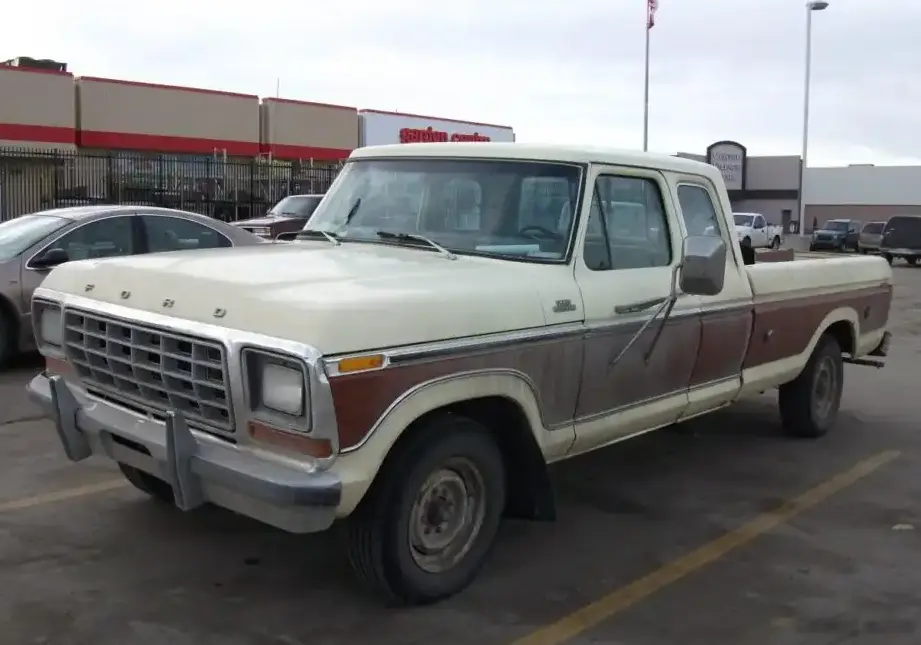
The Ford F-Series F-250 VI SuperCab, featuring the 6.6-liter (400 cubic inch) 400 V8 engine producing 169 horsepower, represents a notable iteration of Ford’s enduring and highly successful F-Series pickup truck line. Manufactured from 1977 through 1979, this variant occupied a middle ground within the F-250 range, balancing capability with affordability. The “VI” designation signifies the sixth generation of the F-Series, spanning from 1973 to 1979, while “SuperCab” denotes the extended cab configuration, offering increased passenger capacity compared to standard cab models. This specific engine and cab combination catered to buyers requiring a robust work truck with occasional passenger-carrying needs.
Technical Specifications
| Brand | Ford |
| Model | F-Series F-250 |
| Generation | F-Series F-250 VI SuperCab |
| Engine Type | 6.6 400 V8 (169 Hp) |
| Production Years | 1977-1979 |
| Powertrain Architecture | Internal Combustion Engine |
| Body Type | Pick-up |
| Seats | 6 |
| Doors | 2 |
| Fuel Type | Petrol (Gasoline) |
| Power | 169 Hp |
| Power per Liter | 25.8 Hp/l |
| Engine Displacement | 6555 cm3 / 400.01 cu. in. |
| Number of Cylinders | 8 |
| Engine Configuration | V-engine |
| Valves per Cylinder | 2 |
| Fuel Injection System | Carburetor |
| Engine Aspiration | Naturally Aspirated |
| Max. Weight | 3674 kg / 8099.78 lbs |
| Trunk Space (min) | 1727-2084 l / 60.99 – 73.6 cu. ft. |
| Fuel Tank Capacity | 73 l / 19.28 US gal | 16.06 UK gal |
| Length | 5362-5773 mm / 211.1 – 227.28 in. |
| Wheelbase | 3531-3937 mm / 139.02 – 155 in. |
| Wading Depth | 673-678 mm / 26.5 – 26.69 in. |
| Drivetrain | Rear Wheel Drive |
| Gearbox | 3 gears, manual transmission |
| Front Suspension | Independent coil spring, Transverse stabilizer |
| Rear Suspension | Transverse stabilizer, Leaf spring |
| Front Brakes | Disc |
| Rear Brakes | Drum |
| Power Steering | Electric Steering |
| Tire Size | 215/85 R16.5 |
| Wheel Rim Size | 6J x 16.5 |
Powertrain & Engine Architecture
The core of this F-250 variant is the 400 cubic inch (6.6-liter) Ford Windsor V8 engine. Introduced in 1971, the 400M engine was recognized for its robust construction and relatively straightforward design. It featured a cast iron block and cylinder heads, with a two-barrel carburetor managing fuel delivery. The engine employed a conventional pushrod valvetrain with two valves per cylinder. While not celebrated for high-revving performance, the 400M generated substantial low-end torque, making it well-suited for hauling and towing applications. The 169 horsepower output was typical for the period, and the engine’s durability was a key marketing advantage. A three-speed manual transmission was standard, though a three-speed automatic transmission was offered as an optional upgrade. The manual transmission was a heavy-duty unit engineered to withstand the engine’s torque output.
Driving Characteristics
The 169 hp 400 V8, paired with the standard three-speed manual transmission, delivered a practical, though not particularly thrilling, driving experience. Acceleration was moderate, and the truck was geared more towards utility than speed. The 400M’s low-end torque facilitated relatively effortless towing and hauling, even when the truck was fully loaded. The three-speed manual transmission provided a reasonable range of gear ratios, but lacked the sophistication of more contemporary transmissions. In comparison to the optional 390 cubic inch V8 or the later 460 cubic inch engines, this 400 V8 offered less overall power, but also improved fuel efficiency and a lower purchase price. The SuperCab configuration added some weight, slightly diminishing performance, but the expanded passenger space was a significant benefit for many buyers.
Equipment & Trim Levels
The F-250 SuperCab, even in its base trim, offered a reasonable level of standard equipment for the era. Included were a basic vinyl interior, a heater, and a cigarette lighter. The SuperCab added a rear bench seat, increasing the truck’s passenger capacity to six. Optional features encompassed air conditioning, an upgraded radio, power steering, and a sliding rear window. Trim levels were relatively simple, with most customization achieved through optional packages. The exterior typically featured minimal chrome trim, reflecting the truck’s work-focused purpose. Paint choices were limited to a selection of solid colors.
Chassis & Braking
The F-250 chassis utilized a traditional body-on-frame construction, providing a robust and durable platform. The front suspension incorporated independent coil springs and a transverse stabilizer bar, offering a relatively comfortable ride for a heavy-duty truck. The rear suspension employed leaf springs and a transverse stabilizer bar, designed to manage heavy loads. Braking was accomplished with disc brakes at the front and drum brakes at the rear. Power steering was an optional feature, simplifying maneuvering the large truck, particularly in confined spaces. Tires were typically sized 215/85 R16.5, striking a balance between traction and durability.
Market Reception & Comparison
The F-250 SuperCab with the 400 V8 engine was generally well-received by customers seeking a capable and affordable work truck with the added convenience of a larger cab. Reviewers acknowledged the engine’s durability and ample low-end torque, but also noted its relatively modest horsepower compared to some competitors. Fuel economy was typical for the time, averaging around 10-12 miles per gallon. Compared to F-250 models equipped with the larger 390 or 460 cubic inch engines, this variant presented a more economical option, albeit with reduced performance. It was frequently chosen by farmers, ranchers, and contractors who needed a dependable truck for everyday tasks.
Legacy
The Ford F-250 VI SuperCab with the 400 V8 engine has become a favored choice among classic truck enthusiasts. The 400M engine, while not as highly esteemed as some of Ford’s other V8s, is recognized for its durability and relative simplicity, making it reasonably easy to maintain. Parts availability remains generally good, and the truck’s rugged construction ensures that numerous examples are still operational today. In the used vehicle market, these trucks typically command reasonable prices, offering an accessible entry point into the world of classic Ford trucks. The combination of a spacious SuperCab, a durable engine, and a capable chassis has solidified this F-250 variant’s reputation as a popular and respected workhorse.