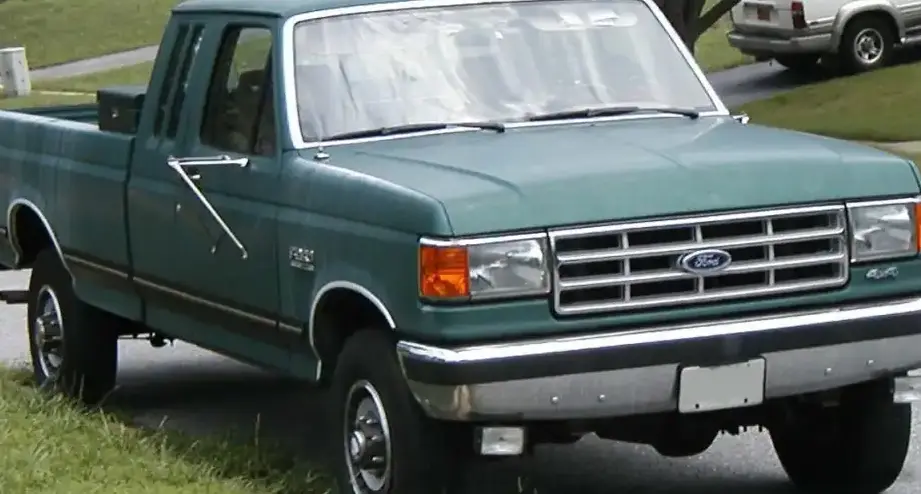
The Ford F-Series F-250 VIII SuperCab HD, equipped with the 5.8-liter V8 Windsor engine and a four-wheel-drive automatic transmission, represents a significant iteration of Ford’s long-running and immensely popular F-Series pickup truck line. Produced from 1986 through 1988, this variant occupied a middle ground within the F-250 range, offering a balance between capability and affordability. It was part of the eighth generation (1987-1991) of the F-Series, known for its more aerodynamic styling and improved interior comfort compared to its predecessors. The “SuperCab” designation indicated an extended cab configuration, providing additional passenger space beyond the standard cab.
Technical Specifications
| Brand | Ford |
| Model | F-Series F-250 |
| Generation | F-Series F-250 VIII SuperCab HD |
| Type (Engine) | 5.8 V8 Windsor (210 Hp) 4×4 Automatic |
| Start of production | 1986 |
| End of production | 1988 |
| Powertrain Architecture | Internal Combustion engine |
| Body type | Pick-up |
| Seats | 6 |
| Doors | 2 |
| Fuel Type | Petrol (Gasoline) |
| Power | 210 Hp |
| Power per litre | 36.5 Hp/l |
| Torque | 414 Nm / 305.35 lb.-ft. |
| Engine layout | Front, Longitudinal |
| Engine displacement | 5752 cm3 / 351.01 cu. in. |
| Number of cylinders | 8 |
| Engine configuration | V-engine |
| Fuel injection system | Carburettor |
| Engine aspiration | Naturally aspirated engine |
| Max. weight | 3992 kg / 8800.85 lbs. |
| Fuel tank capacity | 144 l / 38.04 US gal | 31.68 UK gal |
| Length | 5898 mm / 232.2 in. |
| Width | 1778 mm / 70 in. |
| Height | 1956 mm / 77.01 in. |
| Wheelbase | 3937 mm / 155 in. |
| Wading depth | 914 mm / 35.98 in. |
| Drivetrain Architecture | The Internal combustion engine (ICE) drives the rear wheels permanently, and the front wheels are driven through an electrically or mechanically operated clutch if necessary. |
| Drive wheel | All wheel drive (4×4) |
| Number of gears and type of gearbox | automatic transmission SelectShift |
| Front suspension | Leaf spring |
| Rear suspension | Leaf spring |
| Front brakes | Disc |
| Rear brakes | Drum |
| Power steering | Electric Steering |
| Tires size | 235/85 R16 |
| Wheel rims size | 16 |
Powertrain & Engine Architecture
The heart of this F-250 variant is the 5.8-liter (351 cubic inch) Windsor V8 engine. This engine, a Ford mainstay for decades, is a pushrod engine with a cast iron block and cylinder heads. It utilizes a two-barrel carburetor for fuel delivery, a relatively simple system compared to fuel injection, but one that proved durable and easy to maintain. The engine’s valvetrain consists of two valves per cylinder, operated by a hydraulic lifter camshaft. The 210 horsepower output, while modest by modern standards, was considered adequate for heavy-duty truck applications in the 1980s. The “SelectShift” automatic transmission, a three-speed unit, was designed to provide smooth and reliable operation under demanding conditions. It featured a torque converter that multiplied engine torque for improved low-end pulling power. This transmission, while not offering the sophistication of later electronically controlled automatics, was known for its robustness and ability to withstand the stresses of heavy hauling.
Driving Characteristics
The F-250 with the 5.8L V8 and automatic transmission offered a comfortable, if not particularly sporty, driving experience. Acceleration was adequate for everyday use, but the truck’s substantial weight (nearly 4,000 kg) limited its responsiveness. The automatic transmission’s gear ratios were optimized for towing and hauling, prioritizing low-end torque over outright speed. Compared to the available manual transmission, the automatic provided greater convenience, especially in stop-and-go traffic. However, it did result in a slight reduction in fuel economy and a less direct connection to the engine. The 4×4 system, engaged via a lever inside the cab, provided enhanced traction in off-road conditions or slippery surfaces. The leaf spring suspension, while robust, offered a firm ride, particularly when the truck was unloaded. Steering felt somewhat vague compared to modern standards, but was adequate for the truck’s intended purpose. Overall, the driving experience was geared towards utility and durability rather than performance.
Equipment & Trim Levels
The F-250 SuperCab HD 5.8L Automatic typically came with a fairly basic level of equipment. Standard features included a vinyl bench seat, a basic AM/FM radio, and manual windows and locks. The SuperCab configuration added a second row of seats, increasing passenger capacity to six. Optional extras included air conditioning, a tilt steering wheel, upgraded upholstery, and a more powerful stereo system. The HD (Heavy Duty) designation indicated a higher payload capacity and often included heavier-duty suspension components and a larger rear axle. Trim levels were relatively limited, with most customization options available as individual add-ons rather than as part of a specific package. Buyers could specify different paint colors, wheel options, and interior trim materials to personalize their truck.
Chassis & Braking
The F-250’s chassis was a traditional body-on-frame construction, providing a robust and durable platform for heavy-duty use. The front suspension utilized leaf springs, while the rear suspension also employed leaf springs, designed to handle substantial loads. The braking system featured disc brakes on the front wheels and drum brakes on the rear. Power steering was standard, making it easier to maneuver the large truck. The tires, typically 235/85 R16 size, were designed for both on-road and off-road use, offering a balance between traction and durability. The frame itself was heavily reinforced to withstand the stresses of towing and hauling heavy loads.
Market Reception & Comparison
The F-250 5.8L Automatic was generally well-received by truck buyers seeking a capable and reliable workhorse. Critics praised its robust construction and ample towing capacity. However, the carburetor-fed engine was sometimes criticized for its relatively low fuel economy compared to newer, fuel-injected engines. Compared to the smaller 4.9-liter inline-six engine, the 5.8L V8 offered significantly more power and torque, making it a better choice for demanding applications. Compared to the larger and more powerful 7.5-liter V8, the 5.8L provided a more affordable option with slightly better fuel economy. The automatic transmission was favored by many buyers for its convenience, but some preferred the greater control and efficiency of the manual transmission. This variant represented a sweet spot for many buyers, offering a good balance of power, capability, and affordability.
Legacy
The Ford F-250 VIII SuperCab HD 5.8L V8 Automatic has proven to be a remarkably durable and long-lasting vehicle. Many examples are still on the road today, a testament to Ford’s build quality and the engine’s inherent reliability. While the carburetor requires periodic maintenance, the engine itself is relatively simple to repair. The truck’s robust chassis and suspension also contribute to its longevity. In the used car market, these F-250s are often sought after by collectors and enthusiasts who appreciate their classic styling and rugged capabilities. They represent a bygone era of American truck design, when durability and practicality were paramount. Parts availability remains good, ensuring that these trucks can be kept running for years to come. The 5.8L Windsor V8, while not the most technologically advanced engine, remains a popular choice for engine swaps and restorations due to its affordability and readily available parts. It stands as a testament to the enduring appeal of a well-built, reliable American work truck.