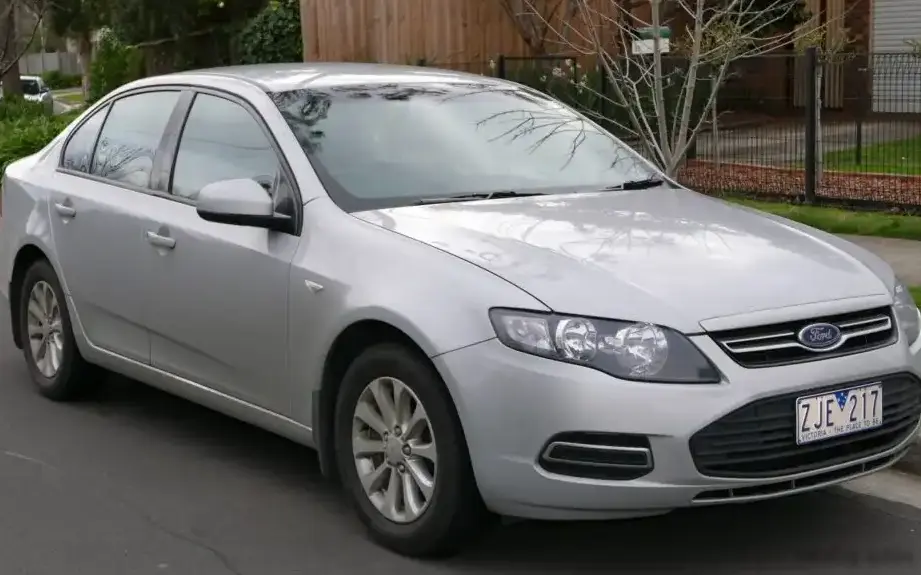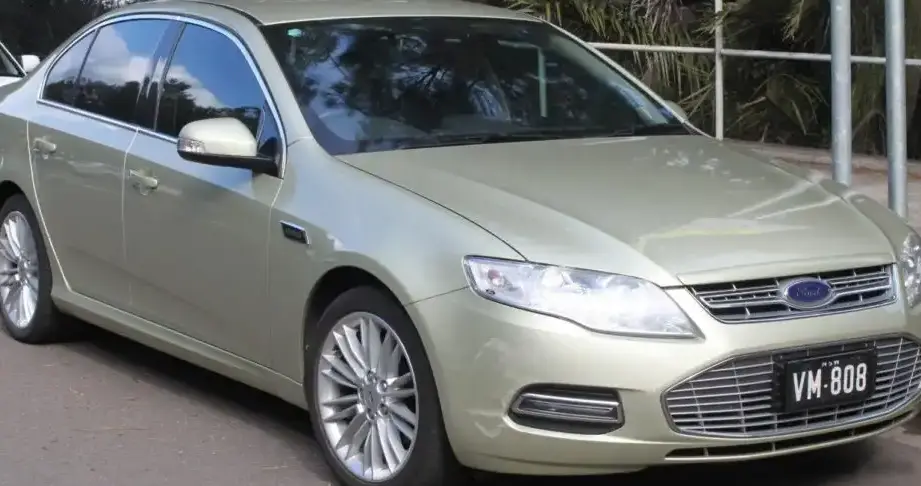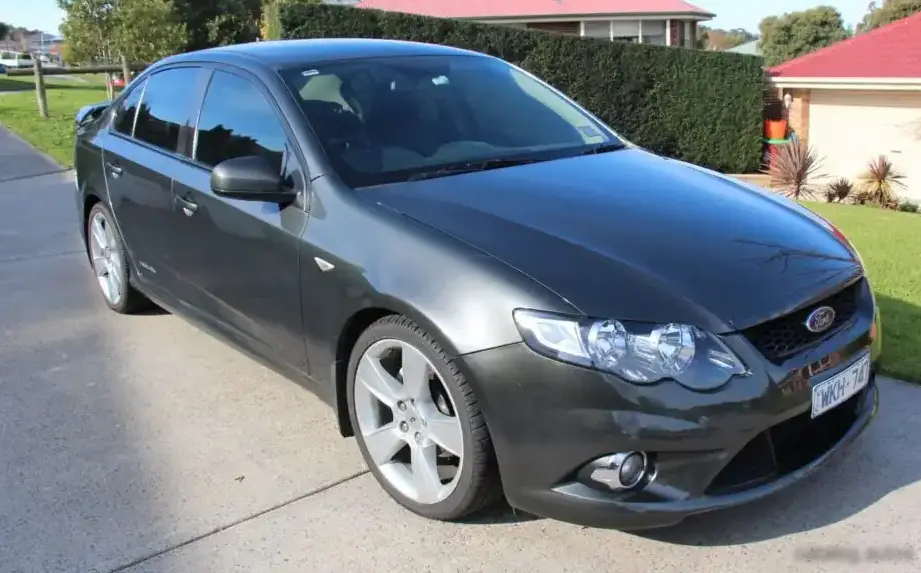
The Ford Falcon FG 4.0 DI-VCT Turbo, produced between 2008 and 2011, represented a high-performance variant within the broader FG Falcon range. This model, exclusive to the Australian market, was positioned as a flagship performance sedan, offering a significant power upgrade over the naturally aspirated engines available in other Falcon trims. It was a key part of Ford Australia’s strategy to maintain a strong presence in the large car segment, competing with rivals like the Holden Commodore. The FG series itself was a heavily revised version of the BA/BF Falcon, featuring updated styling, improved interior refinement, and a focus on enhanced driving dynamics.
Technical Specifications
| Brand | Ford |
| Model | Falcon |
| Generation | Falcon (FG) |
| Type (Engine) | 4.0 DI-VCT Turbo (367 Hp) |
| Start of production | 2008 |
| End of production | 2011 |
| Powertrain Architecture | Internal Combustion engine |
| Body type | Sedan |
| Seats | 5 |
| Doors | 4 |
| Fuel consumption (urban) | 17.1 l/100 km (13.8 US mpg, 16.5 UK mpg, 5.8 km/l) |
| Fuel consumption (extra urban) | 9 l/100 km (26.1 US mpg, 31.4 UK mpg, 11.1 km/l) |
| Fuel consumption (combined) | 12 l/100 km (19.6 US mpg, 23.5 UK mpg, 8.3 km/l) |
| Fuel Type | Petrol (Gasoline) |
| Power | 367 Hp @ 5250 rpm |
| Power per litre | 92.1 Hp/l |
| Torque | 533 Nm @ 2000-4750 rpm (393.12 lb.-ft. @ 2000-4750 rpm) |
| Engine layout | Front, Longitudinal |
| Engine Model/Code | Barra 270T |
| Engine displacement | 3984 cm3 (243.12 cu. in.) |
| Number of cylinders | 6 |
| Engine configuration | Inline |
| Cylinder Bore | 92.26 mm (3.63 in.) |
| Piston Stroke | 99.31 mm (3.91 in.) |
| Compression ratio | 8.8:1 |
| Number of valves per cylinder | 4 |
| Fuel injection system | Multi-port manifold injection |
| Engine aspiration | Turbocharger, Intercooler |
| Valvetrain | DOHC |
| Trunk (boot) space (minimum) | 535 l (18.89 cu. ft.) |
| Fuel tank capacity | 68 l (17.96 US gal, 14.96 UK gal) |
| Permitted trailer load with brakes (12%) | 1600 kg (3527.4 lbs.) |
| Length | 4970 mm (195.67 in.) |
| Width | 1868 mm (73.54 in.) |
| Width including mirrors | 2100 mm (82.68 in.) |
| Height | 1433 mm (56.42 in.) |
| Wheelbase | 2838 mm (111.73 in.) |
| Front track | 1583 mm (62.32 in.) |
| Rear track | 1598 mm (62.91 in.) |
| Front overhang | 954 mm (37.56 in.) |
| Rear overhang | 1179 mm (46.42 in.) |
| Minimum turning circle | 11 m (36.09 ft.) |
| Drivetrain Architecture | Rear wheel drive |
| Number of gears and type of gearbox | 6 gears, manual transmission |
| Front suspension | Double wishbone |
| Rear suspension | Independent multi-link suspension |
| Front brakes | Ventilated discs |
| Rear brakes | Disc |
| Assisting systems | ABS (Anti-lock braking system) |
| Steering type | Steering rack and pinion |
| Power steering | Hydraulic Steering |
| Tires size | 245/45 R17; 245/40 R18; 245/35 R19 |
| Wheel rims size | 8J x 17; 8J x 18; 8J x 19 |
Introduction
The Ford Falcon FG 4.0 DI-VCT Turbo was a performance-oriented variant of the FG Falcon, produced from 2008 to 2011. It represented the pinnacle of Ford Australia’s engineering capabilities during the final years of Falcon production. Built on the FG platform (a significant update to the BA/BF series), the 4.0L Barra 270T turbocharged inline-six engine was the defining feature of this model. The FG range was designed to address criticisms of earlier Falcons, focusing on improved refinement, handling, and a more modern interior. The Turbo variant specifically aimed to deliver a compelling alternative to imported performance cars, offering a uniquely Australian driving experience.
Powertrain & Engine Architecture
The heart of the Falcon FG 4.0 DI-VCT Turbo is the Barra 270T engine. This 4.0-liter inline-six engine utilizes a single turbocharger with an intercooler to boost power output to 367 horsepower and 533 Nm (393 lb-ft) of torque. The “DI-VCT” designation stands for Direct Injection Variable Cam Timing, highlighting key features of the engine’s design. The engine employs multi-port fuel injection, a relatively conventional system for the time, but paired with the turbocharging and variable valve timing, it delivered impressive performance. The Barra engine family is known for its robust construction and potential for modification. The 6-speed manual transmission was the only transmission option offered with this engine, catering to enthusiasts seeking a more engaging driving experience. The engine’s longitudinal layout and rear-wheel-drive configuration were traditional for Australian-made Falcons.
Driving Characteristics
The Falcon FG 4.0 DI-VCT Turbo offered a significant step up in performance compared to the naturally aspirated Falcon models. The turbocharger provides a noticeable surge of power, particularly in the mid-range, making overtaking and acceleration effortless. The 6-speed manual transmission allows for precise control over the engine’s power delivery. While the turbo lag was present, it was manageable and didn’t detract significantly from the overall driving experience. Compared to the base models, the Turbo variant felt considerably more responsive and engaging. The rear-wheel-drive layout contributed to a balanced feel, although traction could be a challenge under hard acceleration, especially on less-than-ideal road surfaces. The suspension was tuned to provide a good balance between comfort and handling, making it suitable for both daily driving and spirited performance.
Equipment & Trim Levels
The Falcon FG 4.0 DI-VCT Turbo was typically equipped with a high level of standard features. These included sports seats, a leather-wrapped steering wheel, air conditioning, a premium audio system, and alloy wheels. Exterior styling cues included a unique front fascia, side skirts, and a rear spoiler, differentiating it from other Falcon models. Optional extras included a sunroof, satellite navigation, and upgraded interior trim materials. The interior design was a significant improvement over previous Falcon generations, with a more modern and refined appearance. The focus was on providing a comfortable and well-equipped cabin for both driver and passengers.
Chassis & Braking
The Falcon FG 4.0 DI-VCT Turbo utilized a double wishbone front suspension and an independent multi-link rear suspension. This setup provided a good balance of ride comfort and handling precision. The braking system consisted of ventilated discs on all four wheels, providing ample stopping power. Anti-lock brakes (ABS) were standard. The chassis was reinforced compared to the base Falcon models to handle the increased power output of the turbocharged engine. The steering was a hydraulic rack and pinion system, offering precise and responsive control. Tire sizes varied depending on the wheel size, with options ranging from 245/45 R17 to 245/35 R19.
Market Reception & Comparison
The Falcon FG 4.0 DI-VCT Turbo was generally well-received by Australian automotive critics. It was praised for its strong performance, engaging driving dynamics, and improved refinement. However, its relatively high fuel consumption was a common criticism. Compared to the naturally aspirated Falcon models, the Turbo variant offered a significant performance advantage but came at a higher price point. It competed directly with the Holden Commodore SS, which was also a popular choice among Australian performance car enthusiasts. The Turbo Falcon offered a unique turbocharged inline-six engine, while the Commodore SS featured a V8 engine, appealing to different preferences. Fuel economy was comparable between the two models, with both being relatively thirsty.
Legacy
The Ford Falcon FG 4.0 DI-VCT Turbo holds a special place in Australian automotive history as one of the last high-performance Falcons produced before the end of local manufacturing. The Barra 270T engine has become a favorite among enthusiasts for its robust construction and potential for modification. Today, these cars are sought after by collectors and performance enthusiasts. While the fuel economy isn’t exceptional by modern standards, the Falcon FG 4.0 DI-VCT Turbo remains a capable and enjoyable performance car. Reliability is generally good, although regular maintenance is essential, particularly for the turbocharger and cooling system. The Barra engine is known to be durable, but preventative maintenance is key to long-term reliability. The FG Turbo Falcon represents a final flourish of Australian automotive engineering and a testament to Ford’s commitment to performance.