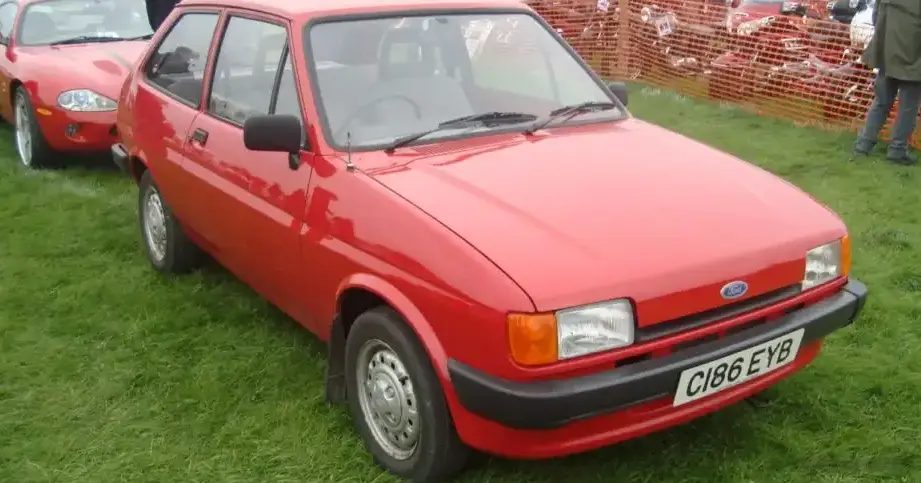
The Ford Fiesta Mk2 1.4, powered by the FBD engine producing 75 horsepower, represented a significant evolution of Ford’s popular supermini. Produced between 1985 and 1989, this variant occupied a crucial position in the Fiesta Mk2 lineup, offering a balance of affordability, practicality, and reasonable performance for the European market. It was designed to appeal to buyers seeking economical transportation without sacrificing the Fiesta’s inherent charm and nimble handling. This model bridged the gap between the base 1.0-liter versions and the more potent 1.6-liter options, making it a common sight on European roads during its production run.
Technical Specifications
| Brand | Ford |
| Model | Fiesta |
| Generation | Fiesta II (Mk2) |
| Type (Engine) | 1.4 (FBD) (75 Hp) |
| Start of production | 1985 |
| End of production | 1989 |
| Powertrain Architecture | Internal Combustion engine |
| Body type | Hatchback |
| Fuel Type | Petrol (Gasoline) |
| Power | 75 Hp |
| Engine Model/Code | FBD |
| Engine aspiration | Naturally aspirated engine |
| Engine oil capacity | 3.5 l (3.7 US qt | 3.08 UK qt) |
| Coolant capacity | 7.6 l (8.03 US qt | 6.69 UK qt) |
Powertrain & Engine Architecture
The heart of the Fiesta Mk2 1.4 was the Ford FBD engine, a 1392cc inline-four cylinder petrol engine. This engine was part of Ford’s ‘Valencia’ engine family, known for its simplicity and durability. The FBD featured a single overhead camshaft (SOHC) valvetrain operating two valves per cylinder. Fuel delivery was managed by a Bosch carburetor, a common setup for vehicles of this era, prioritizing cost-effectiveness over the more advanced fuel injection systems found in higher-spec models. The engine’s relatively low compression ratio (around 9.0:1) contributed to its ability to run on lower octane fuel, a significant advantage in many European markets. The engine produced 75 horsepower at 5,000 rpm and 88 lb-ft of torque at 3,000 rpm. The transmission offered was typically a four-speed manual, but a three-speed automatic transmission was also available, though less common. The automatic version, while offering convenience, did noticeably impact performance.
Driving Characteristics
The Fiesta Mk2 1.4 offered a comfortable and predictable driving experience. With 75 horsepower, acceleration was adequate for everyday driving, but it wasn’t a particularly sporty vehicle. The 0-60 mph time was around 13-14 seconds, depending on the transmission. The manual transmission allowed for more driver control and slightly quicker acceleration, while the automatic version prioritized ease of use. The gear ratios were geared towards fuel efficiency rather than outright performance. The Fiesta’s light weight (around 1,700 lbs) helped to offset the engine’s modest power output, providing a reasonably nimble feel in city driving. Compared to the 1.0-liter versions, the 1.4 offered a noticeable improvement in performance, particularly when carrying passengers or luggage. However, the 1.6-liter models provided a significantly more engaging driving experience with considerably more power.
Equipment & Trim Levels
The Fiesta Mk2 1.4 was typically offered in base or L trim levels. The base model was fairly spartan, featuring cloth upholstery, vinyl floor coverings, and basic instrumentation. The L trim added features such as a more comfortable interior trim, a better-equipped dashboard, and sometimes, features like a rear window wiper. Optional extras included a sunroof, upgraded stereo systems, and central locking. The interior design was functional and straightforward, prioritizing practicality over luxury. The dashboard layout was simple, with clearly labeled controls. The Fiesta Mk2 1.4 generally lacked the advanced features found in more modern vehicles, but it provided a comfortable and functional environment for its occupants.
Chassis & Braking
The Fiesta Mk2 utilized a MacPherson strut front suspension and a twist-beam rear suspension. This setup provided a good balance of ride comfort and handling. The steering was rack and pinion, offering precise and responsive control. Braking was typically accomplished with front disc brakes and rear drum brakes. The braking system was adequate for the vehicle’s weight and performance, but it lacked the stopping power of more modern systems. Later models sometimes featured upgraded braking components. Stabilizer bars were often fitted to improve handling and reduce body roll, particularly on the L trim level. The suspension was tuned for comfort, providing a relatively smooth ride over uneven surfaces.
Market Reception & Comparison
The Fiesta Mk2 1.4 was well-received by critics and buyers alike. It was praised for its affordability, practicality, and fuel efficiency. It offered a good compromise between performance and economy, making it a popular choice for families and commuters. Compared to the 1.0-liter versions, the 1.4 offered a noticeable improvement in performance, while remaining relatively affordable. However, the 1.6-liter models were considered to be more desirable by enthusiasts, offering a more engaging driving experience. Fuel economy for the 1.4 was typically around 35-40 mpg, depending on driving conditions. Reliability was generally good, with the FBD engine proving to be durable and long-lasting. However, like all vehicles of this era, regular maintenance was essential to prevent problems.
Legacy
The Ford Fiesta Mk2 1.4, with its FBD engine, holds a respectable place in automotive history as a reliable and affordable supermini. While not a performance icon, it provided dependable transportation for a generation of European drivers. Today, well-maintained examples are becoming increasingly sought after by classic car enthusiasts. The FBD engine is known for its relative simplicity, making it easier to maintain and repair than more complex engines. However, finding parts can sometimes be a challenge. The Fiesta Mk2 1.4 remains a testament to Ford’s ability to produce practical and affordable vehicles that stood the test of time. Its enduring popularity in the used car market is a reflection of its inherent qualities and its place in automotive folklore.