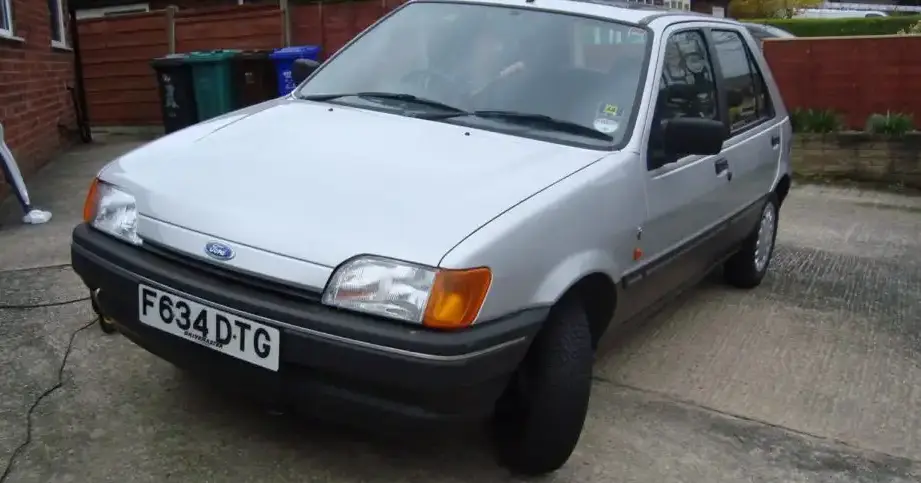
The Ford Fiesta Mk3 1.6i, produced between 1989 and 1992, represented a significant step up in performance and refinement for the popular supermini. Positioned as a mid-range offering within the Mk3 Fiesta lineup, it bridged the gap between the more economical, lower-powered versions and the later, more sporting XR2 model. This variant was primarily aimed at buyers seeking a blend of practicality, reasonable performance, and a more engaging driving experience than the base models offered. The Mk3 Fiesta, internally designated as the B2 platform, was a crucial model for Ford in Europe, solidifying its position in the competitive small car segment.
Technical Specifications
| Brand | Ford |
| Model | Fiesta |
| Generation | Fiesta III (Mk3) |
| Type (Engine) | 1.6 i (110 Hp) |
| Start of production | 1989 |
| End of production | 1992 |
| Powertrain Architecture | Internal Combustion engine |
| Body type | Hatchback |
| Seats | 5 |
| Doors | 3/5 |
| Fuel consumption (urban) | 10.4 l/100 km (22.6 US mpg, 27.2 UK mpg, 9.6 km/l) |
| Fuel consumption (extra urban) | 6.1 l/100 km (38.6 US mpg, 46.3 UK mpg, 16.4 km/l) |
| Fuel consumption (combined) | 7.8 l/100 km (30.2 US mpg, 36.2 UK mpg, 12.8 km/l) |
| Fuel Type | Petrol (Gasoline) |
| Acceleration 0 – 100 km/h | 9.8 sec |
| Acceleration 0 – 62 mph | 9.8 sec |
| Acceleration 0 – 60 mph | 9.3 sec |
| Maximum speed | 192 km/h (119.3 mph) |
| Weight-to-power ratio | 7.7 kg/Hp, 130.2 Hp/tonne |
| Weight-to-torque ratio | 6.1 kg/Nm, 163.3 Nm/tonne |
| Power | 110 Hp @ 6000 rpm |
| Power per litre | 68.8 Hp/l |
| Torque | 138 Nm @ 2800 rpm (101.78 lb.-ft. @ 2800 rpm) |
| Engine layout | Front, Transverse |
| Engine displacement | 1598 cm3 (97.52 cu. in.) |
| Number of cylinders | 4 |
| Engine configuration | Inline |
| Cylinder Bore | 80 mm (3.15 in.) |
| Piston Stroke | 79.5 mm (3.13 in.) |
| Compression ratio | 9.75:1 |
| Number of valves per cylinder | 2 |
| Fuel injection system | Multi-port manifold injection |
| Engine aspiration | Naturally aspirated engine |
| Valvetrain | OHC |
| Kerb Weight | 845 kg (1862.91 lbs.) |
| Max. weight | 1325 kg (2921.12 lbs.) |
| Max load | 480 kg (1058.22 lbs.) |
| Trunk (boot) space – minimum | 250 l (8.83 cu. ft.) |
| Trunk (boot) space – maximum | 625 l (22.07 cu. ft.) |
| Fuel tank capacity | 42 l (11.1 US gal | 9.24 UK gal) |
| Length | 3743 mm (147.36 in.) |
| Width | 1606 mm (63.23 in.) |
| Height | 1379 mm (54.29 in.) |
| Wheelbase | 2446 mm (96.3 in.) |
| Front track | 1392 mm (54.8 in.) |
| Rear (Back) track | 1384 mm (54.49 in.) |
| Drivetrain Architecture | The Internal combustion engine (ICE) drives the front wheels of the vehicle. |
| Drive wheel | Front wheel drive |
| Number of gears and type of gearbox | 5 gears, manual transmission |
| Front suspension | Coil spring |
| Rear suspension | Coil spring |
| Front brakes | Disc |
| Rear brakes | Drum |
| Assisting systems | ABS (Anti-lock braking system) |
| Steering type | Steering rack and pinion |
| Tires size | 135/80 SR13 |
INTRODUCTION
The Ford Fiesta Mk3 1.6i, launched in 1989, was a key variant in the refreshed Mk3 Fiesta range. Building upon the success of the Mk2, the Mk3 brought a more modern aesthetic and improved mechanicals. The 1.6i model, with its 110 horsepower engine, offered a noticeable performance upgrade over the smaller-displacement engines available, making it a popular choice for drivers who wanted a more spirited driving experience without sacrificing fuel efficiency or practicality. Available in both 3-door and 5-door body styles, it catered to a wide range of buyers.
Powertrain & Engine Architecture
At the heart of the Fiesta 1.6i lies the Ford Valencia engine, specifically the 1598cc inline-four cylinder unit. This engine, often referred to by its engine code, typically found in European models, featured a single overhead camshaft (SOHC) valvetrain operating two valves per cylinder. Fuel delivery was handled by a multi-port fuel injection system, a significant improvement over the carbureted engines found in earlier Fiestas. This system contributed to improved throttle response and fuel economy. The engine’s 9.75:1 compression ratio helped to extract a respectable 110 hp at 6000 rpm and 138 Nm (101.78 lb-ft) of torque at 2800 rpm. The engine was transversely mounted, driving the front wheels. The transmission was a five-speed manual gearbox, providing a good balance between acceleration and cruising ability. The gear ratios were tuned to maximize the engine’s torque, offering reasonable acceleration in everyday driving conditions.
Driving Characteristics
The Fiesta 1.6i offered a noticeably more engaging driving experience than its smaller-engined siblings. While not a sports car, the 110 hp engine provided ample power for confident overtaking and comfortable cruising on highways. The five-speed gearbox allowed drivers to keep the engine in its optimal power band. Compared to the 1.4-liter models, the 1.6i felt significantly more responsive, particularly at higher speeds. The manual transmission offered precise shifts, enhancing the overall driving experience. However, it wasn’t as nimble or powerful as the later XR2 version, which featured a more highly tuned engine and sportier suspension. The 1.6i prioritized usability and a balance between performance and economy.
Equipment & Trim Levels
The 1.6i trim level generally included features such as a basic stereo, cloth upholstery, and a more comprehensive instrument cluster than the base models. Power steering was often an optional extra, as were electric windows. Interior trim was relatively simple but durable, reflecting the Fiesta’s focus on practicality. The dashboard layout was functional and easy to use. Optional extras included a sunroof, upgraded stereo systems, and alloy wheels. The 1.6i often served as a base for buyers who wanted to add options to create a more personalized vehicle.
Chassis & Braking
The Fiesta Mk3 utilized a relatively simple chassis design, featuring coil springs and a twist-beam rear suspension. The front suspension employed MacPherson struts. Braking was handled by disc brakes on the front wheels and drum brakes on the rear. ABS (Anti-lock Braking System) was available as an option, enhancing safety, particularly in wet or slippery conditions. The suspension setup provided a comfortable ride, although it wasn’t as sporty or refined as some of its competitors. The steering was light and precise, making the Fiesta easy to maneuver in urban environments.
Market Reception & Comparison
The Fiesta 1.6i was generally well-received by automotive critics as a competent and enjoyable small car. It was praised for its responsive engine, comfortable ride, and practical interior. Compared to the 1.4-liter models, the 1.6i offered a significant performance boost without a substantial increase in fuel consumption. Against rivals like the Peugeot 205 and Renault Clio, the Fiesta 1.6i held its own, offering a good balance of value and performance. The 1.6i was often seen as a more sensible alternative to the sportier XR2, appealing to buyers who prioritized practicality and affordability.
Legacy
The Ford Fiesta Mk3 1.6i remains a popular choice among classic car enthusiasts and collectors. The Valencia engine is known for its reliability and relatively simple maintenance requirements. While age and mileage can affect reliability, well-maintained examples continue to provide enjoyable and affordable motoring. Parts availability is generally good, although some trim-specific components may be harder to find. Today, the Fiesta Mk3 1.6i is remembered as a well-rounded and enjoyable small car that played a significant role in Ford’s success in the European market. Its blend of practicality, performance, and affordability has ensured its enduring appeal.