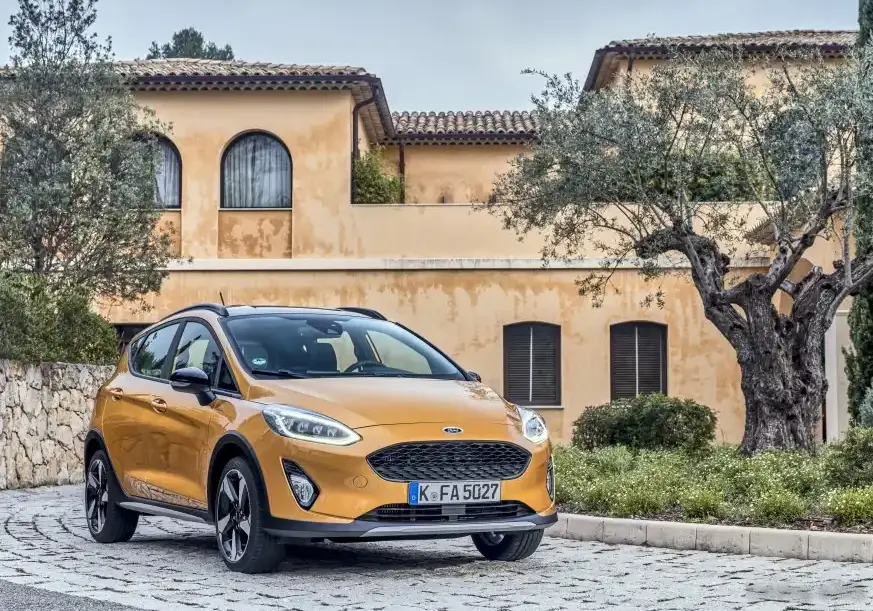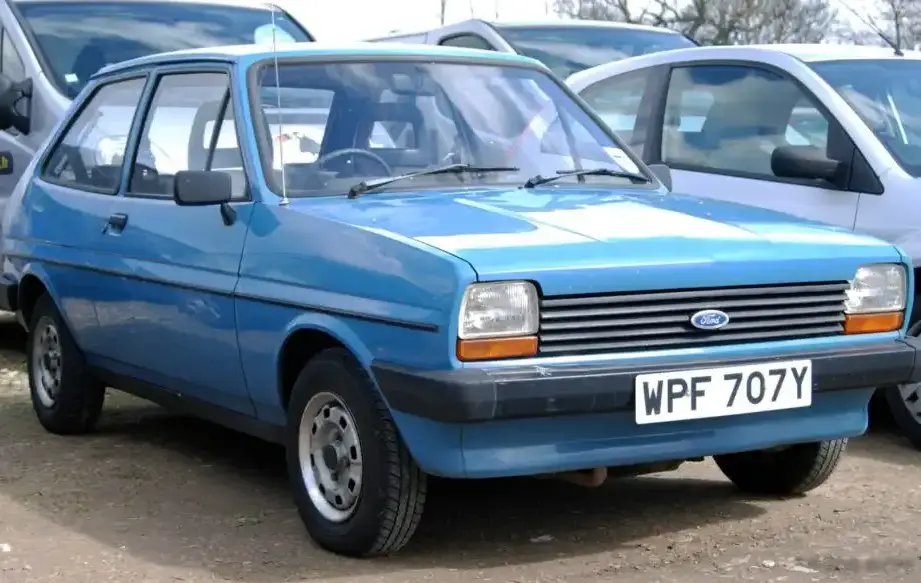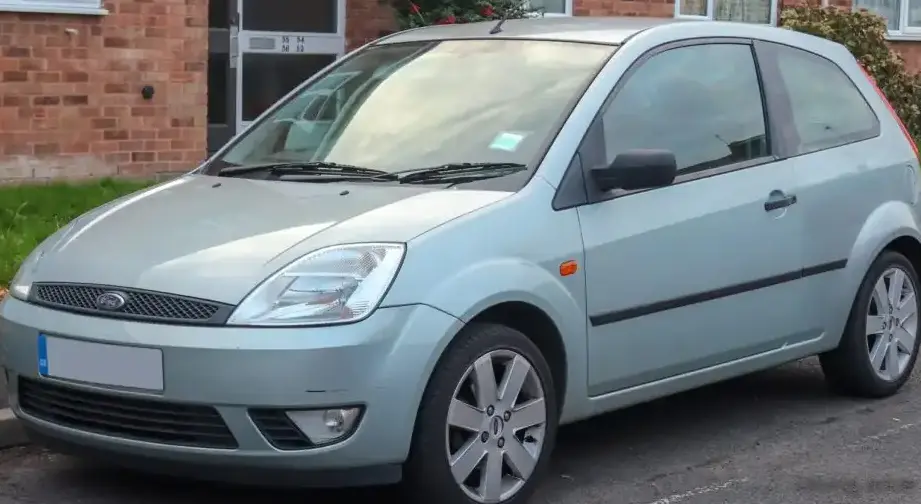
The Ford Fiesta Mk6, produced from 2002 to 2008, represented a significant step forward for Ford’s supermini. The 3-door hatchback variant, particularly when equipped with the 1.4-liter Duratec 16V engine producing 80 horsepower, occupied an important position in the Fiesta lineup as an entry-level offering. This configuration was available from 2002 through 2005, bridging the gap between the base models and the more performance-oriented versions. It was designed to appeal to buyers seeking affordable, economical transportation with a degree of practicality and Ford’s established reliability.
Technical Specifications
| Brand | Ford |
| Model | Fiesta |
| Generation | Fiesta VI (Mk6) 3 door |
| Type (Engine) | 1.4 Duratec 16V (80 Hp) |
| Start of production | 2002 |
| End of production | 2005 |
| Powertrain Architecture | Internal Combustion engine |
| Body type | Hatchback |
| Seats | 5 |
| Doors | 3 |
| Fuel consumption (urban) | 8.6 l/100 km (27.4 US mpg, 32.8 UK mpg, 11.6 km/l) |
| Fuel consumption (extra urban) | 5.1 l/100 km (46.1 US mpg, 55.4 UK mpg, 19.6 km/l) |
| Fuel consumption (combined) | 6.4 l/100 km (36.8 US mpg, 44.1 UK mpg, 15.6 km/l) |
| CO2 emissions | 153 g/km |
| Fuel Type | Petrol (Gasoline) |
| Acceleration 0 – 100 km/h | 13.2 sec |
| Acceleration 0 – 62 mph | 13.2 sec |
| Acceleration 0 – 60 mph | 12.5 sec |
| Maximum speed | 166 km/h (103.15 mph) |
| Emission standard | Euro 4 |
| Weight-to-power ratio | 12.8 kg/Hp, 78.1 Hp/tonne |
| Weight-to-torque ratio | 8.3 kg/Nm, 121.1 Nm/tonne |
| Power | 80 Hp @ 5700 rpm |
| Power per litre | 57.6 Hp/l |
| Torque | 124 Nm @ 3500 rpm (91.46 lb.-ft. @ 3500 rpm) |
| Engine layout | Front, Transverse |
| Engine Model/Code | FXJA |
| Engine displacement | 1388 cm3 (84.7 cu. in.) |
| Number of cylinders | 4 |
| Engine configuration | Inline |
| Cylinder Bore | 76 mm (2.99 in.) |
| Piston Stroke | 76.5 mm (3.01 in.) |
| Compression ratio | 11:1 |
| Number of valves per cylinder | 4 |
| Fuel injection system | Multi-port manifold injection |
| Engine aspiration | Naturally aspirated engine |
| Valvetrain | DOHC |
| Engine oil capacity | 3.8 l (4.02 US qt | 3.34 UK qt) |
| Coolant capacity | 5 l (5.28 US qt | 4.4 UK qt) |
| Kerb Weight | 1024 kg (2257.53 lbs.) |
| Max. weight | 1520 kg (3351.03 lbs.) |
| Max load | 496 kg (1093.49 lbs.) |
| Trunk (boot) space – minimum | 268 l (9.46 cu. ft.) |
| Trunk (boot) space – maximum | 945 l (33.37 cu. ft.) |
| Fuel tank capacity | 45 l (11.89 US gal | 9.9 UK gal) |
| Permitted trailer load with brakes (12%) | 900 kg (1984.16 lbs.) |
| Permitted trailer load without brakes | 500 kg (1102.31 lbs.) |
| Length | 3917 mm (154.21 in.) |
| Width | 1683 mm (66.26 in.) |
| Width including mirrors | 1905 mm (75 in.) |
| Height | 1467 mm (57.76 in.) |
| Wheelbase | 2487 mm (97.91 in.) |
| Front track | 1474 mm (58.03 in.) |
| Rear track | 1444 mm (56.85 in.) |
| Minimum turning circle | 9.8 m (32.15 ft.) |
| Drivetrain | Front wheel drive |
| Number of gears | 5 |
| Gearbox type | Manual transmission |
| Front suspension | Independent type McPherson, Transverse stabilizer |
| Rear suspension | Coil spring, Torsion |
| Front brakes | Disc |
| Rear brakes | Drum |
| Assisting systems | ABS (Anti-lock braking system) |
| Steering type | Steering rack and pinion |
| Power steering | Hydraulic Steering |
| Tires size | 175/65 R14 |
| Wheel rims size | 5.5J x 14 |
Powertrain & Engine Architecture
The heart of this Fiesta variant is the 1.4-liter Duratec engine, specifically the FXJA code. This engine is a naturally aspirated, inline-four cylinder unit featuring a double overhead camshaft (DOHC) valvetrain and multi-port fuel injection. The Duratec series was designed to be a modular engine family, offering a balance of efficiency and reliability. The 1.4L version, while not particularly powerful, was known for its smooth operation and relatively low maintenance requirements. The engine’s 11:1 compression ratio contributed to its modest power output. The five-speed manual transmission was the standard offering, providing adequate gear spacing for everyday driving. The transmission itself is a conventional design, prioritizing durability and ease of maintenance over sporty performance.
Driving Characteristics
The 1.4L 80 hp Fiesta Mk6 offered a practical, if not exhilarating, driving experience. Acceleration from 0-60 mph took around 12.5 seconds, and top speed was approximately 103 mph. The engine’s torque peak of 124 Nm (91.46 lb-ft) at 3500 rpm meant that it required relatively high engine speeds to achieve brisk acceleration. Compared to the more powerful 1.6L or even the diesel variants, this version felt noticeably slower, particularly when fully loaded or tackling inclines. However, the lighter weight of the 1.4L engine contributed to nimble handling and predictable cornering. The gear ratios were tuned for fuel efficiency rather than outright performance, making it a comfortable cruiser on the highway but requiring frequent downshifts for overtaking maneuvers.
Equipment & Trim Levels
The 1.4L Fiesta typically came with a basic level of equipment, reflecting its position as an entry-level model. Standard features generally included power steering, central locking, and an adjustable steering column. Interior upholstery was typically cloth, and the dashboard featured a simple, functional design. Optional extras, such as air conditioning, alloy wheels, and a CD player, were available but added to the overall cost. Higher trim levels, like the Zetec, offered more comprehensive equipment lists, including features like electric windows and upgraded interior trim.
Chassis & Braking
The Fiesta Mk6 utilized a McPherson strut front suspension and a torsion beam rear suspension. This setup provided a good balance of ride comfort and handling. The front brakes were discs, while the rear brakes were drums – a cost-saving measure common in this segment. Anti-lock Braking System (ABS) was standard, enhancing safety. The steering was hydraulic power-assisted, providing light and responsive steering feel. The relatively light weight of the 1.4L model meant that the braking system was generally adequate for everyday use, although it lacked the stopping power of the more powerful variants.
Market Reception & Comparison
The 1.4L Fiesta Mk6 was generally well-received as an affordable and reliable city car. Critics praised its fuel efficiency and ease of driving, but noted its lack of outright performance. Compared to the 1.6L version, the 1.4L offered significantly less power and acceleration, but it also consumed less fuel and was cheaper to insure. The diesel variants provided better fuel economy and torque, but were typically more expensive to purchase and maintain. The 1.4L appealed to buyers who prioritized economy and practicality over performance.
Legacy
The 1.4L Duratec engine, when paired with the manual transmission, proved to be a durable and reliable powertrain. Many examples are still on the road today, testament to its robust design. In the used car market, these Fiesta variants are often sought after by first-time drivers or those looking for an inexpensive and economical runabout. Maintenance costs are generally low, and parts availability is good. While not a performance icon, the 1.4L Fiesta Mk6 played a vital role in Ford’s supermini success story, offering a practical and affordable transportation solution for a wide range of buyers.