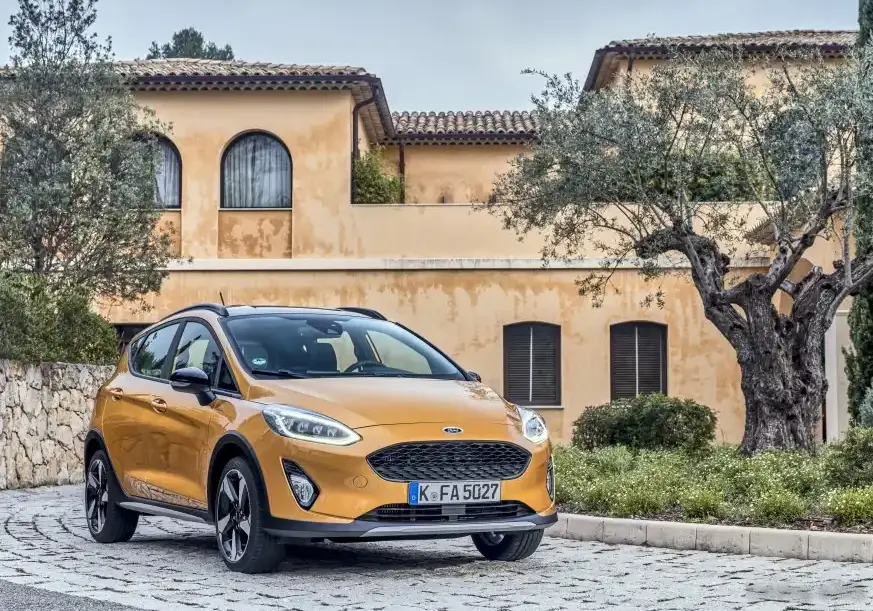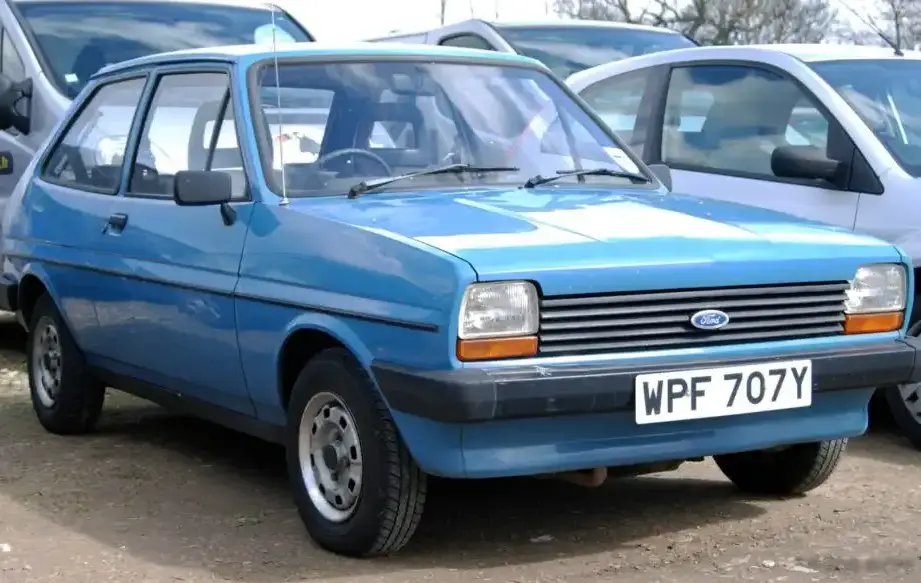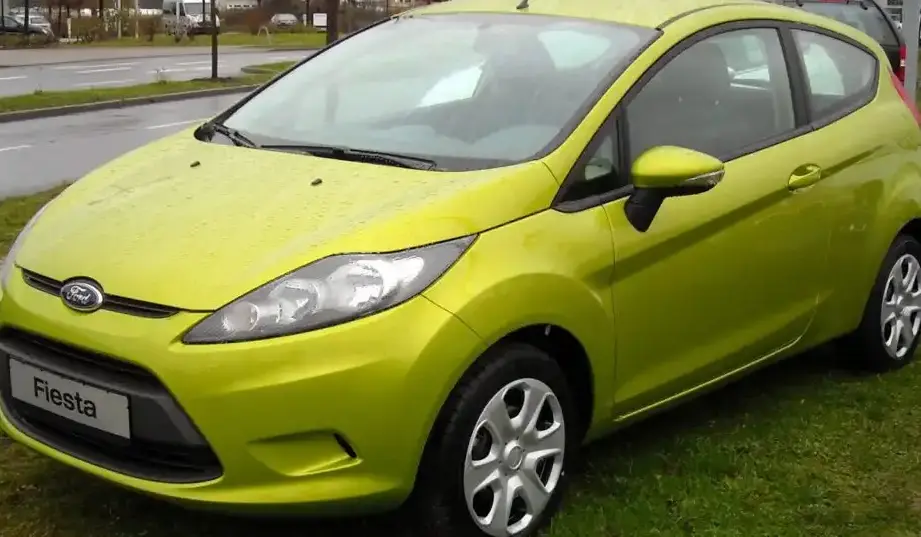
The Ford Fiesta Mk7, produced from 2008 to 2012, represented a significant step forward for Ford’s supermini. The three-door 1.6 Ti-VCT variant, generating 120 horsepower, occupied a middle ground in the Mk7 lineup, offering a balance between affordability and performance. This model aimed to appeal to buyers seeking a more engaging driving experience than the base models, without the higher costs associated with the performance-oriented ST version. It was primarily marketed in Europe, where the Fiesta consistently ranked among the best-selling vehicles in its class, but was also available in select global markets.
Technical Specifications
| Brand | Ford |
| Model | Fiesta |
| Generation | Fiesta VII (Mk7) 3 door |
| Type (Engine) | 1.6 Ti-VCT (120 Hp) |
| Start of production | 2008 |
| End of production | 2012 |
| Powertrain Architecture | Internal Combustion engine |
| Body type | Hatchback |
| Seats | 5 |
| Doors | 3 |
| Fuel consumption (urban) | 7.9 l/100 km (29.8 US mpg, 35.8 UK mpg, 12.7 km/l) |
| Fuel consumption (extra urban) | 4.7 l/100 km (50 US mpg, 60.1 UK mpg, 21.3 km/l) |
| Fuel consumption (combined) | 5.9 l/100 km (39.9 US mpg, 47.9 UK mpg, 16.9 km/l) |
| CO2 emissions | 139 g/km |
| Fuel Type | Petrol (Gasoline) |
| Acceleration 0 – 100 km/h | 9.9 sec |
| Acceleration 0 – 62 mph | 9.9 sec |
| Acceleration 0 – 60 mph | 9.4 sec |
| Maximum speed | 193 km/h (119.92 mph) |
| Emission standard | Euro 4 |
| Weight-to-power ratio | 9.2 kg/Hp, 108.2 Hp/tonne |
| Weight-to-torque ratio | 7.3 kg/Nm, 137.1 Nm/tonne |
| Power | 120 Hp @ 6000 rpm |
| Power per litre | 75.2 Hp/l |
| Torque | 152 Nm @ 4050 rpm (112.11 lb.-ft. @ 4050 rpm) |
| Engine layout | Front, Transverse |
| Engine Model/Code | HXJA |
| Engine displacement | 1596 cm3 (97.39 cu. in.) |
| Number of cylinders | 4 |
| Engine configuration | Inline |
| Cylinder Bore | 79 mm (3.11 in.) |
| Piston Stroke | 81.4 mm (3.2 in.) |
| Compression ratio | 11:1 |
| Number of valves per cylinder | 4 |
| Fuel injection system | Multi-port manifold injection |
| Engine aspiration | Naturally aspirated engine |
| Valvetrain | DOHC, Ti-VCT |
| Engine oil capacity | 4.05 l (4.28 US qt | 3.56 UK qt) |
| Coolant | 5.5 l (5.81 US qt | 4.84 UK qt) |
| Kerb Weight | 1109 kg (2444.93 lbs.) |
| Max. weight | 1500 kg (3306.93 lbs.) |
| Max load | 391 kg (862.01 lbs.) |
| Trunk (boot) space – minimum | 295 l (10.42 cu. ft.) |
| Trunk (boot) space – maximum | 979 l (34.57 cu. ft.) |
| Fuel tank capacity | 45 l (11.89 US gal | 9.9 UK gal) |
| Length | 3950 mm (155.51 in.) |
| Width | 1722 mm (67.8 in.) |
| Width including mirrors | 1973 mm (77.68 in.) |
| Height | 1481 mm (58.31 in.) |
| Wheelbase | 2489 mm (97.99 in.) |
| Front track | 1493 mm (58.78 in.) |
| Rear (Back) track | 1480 mm (58.27 in.) |
| Minimum turning circle | 10.2 m (33.46 ft.) |
| Drivetrain Architecture | ICE, Front wheel drive |
| Drive wheel | Front wheel drive |
| Number of gears | 5 gears, manual transmission |
| Front suspension | Independent, McPherson with coil spring and anti-roll bar |
| Rear suspension | Coil spring, Torsion |
| Front brakes | Ventilated discs |
| Rear brakes | Drum |
| Assisting systems | ABS (Anti-lock braking system) |
| Steering type | Steering rack and pinion |
| Power steering | Electric Steering |
| Tires size | 195/50 R15 |
| Wheel rims size | 6J x 15 |
INTRODUCTION
The Ford Fiesta Mk7, launched in 2008, represented a significant overhaul of Ford’s popular supermini. Built on the global B-platform (also underpinning the Ford Focus Mk3), the Mk7 prioritized a more sophisticated driving experience and improved interior quality. The 1.6 Ti-VCT 120 hp three-door model was introduced as a step up from the base 1.25-liter engine, offering a noticeable performance increase. This variant aimed to attract buyers who desired a more spirited drive without the expense of the higher-spec trims or the performance-focused ST model. Production of this specific configuration ran from 2008 through 2012.
Powertrain & Engine Architecture
The heart of this Fiesta variant is the 1.6-liter Ti-VCT (Twin Independent Variable Camshaft Timing) inline-four cylinder engine, designated HXJA. This engine utilizes multi-port fuel injection and a naturally aspirated design. The Ti-VCT system allows for independent control of intake and exhaust valve timing, optimizing engine performance and efficiency across the rev range. The engine produces 120 horsepower at 6000 rpm and 152 Nm (112 lb-ft) of torque at 4050 rpm. The engine’s architecture is relatively simple, contributing to its reliability. The 1.6 Ti-VCT was paired with a five-speed manual transmission, providing a direct and engaging driving experience. While an automatic transmission was offered on other Fiesta Mk7 variants, it was not available with the 120 hp 1.6 Ti-VCT engine.
Driving Characteristics
The 1.6 Ti-VCT engine provided a noticeable improvement in performance over the base 1.25-liter engine. Acceleration from 0-60 mph took approximately 9.4 seconds, and the car could reach a top speed of 193 km/h (119.92 mph). The five-speed manual transmission offered precise shifts, and the engine felt responsive throughout the rev range. While not a particularly powerful engine, the 1.6 Ti-VCT provided ample power for everyday driving and occasional highway trips. Compared to the higher-output 1.6 Ti-VCT variants (often found in higher trim levels), this 120 hp version offered a more balanced driving experience, prioritizing fuel efficiency and affordability over outright performance. The gear ratios were tuned for a blend of acceleration and fuel economy, making it a practical choice for daily commutes.
Equipment & Trim Levels
The 1.6 Ti-VCT 120 hp model typically came equipped as a mid-range trim, often designated as ‘Zetec’ or similar depending on the specific market. Standard features generally included air conditioning, power steering, electric front windows, a CD player with auxiliary input, and ABS brakes. Safety features such as driver and passenger airbags were also standard. Optional extras included alloy wheels, a trip computer, and upgraded audio systems. Interior upholstery was typically cloth, with a functional and durable design. The dashboard layout was clean and straightforward, prioritizing usability over luxury.
Chassis & Braking
The Fiesta Mk7 utilized a McPherson strut front suspension and a torsion beam rear suspension. This setup provided a good balance between ride comfort and handling. The front brakes were ventilated discs, offering adequate stopping power, while the rear brakes were drums. This configuration was typical for vehicles in this weight class and price range. The electric power steering provided light and precise steering feel. The chassis was relatively lightweight, contributing to the car’s agility and fuel efficiency. A stabilizer bar was included at the front to reduce body roll during cornering.
Market Reception & Comparison
The 1.6 Ti-VCT 120 hp Fiesta Mk7 was generally well-received by automotive critics. It was praised for its responsive engine, engaging handling, and improved interior quality compared to previous Fiesta generations. Compared to the base 1.25-liter engine, the 1.6 Ti-VCT offered a significant performance upgrade without a substantial increase in price. Fuel economy was respectable, averaging around 39.9 US mpg in combined driving. Reliability was generally good, although some owners reported minor issues with the electrical system. Compared to the higher-output 1.6 Ti-VCT variants, this 120 hp version offered a more affordable and fuel-efficient option, making it a popular choice for budget-conscious buyers.
Legacy
The 1.6 Ti-VCT engine proved to be a reliable and durable powertrain. The Fiesta Mk7, in general, established a strong reputation for build quality and driving dynamics. In the used car market, the 1.6 Ti-VCT 120 hp variant remains a popular choice due to its balance of performance, fuel efficiency, and affordability. Maintenance costs are relatively low, and parts are readily available. While not a particularly rare or collectible model, the Fiesta Mk7 1.6 Ti-VCT represents a well-rounded and practical supermini that continues to provide reliable transportation for many drivers today.