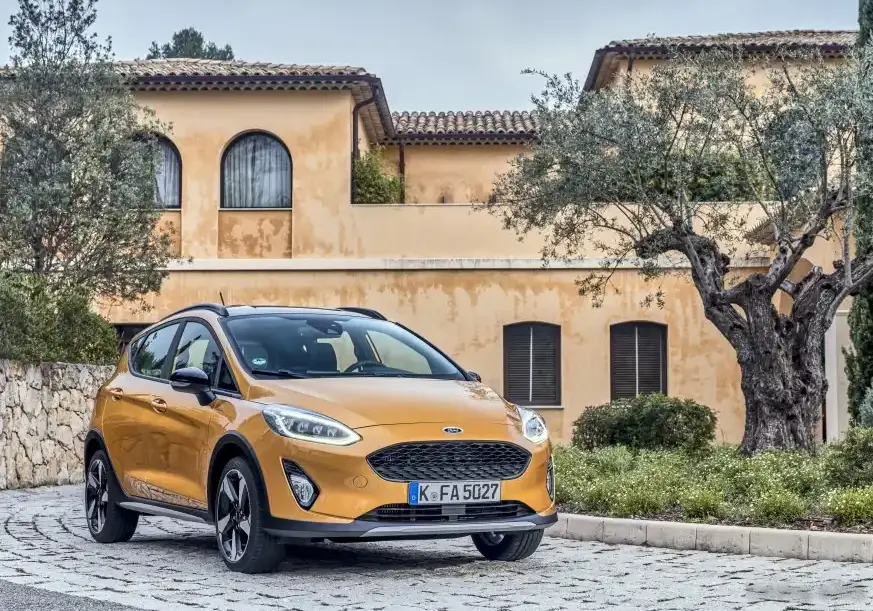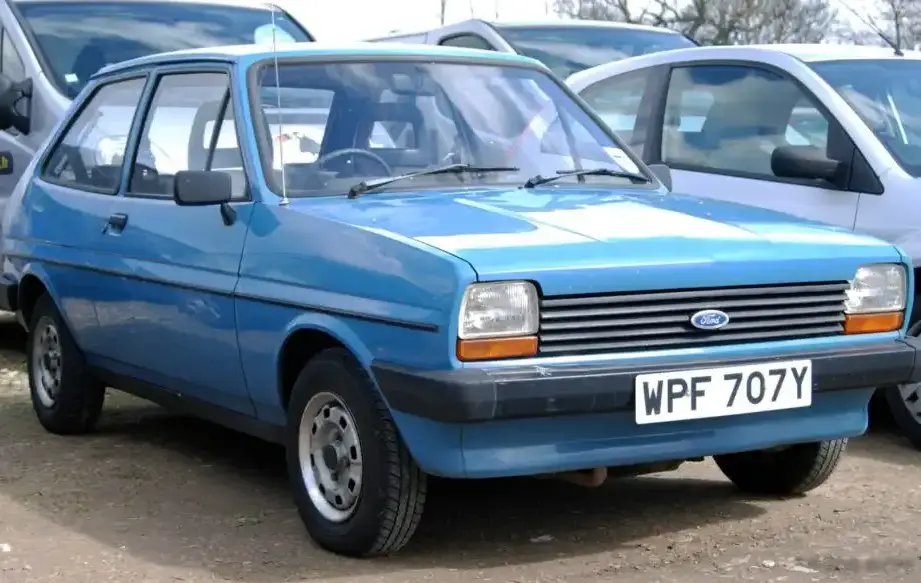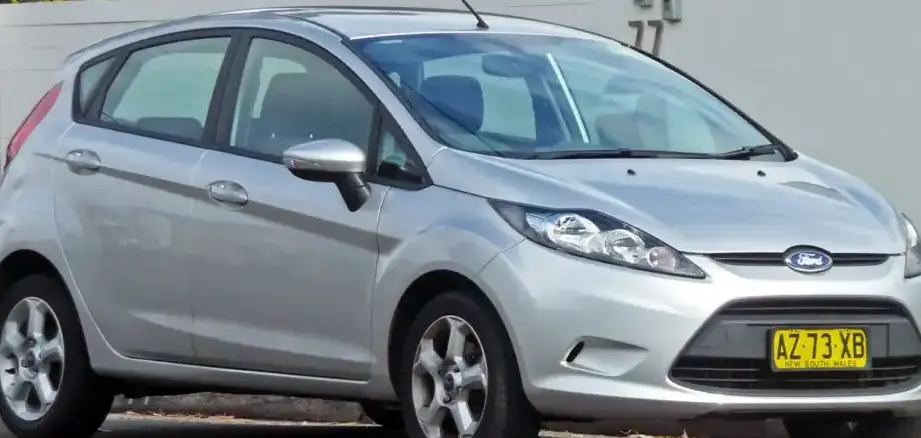
The Ford Fiesta Mk7, produced from 2008 to 2019, represented a significant leap forward for Ford’s supermini. The 5-door variant, introduced to cater to a broader range of buyers, offered increased practicality without sacrificing the Fiesta’s renowned agility. The 1.6 Duratec Ti-VCT (120 hp) with the PowerShift dual-clutch transmission, available from 2011 to 2012, occupied a mid-range position in the Mk7 Fiesta lineup, aiming to balance performance, fuel efficiency, and affordability. This configuration was targeted towards drivers seeking a more refined driving experience than the base models, but without the higher price tag of the sportier ST variant.
Technical Specifications
| Brand | Ford |
| Model | Fiesta |
| Generation | Fiesta VII (Mk7) 5 door |
| Type (Engine) | 1.6 Duratec Ti-VCT (120 Hp) PowerShift |
| Start of production | 2011 |
| End of production | 2012 |
| Powertrain Architecture | Internal Combustion engine |
| Body type | Hatchback |
| Seats | 5 |
| Doors | 5 |
| Fuel consumption (urban) | 8.1 l/100 km (29 US mpg, 34.9 UK mpg, 12.3 km/l) |
| Fuel consumption (extra urban) | 6.2 l/100 km (37.9 US mpg, 45.6 UK mpg, 16.1 km/l) |
| Fuel consumption (combined) | 7.1 l/100 km (33.1 US mpg, 39.8 UK mpg, 14.1 km/l) |
| Fuel Type | Petrol (Gasoline) |
| Weight-to-power ratio | 8.1 kg/Hp, 124.2 Hp/tonne |
| Weight-to-torque ratio | 6.4 kg/Nm, 157.3 Nm/tonne |
| Power | 120 Hp @ 6350 rpm |
| Power per litre | 75.2 Hp/l |
| Torque | 152 Nm @ 5000 rpm (112.11 lb.-ft. @ 5000 rpm) |
| Engine layout | Front, Transverse |
| Engine displacement | 1596 cm3 (97.39 cu. in.) |
| Number of cylinders | 4 |
| Engine configuration | Inline |
| Cylinder Bore | 79 mm (3.11 in.) |
| Piston Stroke | 81.4 mm (3.2 in.) |
| Compression ratio | 11:1 |
| Number of valves per cylinder | 4 |
| Fuel injection system | Multi-port manifold injection |
| Engine aspiration | Naturally aspirated engine |
| Valvetrain | DOHC, Ti-VCT |
| Engine oil capacity | 4.05 l (4.28 US qt, 3.56 UK qt) |
| Coolant | 5.5 l (5.81 US qt, 4.84 UK qt) |
| Kerb Weight | 966 kg (2129.67 lbs.) |
| Max. weight | 1490 kg (3284.89 lbs.) |
| Max load | 524 kg (1155.22 lbs.) |
| Trunk (boot) space – minimum | 436 l (15.4 cu. ft.) |
| Trunk (boot) space – maximum | 736 l (25.99 cu. ft.) |
| Length | 4067 mm (160.12 in.) |
| Width | 1722 mm (67.8 in.) |
| Width including mirrors | 1976 mm (77.8 in.) |
| Height | 1473 mm (57.99 in.) |
| Wheelbase | 2489 mm (97.99 in.) |
| Drivetrain | Front wheel drive |
| Number of gears and type of gearbox | 6 gears, automatic transmission PowerShift |
| Front suspension | Independent, type McPherson with coil spring and anti-roll bar |
| Rear suspension | Coil spring, Torsion |
| Front brakes | Ventilated discs |
| Rear brakes | Drum |
| Assisting systems | ABS (Anti-lock braking system) |
| Steering type | Steering rack and pinion |
| Power steering | Electric Steering |
| Tires size | 195/50 R15 |
| Wheel rims size | 6J x 15 |
INTRODUCTION
The 1.6 Duratec Ti-VCT engine, paired with Ford’s PowerShift 6-speed dual-clutch transmission, was introduced to the Fiesta Mk7 range in 2011 as a more sophisticated alternative to the lower-powered 1.25 and 1.4-liter engines. This combination aimed to provide a smoother, more responsive driving experience, particularly appealing to those who preferred the convenience of an automatic transmission but didn’t want to sacrifice too much performance. The Mk7 Fiesta, built on the B2E platform, was a critical model for Ford in Europe, competing directly with rivals like the Volkswagen Polo, Renault Clio, and Opel/Vauxhall Corsa. The 5-door body style, becoming increasingly popular, broadened the Fiesta’s appeal to families and those needing more rear passenger space.
Powertrain & Engine Architecture
The 1.6 Duratec Ti-VCT engine is a naturally aspirated, inline-four cylinder petrol engine. The ‘Ti-VCT’ designation stands for Twin Independent Variable Camshaft Timing, a technology that optimizes valve timing for improved performance and fuel efficiency across the engine’s operating range. The engine utilizes multi-point fuel injection, delivering fuel directly to the intake ports. The engine code for this variant is typically found as a suffix to the vehicle identification number (VIN) and can vary slightly depending on the specific market. The PowerShift transmission is a 6-speed dual-clutch transmission (DCT) developed by Getrag in collaboration with Ford. It operates similarly to a manual transmission but uses two separate clutches for odd and even gears, allowing for quicker and smoother gear changes than a traditional automatic transmission. The PowerShift’s control unit manages the clutch engagement and gear selection, offering both automatic and manual shift modes via steering wheel-mounted paddles or the gear selector.
Driving Characteristics
The 120 hp output of the 1.6 Duratec Ti-VCT, combined with the PowerShift transmission, provided a noticeable step up in performance compared to the lower-spec Fiesta models. While not a particularly sporty setup, it offered adequate acceleration for everyday driving and comfortable cruising speeds. The PowerShift transmission contributed to a more engaging driving experience, with quick and precise gear changes. However, some drivers reported occasional jerkiness at low speeds, a common characteristic of early dual-clutch transmissions. The gear ratios were tuned for a balance between fuel economy and responsiveness, with a relatively tall final drive to aid efficiency. Compared to the 1.4-liter manual, the 1.6 PowerShift offered quicker acceleration and a more relaxed driving experience, especially on longer journeys. It didn’t match the outright performance of the Fiesta ST, which featured a more powerful engine and a sport-tuned chassis.
Equipment & Trim Levels
The 1.6 Duratec Ti-VCT PowerShift typically came in mid-range trim levels, such as ‘Zetec’ or ‘Titanium’. Standard equipment generally included air conditioning, power windows, power door mirrors, a CD/MP3 stereo system, and alloy wheels. Higher trim levels added features like automatic headlights, rain-sensing wipers, a trip computer, and upgraded interior trim. Optional extras included a navigation system, parking sensors, and a panoramic sunroof. Interior upholstery was typically cloth, with a choice of colors and patterns. The dashboard layout was functional and modern, with a clear instrument cluster and logically arranged controls.
Chassis & Braking
The Fiesta Mk7 featured a McPherson strut front suspension and a torsion beam rear suspension. This setup provided a good balance between ride comfort and handling. The 1.6 Duratec models generally had slightly thicker anti-roll bars compared to the base models, further improving handling stability. Braking systems consisted of ventilated discs on the front wheels and drum brakes on the rear wheels. Anti-lock Braking System (ABS) was standard. The steering was electrically assisted, providing light and precise steering feel.
Market Reception & Comparison
The 1.6 Duratec Ti-VCT PowerShift Fiesta received generally positive reviews from automotive critics. It was praised for its refined engine, smooth transmission (when functioning optimally), and comfortable ride. Fuel economy was considered competitive for its class. However, the PowerShift transmission’s occasional jerkiness and reports of reliability issues were noted as potential drawbacks. Compared to the 1.4-liter manual, the 1.6 PowerShift offered a more premium driving experience but at a higher price point. The 1.6 Duratec was also more fuel-efficient than the higher-performance Fiesta ST, but offered significantly less power.
Legacy
The 1.6 Duratec Ti-VCT PowerShift Fiesta Mk7 remains a relatively common sight on used car markets. While the engine itself is generally considered reliable, the PowerShift transmission has a reputation for potential issues, including clutch failure and mechatronic unit problems. Regular maintenance, including fluid changes, is crucial to ensure the longevity of the transmission. Despite the potential transmission concerns, the 1.6 Duratec PowerShift Fiesta offers a good balance of performance, fuel efficiency, and comfort, making it a viable option for buyers seeking a well-rounded supermini. Values tend to be lower than comparable models with traditional automatic transmissions, reflecting the perceived risk associated with the PowerShift unit.