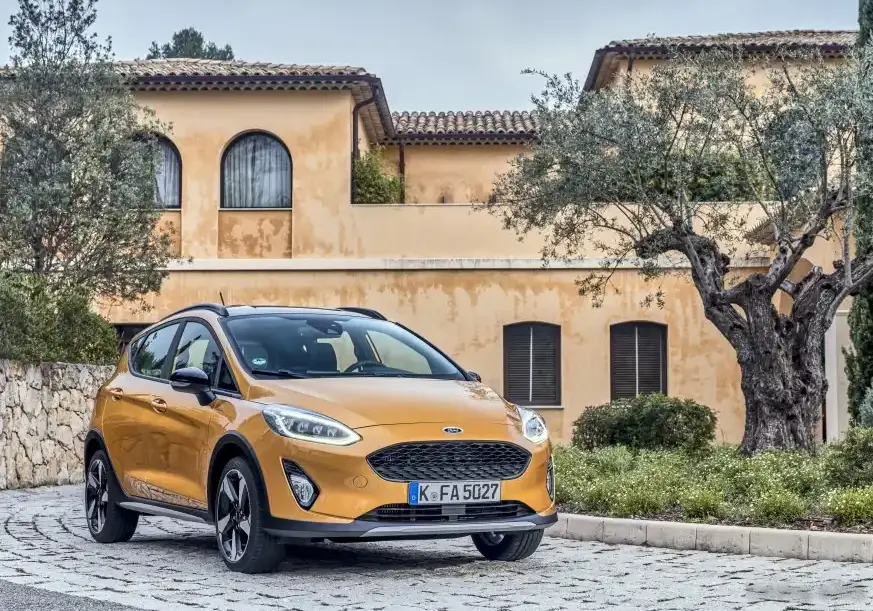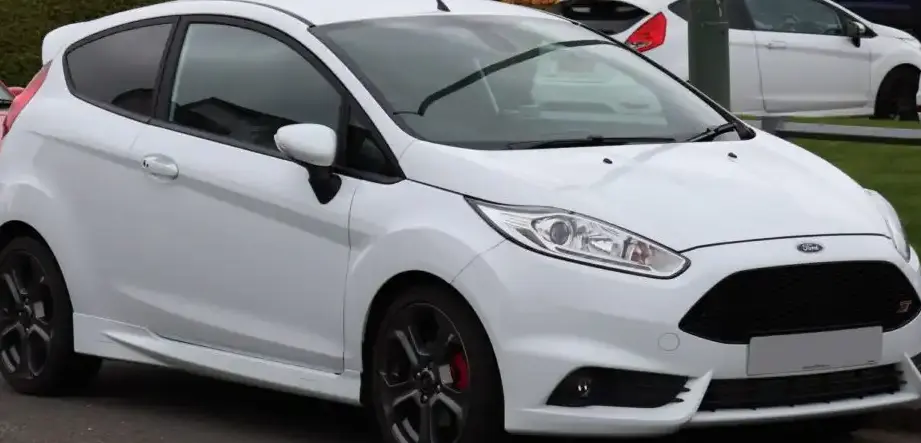
The Ford Fiesta VII, specifically the facelifted model introduced in 2013, represented a significant evolution of Ford’s popular subcompact car. The three-door 1.0 Duratec 80 horsepower variant, produced from 2013 to 2017, occupied the entry-level position within the Mk7 Fiesta range. This model was primarily aimed at buyers seeking an economical and practical city car, offering a balance between affordability and Ford’s established reputation for driving dynamics. It was a key offering in the European market, where the Fiesta consistently ranked among the best-selling vehicles in its class, and also saw moderate sales in other regions.
Technical Specifications
| Brand | Ford |
| Model | Fiesta |
| Generation | Fiesta VII (Mk7, facelift 2013) 3 door |
| Type (Engine) | 1.0 Duratec (80 Hp) |
| Start of production | 2013 |
| End of production | 2017 |
| Powertrain Architecture | Internal Combustion engine |
| Body type | Hatchback |
| Seats | 5 |
| Doors | 3 |
| Fuel consumption (urban) | 5.8 l/100 km (40.6 US mpg, 48.7 UK mpg, 17.2 km/l) |
| Fuel consumption (extra urban) | 3.8 l/100 km (61.9 US mpg, 74.3 UK mpg, 26.3 km/l) |
| Fuel consumption (combined) | 4.6 l/100 km (51.1 US mpg, 61.4 UK mpg, 21.7 km/l) |
| CO2 emissions | 105 g/km |
| Fuel Type | Petrol (Gasoline) |
| Acceleration 0 – 100 km/h | 14.9 sec |
| Acceleration 0 – 62 mph | 14.9 sec |
| Acceleration 0 – 60 mph | 14.2 sec |
| Maximum speed | 165 km/h (102.53 mph) |
| Emission standard | Euro 5 |
| Weight-to-power ratio | 12.1 kg/Hp, 82.5 Hp/tonne |
| Weight-to-torque ratio | 9.2 kg/Nm, 108.2 Nm/tonne |
| Power | 80 Hp @ 6300 rpm |
| Power per litre | 80.2 Hp/l |
| Torque | 105 Nm @ 4100 rpm (77.44 lb.-ft. @ 4100 rpm) |
| Engine layout | Front, Transverse |
| Engine Model/Code | P4JA, P4JB, P4JC, P4JD |
| Engine displacement | 998 cm3 (60.9 cu. in.) |
| Number of cylinders | 3 |
| Engine configuration | Inline |
| Number of valves per cylinder | 4 |
| Fuel injection system | Direct injection |
| Engine aspiration | Naturally aspirated engine, Intercooler |
| Engine oil capacity | 4.1 l (4.33 US qt | 3.61 UK qt) |
| Coolant capacity | 5.8 l (6.13 US qt | 5.1 UK qt) |
| Kerb Weight | 970 kg (2138.48 lbs.) |
| Max. weight | 1525 kg (3362.05 lbs.) |
| Max load | 555 kg (1223.57 lbs.) |
| Trunk (boot) space – minimum | 281 l (9.92 cu. ft.) |
| Trunk (boot) space – maximum | 965 l (34.08 cu. ft.) |
| Fuel tank capacity | 42 l (11.1 US gal | 9.24 UK gal) |
| Permitted trailer load with brakes (8%) | 750 kg (1653.47 lbs.) |
| Permitted trailer load with brakes (12%) | 650 kg (1433 lbs.) |
| Permitted trailer load without brakes | 520 kg (1146.4 lbs.) |
| Length | 3969 mm (156.26 in.) |
| Width | 1722 mm (67.8 in.) |
| Width with mirrors folded | 1787 mm (70.35 in.) |
| Width including mirrors | 1973 mm (77.68 in.) |
| Height | 1495 mm (58.86 in.) |
| Wheelbase | 2489 mm (97.99 in.) |
| Minimum turning circle | 10.2 m (33.46 ft.) |
| Drivetrain Architecture | The Internal combustion engine (ICE) drives the front wheels of the vehicle. |
| Drive wheel | Front wheel drive |
| Number of gears and type of gearbox | 5 gears, manual transmission |
| Front suspension | Independent, type McPherson with coil spring and anti-roll bar |
| Rear suspension | Coil spring, Torsion |
| Front brakes | Ventilated discs |
| Rear brakes | Drum |
| Assisting systems | ABS (Anti-lock braking system) |
| Steering type | Steering rack and pinion |
| Power steering | Electric Steering |
| Tires size | 175/65 R14; 195/55 R15 |
| Wheel rims size | 5.5J x 14; 6J x 15 |
INTRODUCTION
The 1.0 Duratec 80 hp Fiesta, part of the Mk7 generation (2012-2019) following the 2013 facelift, was a key component of Ford’s strategy to offer a fuel-efficient and affordable entry point into the Fiesta range. The Mk7 Fiesta, built on the global B-platform (also known as the 1HX0/A3 platform shared with other Ford and partner vehicles), represented a move towards a more sophisticated and refined subcompact. The three-door body style, while becoming less common, was still offered to appeal to buyers prioritizing a sportier aesthetic. This particular variant was designed to appeal to cost-conscious buyers, young drivers, and those primarily using the car for urban commuting.
Powertrain & Engine Architecture
The heart of this Fiesta variant is the 1.0-liter Duratec three-cylinder engine, specifically the P4JA, P4JB, P4JC, or P4JD engine code depending on the specific market and year. This engine is a naturally aspirated unit featuring direct fuel injection, a key technology for improving fuel economy and reducing emissions. The engine utilizes a four-valve-per-cylinder configuration and an intercooler to enhance performance. The 80 horsepower output is achieved at 6300 rpm, with a torque figure of 105 Nm (77.44 lb-ft) delivered at 4100 rpm. The engine is transversely mounted at the front of the vehicle. The Fiesta 1.0 was typically paired with a five-speed manual transmission, although a six-speed Powershift dual-clutch automatic transmission was also available as an option, though less common in this lower horsepower trim. The automatic transmission aimed to provide smoother gear changes and improved convenience, but at the expense of some fuel efficiency compared to the manual.
Driving Characteristics
The 1.0 Duratec 80 hp Fiesta offered a surprisingly refined driving experience for a small, three-cylinder engine. While not particularly quick – 0-60 mph took around 14.2 seconds – the engine was responsive enough for everyday driving. The relatively low weight of the Fiesta (around 970 kg or 2138 lbs) helped to mitigate the limited horsepower. The five-speed manual transmission provided adequate gear spacing, allowing the driver to keep the engine in its optimal power band. The automatic transmission, while convenient, resulted in slightly slower acceleration and a less engaging driving experience. The steering was precise and well-weighted, characteristic of the Fiesta’s reputation for handling. The suspension, tuned for comfort, provided a reasonably smooth ride, although it could become a little unsettled on rougher road surfaces.
Equipment & Trim Levels
The 1.0 Duratec 80 hp Fiesta typically came equipped with a basic but functional level of standard features. These generally included power steering, central locking, electric front windows, and an audio system with USB connectivity. Safety features such as ABS, electronic stability control (ESC), and airbags were also standard. Higher trim levels, such as Zetec, offered additional features like alloy wheels, air conditioning, and upgraded interior trim. Optional extras included a trip computer, Bluetooth connectivity, and parking sensors. Interior upholstery was typically cloth, with a relatively simple dashboard layout. The three-door configuration meant rear passenger access was less convenient than in the five-door model.
Chassis & Braking
The Fiesta Mk7 utilized a McPherson strut front suspension with a coil spring and anti-roll bar, providing a good balance of comfort and handling. The rear suspension employed a torsion beam setup, which was cost-effective and space-efficient. Braking duties were handled by ventilated discs at the front and drum brakes at the rear. The braking system was adequate for the car’s weight and performance, with ABS providing additional safety. The steering system was a rack and pinion type with electric power assistance, offering precise control and reducing driver effort.
Market Reception & Comparison
The 1.0 Duratec 80 hp Fiesta was generally well-received by critics as a practical and economical city car. Its fuel economy – around 51.1 US mpg combined – was a major selling point. Compared to other trims in the Fiesta lineup, such as the 1.6-liter versions, it offered lower performance but significantly better fuel efficiency. The 1.0-liter engine was also quieter and more refined than some of its competitors. However, some reviewers noted that the engine could feel strained when fully loaded or driving on steep hills. Compared to diesel-powered Fiesta models, the 1.0 Duratec offered lower running costs in terms of fuel, but potentially higher maintenance costs due to the complexities of the direct injection system.
Legacy
The 1.0 Duratec engine proved to be a reliable and durable powertrain, although, like any engine, it is not without its potential issues. Common concerns include timing chain wear and potential issues with the direct injection system. However, with regular maintenance, these engines can provide many years of reliable service. In the used car market, the 1.0 Duratec 80 hp Fiesta remains a popular choice for budget-conscious buyers seeking a practical and economical small car. Its affordability, fuel efficiency, and relatively low running costs continue to make it an attractive option, particularly for first-time drivers or those needing a dependable city runabout.