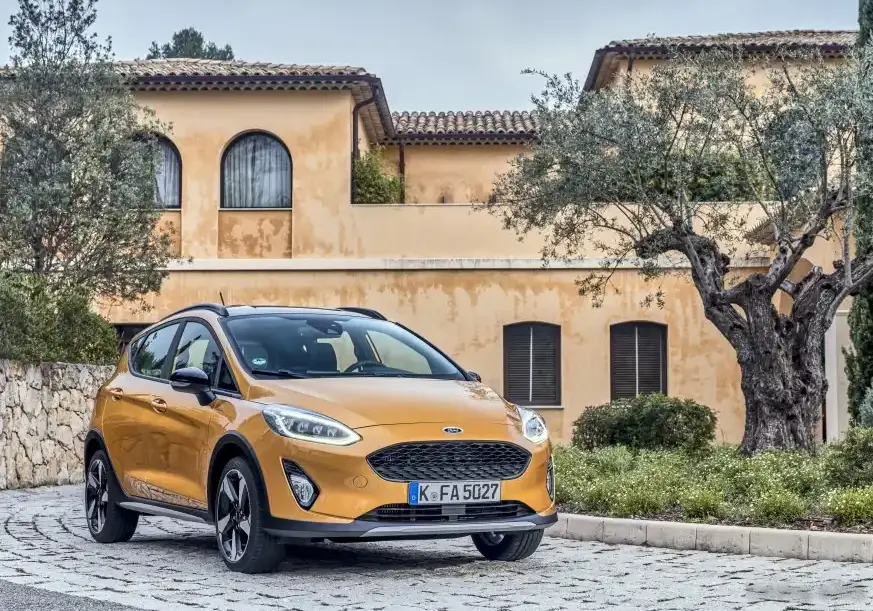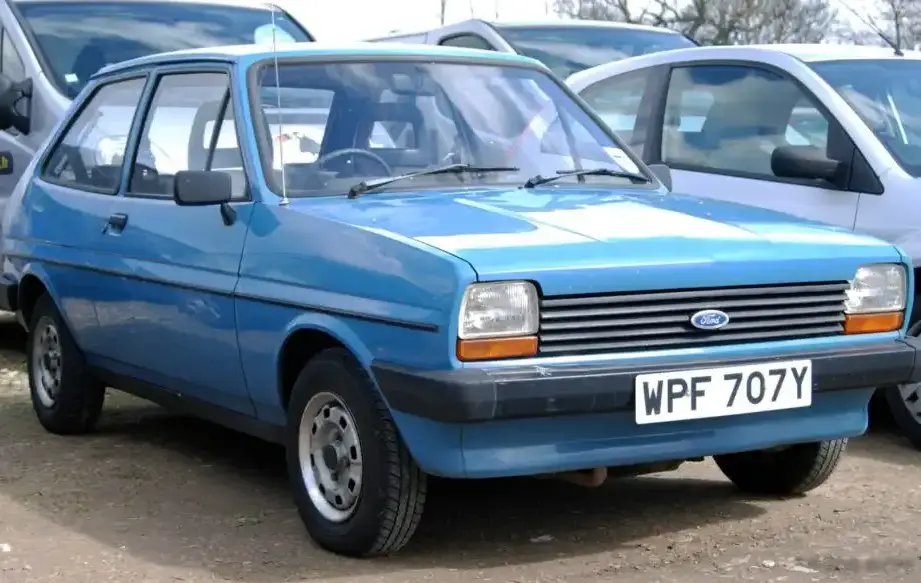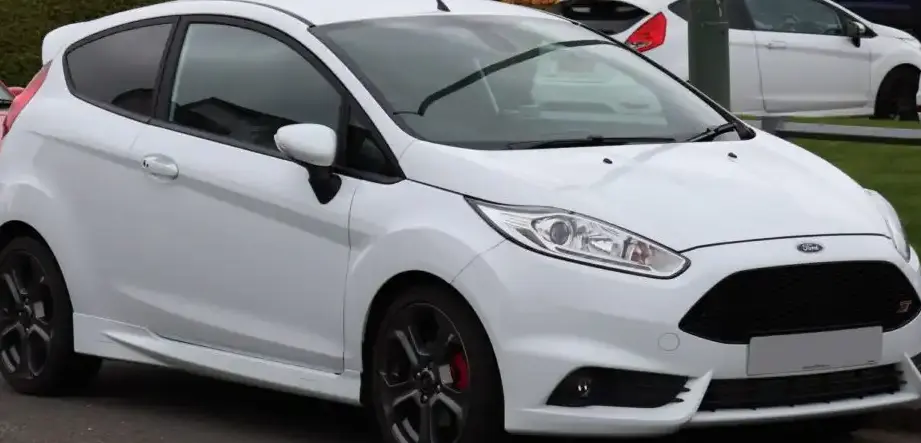
The Ford Fiesta VII, specifically the 3-door 1.6 TDCi (95 hp) ECOnetic model produced from 2013 to 2017, represented a key offering in Ford’s European small car lineup. This variant was part of the Mk7 Fiesta’s facelift, building upon the already successful sixth-generation model (launched in 2008). The ECOnetic designation signified Ford’s focus on fuel efficiency and reduced emissions, making this a popular choice for economy-minded drivers. Positioned as a mid-range trim, it offered a balance between affordability and features, slotting below the more powerful petrol variants and above the base-level models.
Technical Specifications
| Brand | Ford |
| Model | Fiesta |
| Generation | Fiesta VII (Mk7, facelift 2013) 3 door |
| Type (Engine) | 1.6 TDCi (95 Hp) ECOnetic |
| Start of production | 2013 |
| End of production | 2017 |
| Powertrain Architecture | Internal Combustion engine |
| Body type | Hatchback |
| Seats | 5 |
| Doors | 3 |
| Fuel consumption (urban) | 3.8 l/100 km (61.9 US mpg, 74.3 UK mpg, 26.3 km/l) |
| Fuel consumption (extra urban) | 3.1 l/100 km (75.9 US mpg, 91.1 UK mpg, 32.3 km/l) |
| Fuel consumption (combined) | 3.3 l/100 km (71.3 US mpg, 85.6 UK mpg, 30.3 km/l) |
| CO2 emissions | 87 g/km |
| Fuel Type | Diesel |
| Acceleration 0 – 100 km/h | 12.9 sec |
| Acceleration 0 – 62 mph | 12.9 sec |
| Acceleration 0 – 60 mph | 12.3 sec |
| Maximum speed | 178 km/h (110.6 mph) |
| Emission standard | Euro 5 |
| Weight-to-power ratio | 10.9 kg/Hp, 92 Hp/tonne |
| Weight-to-torque ratio | 5.2 kg/Nm, 193.6 Nm/tonne |
| Power | 95 Hp @ 3800 rpm |
| Power per litre | 60.9 Hp/l |
| Torque | 200 Nm @ 1750-3000 rpm (147.51 lb.-ft. @ 1750-3000 rpm) |
| Engine layout | Front, Transverse |
| Engine Model/Code | TZJA, T3DA, T3DB |
| Engine displacement | 1560 cm3 (95.2 cu. in.) |
| Number of cylinders | 4 |
| Engine configuration | Inline |
| Number of valves per cylinder | 4 |
| Fuel injection system | Diesel Commonrail |
| Engine aspiration | Turbocharger, Intercooler |
| Engine oil capacity | 3.85 l (4.07 US qt | 3.39 UK qt) |
| Kerb Weight | 1033 kg (2277.38 lbs.) |
| Max. weight | 1560 kg (3439.21 lbs.) |
| Max load | 527 kg (1161.84 lbs.) |
| Trunk (boot) space – minimum | 281 l (9.92 cu. ft.) |
| Trunk (boot) space – maximum | 965 l (34.08 cu. ft.) |
| Fuel tank capacity | 40 l (10.57 US gal | 8.8 UK gal) |
| Length | 3969 mm (156.26 in.) |
| Width | 1722 mm (67.8 in.) |
| Width with mirrors folded | 1787 mm (70.35 in.) |
| Width including mirrors | 1973 mm (77.68 in.) |
| Height | 1495 mm (58.86 in.) |
| Wheelbase | 2489 mm (97.99 in.) |
| Minimum turning circle | 10.2 m (33.46 ft.) |
| Drivetrain Architecture | Front wheel drive |
| Number of gears | 5 gears, manual transmission |
| Front suspension | Independent, type McPherson with coil spring and anti-roll bar |
| Rear suspension | Coil spring, Torsion |
| Front brakes | Ventilated discs |
| Rear brakes | Drum |
| Assisting systems | ABS (Anti-lock braking system) |
| Steering type | Steering rack and pinion |
| Power steering | Electric Steering |
| Tires size | 175/65 R14; 195/55 R15 |
| Wheel rims size | 5.5J x 14; 6J x 15 |
Powertrain & Engine Architecture
The heart of the Fiesta 1.6 TDCi ECOnetic is the 1.6-liter Duratorq diesel engine, specifically the TZJA, T3DA, or T3DB engine code depending on the specific market and year. This engine is a four-cylinder, inline configuration with four valves per cylinder. It utilizes a common rail direct injection system, delivering fuel at extremely high pressure for optimized combustion. A turbocharger with an intercooler is employed to boost power and torque, providing a reasonable level of performance for its displacement. The engine’s design prioritized efficiency, featuring low-friction components and optimized combustion chamber geometry. The 5-speed manual transmission was the standard offering, chosen for its efficiency and cost-effectiveness. The gear ratios were tuned to maximize fuel economy, with a relatively long final drive.
Driving Characteristics
The 95 hp output and 200 Nm (147.51 lb-ft) of torque provided adequate, though not exhilarating, performance. Acceleration from 0-60 mph took around 12.3 seconds, and the top speed was approximately 110.6 mph. The ECOnetic trim focused on fuel economy rather than outright speed. The engine felt responsive at lower RPMs thanks to the turbocharger, making it suitable for everyday driving. However, it did require downshifting for quicker acceleration or when tackling inclines. Compared to the 1.0 EcoBoost petrol variants, the 1.6 TDCi offered more torque lower in the rev range, making it feel more effortless in certain situations. However, the petrol engines generally provided quicker acceleration and a more refined driving experience. The manual transmission was smooth and precise, contributing to a pleasant driving experience.
Equipment & Trim Levels
The ECOnetic trim level typically included standard features such as air conditioning, power steering, electric front windows, and a basic audio system. Safety features included ABS, airbags, and stability control. The interior upholstery was typically cloth, with a functional and durable design. Optional extras included alloy wheels, upgraded audio systems, and parking sensors. The dashboard layout was typical of the Mk7 Fiesta, with a clear and straightforward design. The ECOnetic models often featured specific trim details, such as unique seat fabrics and badging, to differentiate them from other variants.
Chassis & Braking
The Fiesta 1.6 TDCi ECOnetic utilized a McPherson strut front suspension and a torsion beam rear suspension. This setup provided a good balance between ride comfort and handling. The front brakes were ventilated discs, while the rear brakes were drums. This configuration was common for vehicles in this weight class and price range. The electric power steering provided light and precise steering feel. The ECOnetic models were often fitted with low rolling resistance tires to further improve fuel economy.
Market Reception & Comparison
The Fiesta 1.6 TDCi ECOnetic was generally well-received by critics for its fuel efficiency and affordability. It was praised for its ability to deliver low running costs, making it an attractive option for budget-conscious buyers. However, some critics noted that the engine lacked the refinement and performance of some of its competitors. Compared to other Fiesta trims, such as the 1.0 EcoBoost, the 1.6 TDCi offered better fuel economy but less power and refinement. The 1.6 TDCi was also generally more reliable than some of the more complex petrol engine options.
Legacy
The 1.6 TDCi engine, while generally reliable, has been known to exhibit issues with the diesel particulate filter (DPF) if not properly maintained, particularly with frequent short journeys. Regular servicing and the use of quality diesel fuel are crucial for ensuring the longevity of this powertrain. Today, the Fiesta 1.6 TDCi ECOnetic remains a popular choice in the used car market, offering a practical and economical option for those seeking a small, fuel-efficient hatchback. Its reputation for reliability and low running costs continues to make it a desirable vehicle for many buyers.