Technical Specifications
| Brand | Ford |
| Model | Fiesta |
| Generation | Fiesta VII (Mk7, facelift 2013) 5 door |
| Type (Engine) | 1.0 EcoBoost (125 Hp) |
| Start of production | 2013 |
| End of production | 2017 |
| Powertrain Architecture | Internal Combustion engine |
| Body type | Hatchback |
| Seats | 5 |
| Doors | 5 |
| Fuel consumption (urban) | 5.3 l/100 km (44.4 US mpg, 53.3 UK mpg, 18.9 km/l) |
| Fuel consumption (extra urban) | 3.7 l/100 km (63.6 US mpg, 76.3 UK mpg, 27 km/l) |
| Fuel consumption (combined) | 4.3 l/100 km (54.7 US mpg, 65.7 UK mpg, 23.3 km/l) |
| CO2 emissions | 99 g/km |
| Fuel Type | Petrol (Gasoline) |
| Acceleration 0 – 100 km/h | 9.4 sec |
| Acceleration 0 – 62 mph | 9.4 sec |
| Acceleration 0 – 60 mph | 8.9 sec |
| Maximum speed | 196 km/h (121.79 mph) |
| Emission standard | Euro 5 |
| Weight-to-power ratio | 8.1 kg/Hp, 123 Hp/tonne |
| Weight-to-torque ratio | 6 kg/Nm, 167.3 Nm/tonne |
| Power | 125 Hp @ 6000 rpm |
| Power per litre | 125.3 Hp/l |
| Torque | 170 Nm @ 1400-4500 rpm (125.39 lb.-ft. @ 1400-4500 rpm) |
| Engine layout | Front, Transverse |
| Engine Model/Code | M1JE, M1JH |
| Engine displacement | 998 cm3 (60.9 cu. in.) |
| Number of cylinders | 3 |
| Engine configuration | Inline |
| Number of valves per cylinder | 4 |
| Fuel injection system | Direct injection |
| Engine aspiration | Turbocharger, Intercooler |
| Engine oil capacity | 4.1 l (4.33 US qt | 3.61 UK qt) |
| Coolant capacity | 5.8 l (6.13 US qt | 5.1 UK qt) |
| Kerb Weight | 1016 kg (2239.9 lbs.) |
| Max. weight | 1555 kg (3428.19 lbs.) |
| Max load | 539 kg (1188.29 lbs.) |
| Trunk (boot) space – minimum | 281 l (9.92 cu. ft.) |
| Trunk (boot) space – maximum | 965 l (34.08 cu. ft.) |
| Fuel tank capacity | 42 l (11.1 US gal | 9.24 UK gal) |
| Permitted trailer load with brakes (12%) | 900 kg (1984.16 lbs.) |
| Permitted trailer load without brakes | 550 kg (1212.54 lbs.) |
| Length | 3969 mm (156.26 in.) |
| Width | 1722 mm (67.8 in.) |
| Width with mirrors folded | 1787 mm (70.35 in.) |
| Width including mirrors | 1973 mm (77.68 in.) |
| Height | 1495 mm (58.86 in.) |
| Wheelbase | 2489 mm (97.99 in.) |
| Minimum turning circle | 10.2 m (33.46 ft.) |
| Drivetrain Architecture | Front wheel drive |
| Number of gears and type of gearbox | 5 gears, manual transmission |
| Front suspension | Independent, type McPherson with coil spring and anti-roll bar |
| Rear suspension | Coil spring, Torsion |
| Front brakes | Ventilated discs |
| Rear brakes | Drum |
| Assisting systems | ABS (Anti-lock braking system) |
| Steering type | Steering rack and pinion |
| Power steering | Electric Steering |
| Tires size | 195/55 R15 |
| Wheel rims size | 6J x 15 |
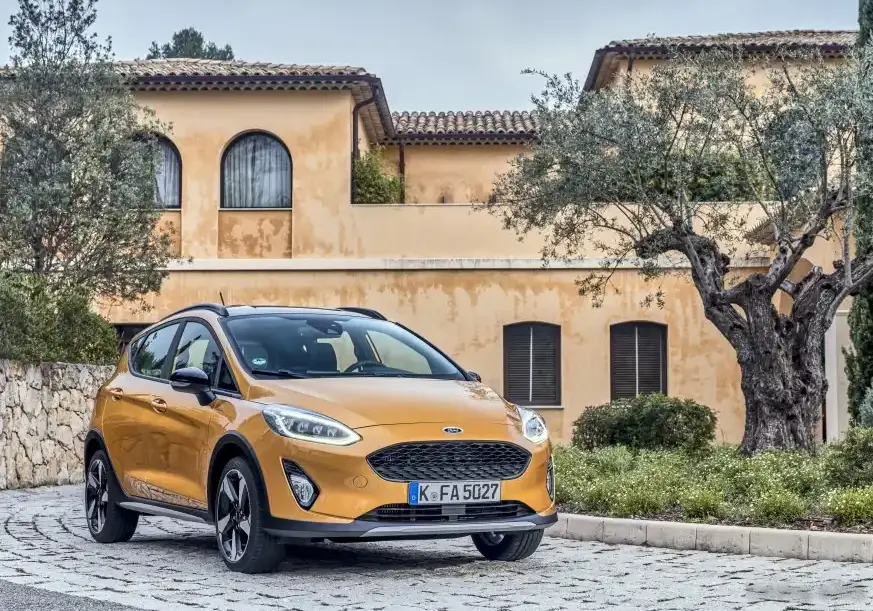
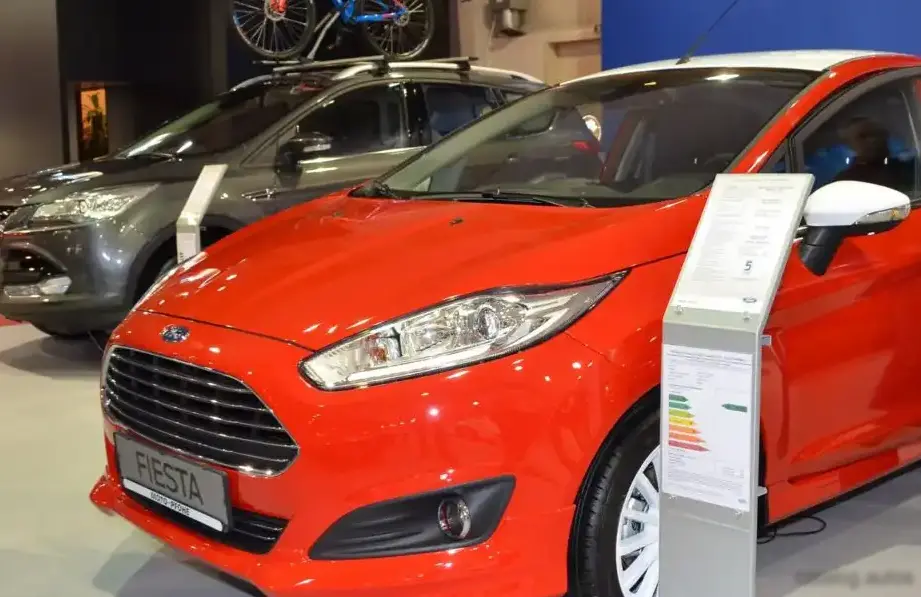
The Ford Fiesta Mk7, specifically the facelifted version produced from 2013 to 2017, represented a significant evolution of Ford’s popular subcompact. Among the various engine and trim combinations offered, the 5-door model equipped with the 1.0 EcoBoost 125 horsepower engine became a popular choice, particularly in European markets. This variant occupied a middle ground in the Fiesta lineup, offering a balance between fuel efficiency, performance, and affordability. It aimed to appeal to buyers seeking a modern, well-equipped hatchback without the higher costs associated with the more powerful ST models or the diesel options.
Powertrain & Engine Architecture
The 1.0 EcoBoost engine, introduced in the Fiesta Mk7 facelift, was a pivotal development for Ford. This small-displacement, turbocharged three-cylinder engine represented a shift towards downsizing and improved fuel economy without sacrificing performance. The 125 horsepower version, paired with a five-speed manual transmission, was offered in the popular 5-door body style from 2013 through 2017. This configuration aimed to provide a practical and efficient option for everyday driving, appealing to a broad range of customers. It sat comfortably between the base 1.25L naturally aspirated engine and the more potent 1.6L EcoBoost models. The engine is identified by the codes M1JE or M1JH, depending on the specific production year. This engine is a marvel of engineering, packing a turbocharger and direct fuel injection into a remarkably small package. The direct injection system, coupled with the turbocharger, allows for precise fuel control and increased power output. The engine features a cast iron block with an aluminum cylinder head, contributing to its durability and relatively lightweight construction. The valvetrain utilizes four valves per cylinder, enhancing breathing and overall efficiency. The five-speed manual transmission provides a traditional driving experience, with gear ratios tuned for a balance of acceleration and fuel economy. The turbocharger provides boost from as low as 1400 rpm, delivering a surprisingly responsive driving experience.
Driving Characteristics
The 1.0 EcoBoost 125 hp Fiesta offers a surprisingly lively driving experience. While not as quick as the higher-powered versions, it provides ample power for everyday driving situations. Acceleration from 0-60 mph takes around 8.9 seconds, which is respectable for a subcompact car. The turbocharger provides a noticeable boost in power, making overtaking maneuvers relatively effortless. The five-speed manual transmission is well-matched to the engine’s characteristics, offering smooth and precise gear changes. Compared to the base 1.25L engine, the 1.0 EcoBoost provides a significant improvement in performance. However, it doesn’t quite match the punch of the 1.6L EcoBoost models. The relatively low weight of the Fiesta contributes to its nimble handling and responsive steering. The engine’s torque curve is relatively flat, providing good pulling power across a wide range of engine speeds. This makes it a pleasant engine to drive in both urban and highway environments.
Equipment & Trim Levels
The 1.0 EcoBoost 125 hp Fiesta typically came equipped with a reasonable level of standard features. Depending on the specific trim level – commonly Ambiente, Trend, or Titanium – standard equipment could include air conditioning, power windows, power door locks, a basic audio system with USB connectivity, and alloy wheels. Higher trim levels, such as the Titanium, added features like automatic headlights, rain-sensing wipers, a more advanced audio system, and upgraded interior trim. Optional extras included navigation systems, parking sensors, and a panoramic sunroof. Interior upholstery typically consisted of cloth seats, with higher trims offering partial leather options. The Trend trim level often represented the sweet spot, offering a good balance of features and affordability.
Chassis & Braking
The Fiesta Mk7 utilizes a McPherson strut front suspension and a torsion beam rear suspension. This setup provides a good balance of ride comfort and handling. The front suspension incorporates a stabilizer bar to reduce body roll during cornering. The braking system consists of ventilated discs on the front wheels and drum brakes on the rear wheels. ABS (Anti-lock Braking System) is standard, providing enhanced braking performance in emergency situations. The electric power steering provides a light and responsive steering feel. The suspension tuning was generally geared towards comfort, but still provided adequate control in corners. The rear drum brakes were sufficient for most driving conditions, but higher-performance trims often featured rear disc brakes.
Market Reception & Comparison
The 1.0 EcoBoost Fiesta received generally positive reviews from automotive critics. It was praised for its fuel efficiency, surprisingly strong performance, and nimble handling. Critics noted that the engine, while small, provided ample power for most driving situations. Compared to the 1.25L engine, the 1.0 EcoBoost offered a significant improvement in performance and drivability. Compared to the 1.6L EcoBoost, it offered a more affordable price point and slightly better fuel economy. The 1.0 EcoBoost also proved to be a reliable engine, with relatively few reported issues. Some reviewers did note that the three-cylinder engine could be slightly rougher in operation compared to larger engines, but this was generally considered a minor trade-off for the fuel economy benefits.
Legacy
The 1.0 EcoBoost engine has proven to be a remarkably durable and reliable powertrain. Even today, well-maintained examples of the 1.0 EcoBoost Fiesta Mk7 are relatively common on the used car market. The engine’s fuel efficiency and low running costs continue to make it an attractive option for budget-conscious buyers. While some early examples experienced issues with timing belt failures, these were addressed with updated components in later production years. Overall, the 1.0 EcoBoost 125 hp Fiesta remains a practical, efficient, and enjoyable subcompact car. It represents a significant step forward in small-car technology, demonstrating that downsizing and turbocharging can deliver a compelling driving experience without sacrificing reliability or affordability.