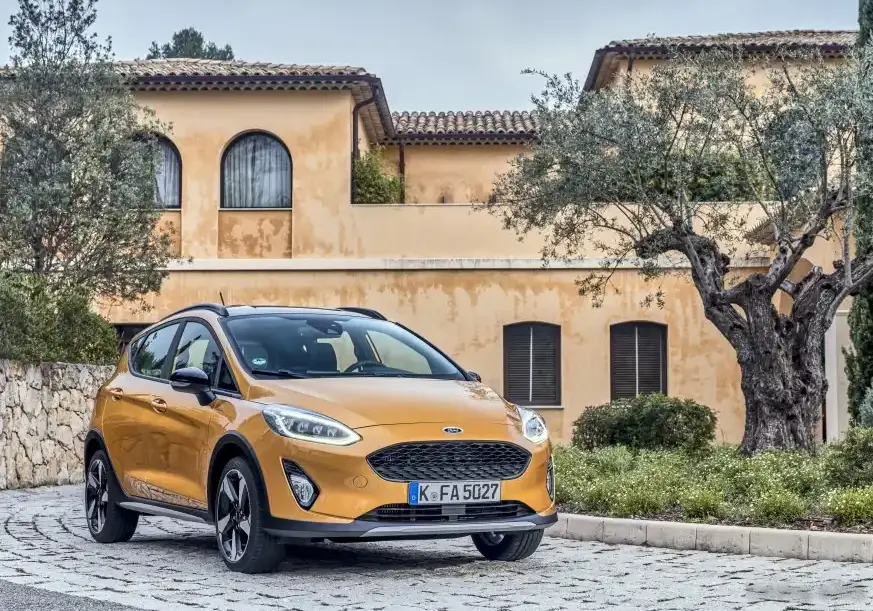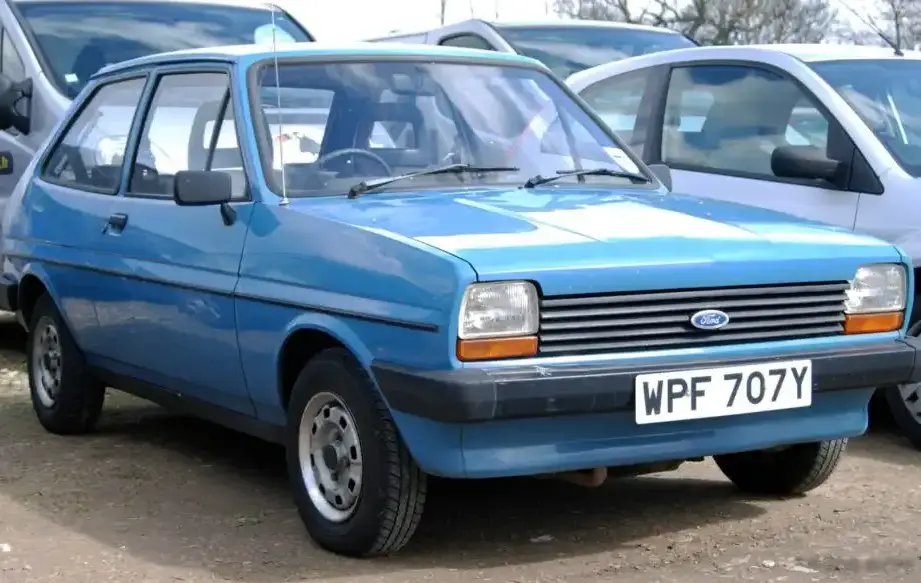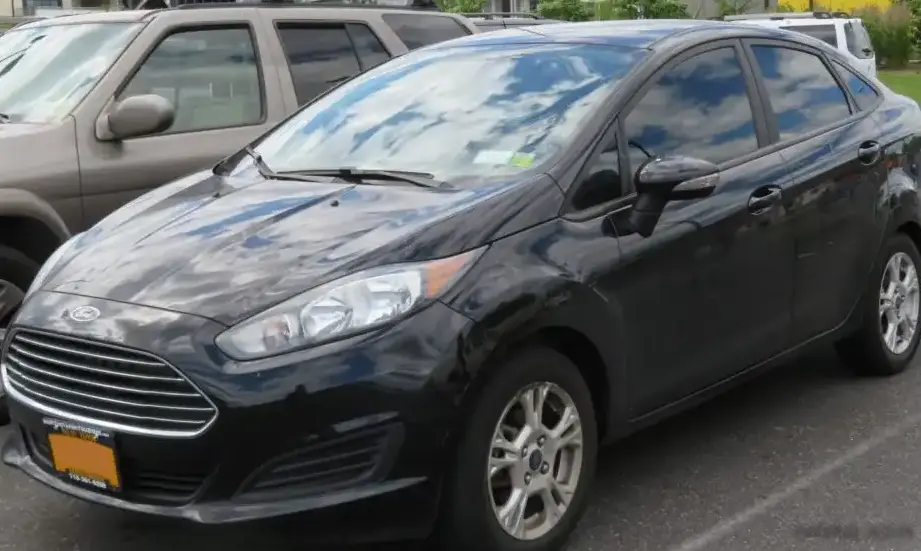
The Ford Fiesta VII Sedan (Mk7) 1.6, producing 105 horsepower, was a key variant in Ford’s global small car lineup from 2015 to 2017. Positioned as a mid-range offering, it bridged the gap between the base 1.5L engine and the more performance-oriented 1.0L EcoBoost variants. This sedan body style, while less common in the North American market, was primarily aimed at regions where trunk space and traditional sedan aesthetics were preferred, such as parts of Europe, South America, and Asia. The Mk7 Fiesta represented a significant step forward for the Fiesta line, built on the B2E platform, offering improved refinement, technology, and safety features compared to its predecessor.
Technical Specifications
| Brand | Ford |
| Model | Fiesta |
| Generation | Fiesta VII Sedan (Mk7) |
| Type (Engine) | 1.6 (105 Hp) |
| Start of production | 2015 year |
| End of production | 2017 year |
| Powertrain Architecture | Internal Combustion engine |
| Body type | Sedan |
| Seats | 5 |
| Doors | 4 |
| Fuel consumption (economy) – urban | 8.4 l/100 km (28 US mpg, 33.6 UK mpg, 11.9 km/l) |
| Fuel consumption (economy) – extra urban | 4.5 l/100 km (52.3 US mpg, 62.8 UK mpg, 22.2 km/l) |
| Fuel consumption (economy) – combined | 5.9 l/100 km (39.9 US mpg, 47.9 UK mpg, 16.9 km/l) |
| CO2 emissions | 137 g/km |
| Fuel Type | Petrol (Gasoline) |
| Acceleration 0 – 100 km/h | 11.4 sec |
| Acceleration 0 – 62 mph | 11.4 sec |
| Acceleration 0 – 60 mph | 10.8 sec |
| Maximum speed | 182 km/h (113.09 mph) |
| Weight-to-power ratio | 10.7 kg/Hp, 93.3 Hp/tonne |
| Weight-to-torque ratio | 7.5 kg/Nm, 133.3 Nm/tonne |
| Power | 105 Hp @ 6000 rpm |
| Power per litre | 65.8 Hp/l |
| Torque | 150 Nm @ 4000-4500 rpm (110.63 lb.-ft. @ 4000-4500 rpm) |
| Engine layout | Front, Transverse |
| Engine displacement | 1596 cm3 (97.39 cu. in.) |
| Number of cylinders | 4 |
| Engine configuration | Inline |
| Cylinder Bore | 79 mm (3.11 in.) |
| Piston Stroke | 81.4 mm (3.2 in.) |
| Compression ratio | 11:1 |
| Number of valves per cylinder | 4 |
| Fuel injection system | Multi-port manifold injection |
| Engine aspiration | Naturally aspirated engine |
| Engine oil capacity | 4.1 l (4.33 US qt | 3.61 UK qt) |
| Coolant | 5.8 l (6.13 US qt | 5.1 UK qt) |
| Kerb Weight | 1125 kg (2480.2 lbs.) |
| Trunk (boot) space – minimum | 455 l (16.07 cu. ft.) |
| Fuel tank capacity | 45 l (11.89 US gal | 9.9 UK gal) |
| Length | 4320 mm (170.08 in.) |
| Width | 1722 mm (67.8 in.) |
| Height | 1489 mm (58.62 in.) |
| Wheelbase | 2489 mm (97.99 in.) |
| Front track | 1473 mm (57.99 in.) |
| Rear (Back) track | 1461 mm (57.52 in.) |
| Minimum turning circle | 10.1 m (33.14 ft.) |
| Drivetrain Architecture | The Internal combustion engine (ICE) drives the front wheels of the vehicle. |
| Drive wheel | Front wheel drive |
| Number of gears and type of gearbox | 5 gears, manual transmission |
| Front suspension | Independent type McPherson |
| Rear suspension | Semi-independent, coil spring |
| Front brakes | Ventilated discs |
| Rear brakes | Drum |
| Assisting systems | ABS (Anti-lock braking system) |
| Steering type | Steering rack and pinion |
| Power steering | Electric Steering |
| Tires size | 195/55 R15 |
| Wheel rims size | 15 |
Powertrain & Engine Architecture
The heart of the Fiesta 1.6 was the Duratec 1.6-liter inline-four cylinder engine. This engine, while not a cutting-edge design, was known for its reliability and relatively low maintenance costs. The engine code varied by region, but it generally fell within the HXDA family. It utilized a multi-port fuel injection system, delivering fuel directly into the intake ports, and a single overhead camshaft (SOHC) valvetrain with four valves per cylinder. This configuration provided a reasonable balance between performance and fuel efficiency. The 105 horsepower output was achieved at 6000 rpm, with peak torque of 150 Nm (110.63 lb-ft) available between 4000 and 4500 rpm. The five-speed manual transmission was the standard offering, providing a fairly conventional gear ratio spread. The transmission was chosen for its durability and cost-effectiveness, rather than for sporty performance.
Driving Characteristics
The Fiesta 1.6 offered a comfortable, if not particularly exciting, driving experience. Acceleration from 0-60 mph took around 10.8 seconds, making it adequate for everyday driving but not a performance leader. The engine felt reasonably responsive in the mid-range, providing enough power for overtaking maneuvers. However, it did require the driver to downshift to maintain momentum when climbing hills or carrying a full load. The five-speed manual transmission had a relatively long throw, but the shift quality was generally smooth. Compared to the more powerful EcoBoost variants, the 1.6 felt noticeably slower, but it offered a more linear power delivery and a more forgiving nature for less experienced drivers. The suspension was tuned for comfort, absorbing bumps and imperfections in the road well, but it didn’t offer the same level of handling precision as some of its rivals.
Equipment & Trim Levels
The 1.6-liter Fiesta typically came in a mid-range trim level, often designated as “Comfort” or “Trend” depending on the market. Standard features generally included air conditioning, power windows, central locking, and a basic audio system with USB connectivity. Safety features such as ABS and front airbags were also standard. Optional extras included alloy wheels, a more advanced audio system, and parking sensors. Interior upholstery was typically cloth, with a relatively simple dashboard design. The overall interior ambiance was functional and practical, rather than luxurious.
Chassis & Braking
The Fiesta Mk7 utilized a McPherson strut front suspension and a semi-independent coil spring rear suspension. This setup provided a good balance between ride comfort and handling. The front brakes were ventilated discs, offering adequate stopping power, while the rear brakes were drums, a cost-saving measure common in this segment. The electric power steering provided light and easy steering, making it ideal for urban driving. The chassis was relatively lightweight, contributing to the car’s overall fuel efficiency.
Market Reception & Comparison
The Fiesta 1.6 was generally well-received by critics as a sensible and affordable small car. It was praised for its fuel efficiency, reliability, and comfortable ride. However, it was often criticized for its lack of performance and its somewhat bland styling. Compared to the 1.0L EcoBoost variants, the 1.6 offered less power and excitement, but it was also more affordable and potentially more reliable in the long run. Against competitors like the Volkswagen Polo and Opel Corsa, the Fiesta 1.6 held its own in terms of value for money and practicality.
Legacy
The Duratec 1.6-liter engine proved to be a durable and reliable unit, and many examples are still on the road today. While not a particularly exciting engine, it offered a good balance of performance, fuel efficiency, and affordability. The Fiesta Mk7 1.6 remains a popular choice in the used car market, particularly for buyers looking for a practical and economical small car. Maintenance costs are generally low, and parts availability is good. However, potential buyers should be aware of the possibility of age-related issues, such as worn suspension components and corrosion.