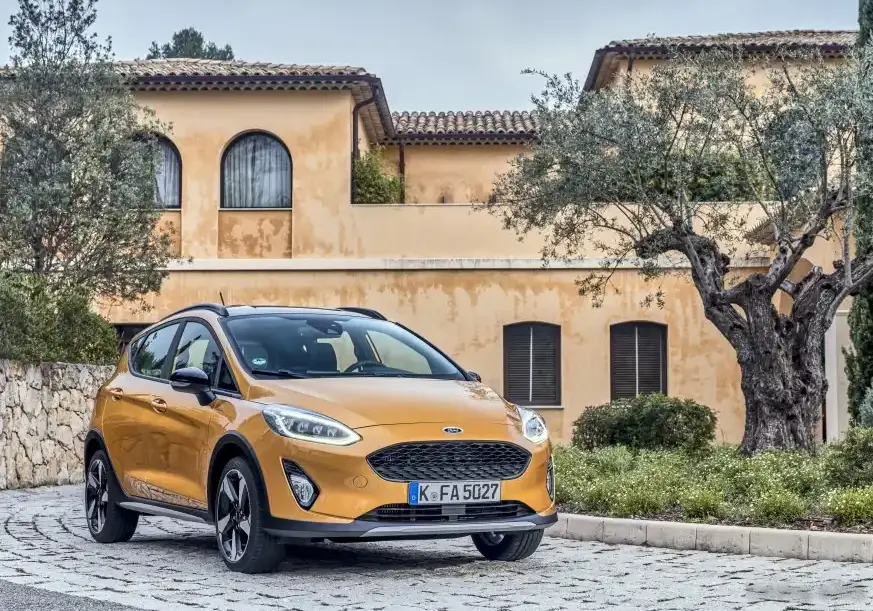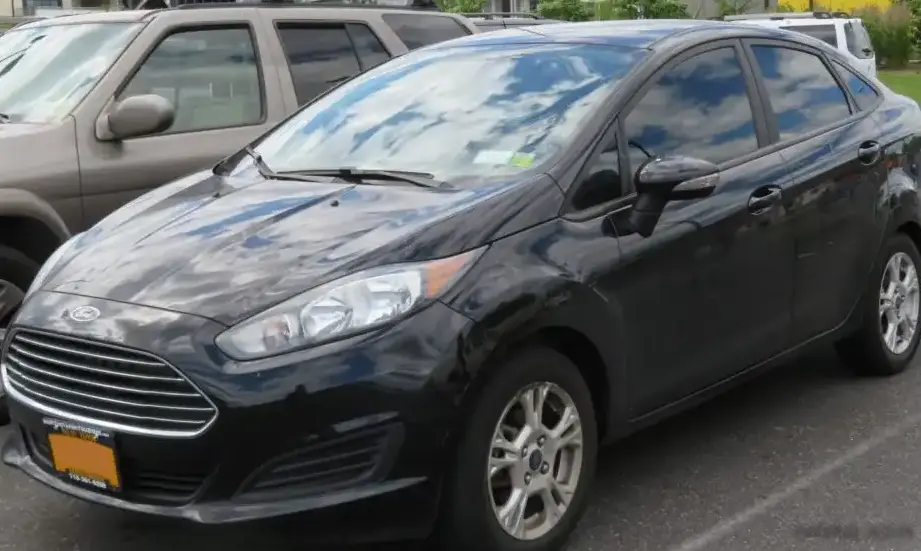
The Ford Fiesta VII Sedan (Mk7) 1.6, producing 85 horsepower, was a subcompact car offered by Ford between 2015 and 2017. Positioned as an entry-level offering within the Mk7 Fiesta sedan range, it primarily served markets outside of North America where the Fiesta sedan remained in production for a longer period. This variant was built on the global Ford B-platform, also known as the 1HX0/A3 platform, which underpinned a variety of small Ford vehicles worldwide. The 1.6L engine and manual transmission combination aimed to provide affordable and efficient transportation for first-time buyers or those seeking a practical city car.
Technical Specifications
| Brand | Ford |
| Model | Fiesta |
| Generation | Fiesta VII Sedan (Mk7) |
| Type (Engine) | 1.6 (85 Hp) |
| Start of production | 2015 |
| End of production | 2017 |
| Powertrain Architecture | Internal Combustion engine |
| Body type | Sedan |
| Seats | 5 |
| Doors | 4 |
| Fuel consumption (urban) | 8.4 l/100 km (28 US mpg, 33.6 UK mpg, 11.9 km/l) |
| Fuel consumption (extra urban) | 4.5 l/100 km (52.3 US mpg, 62.8 UK mpg, 22.2 km/l) |
| Fuel consumption (combined) | 5.9 l/100 km (39.9 US mpg, 47.9 UK mpg, 16.9 km/l) |
| CO2 emissions | 137 g/km |
| Fuel Type | Petrol (Gasoline) |
| Acceleration 0 – 100 km/h | 12.8 sec |
| Acceleration 0 – 62 mph | 12.8 sec |
| Acceleration 0 – 60 mph | 12.2 sec |
| Maximum speed | 171 km/h (106.25 mph) |
| Weight-to-power ratio | 13.2 kg/Hp, 75.6 Hp/tonne |
| Weight-to-torque ratio | 8 kg/Nm, 125.3 Nm/tonne |
| Power | 85 Hp @ 6000 rpm |
| Power per litre | 53.3 Hp/l |
| Torque | 141 Nm @ 2500 rpm (104 lb.-ft. @ 2500 rpm) |
| Engine layout | Front, Transverse |
| Engine displacement | 1596 cm3 (97.39 cu. in.) |
| Number of cylinders | 4 |
| Engine configuration | Inline |
| Cylinder Bore | 79 mm (3.11 in.) |
| Piston Stroke | 81.4 mm (3.2 in.) |
| Compression ratio | 11:1 |
| Number of valves per cylinder | 4 |
| Fuel injection system | Multi-port manifold injection |
| Engine aspiration | Naturally aspirated engine |
| Engine oil capacity | 4.1 l (4.33 US qt | 3.61 UK qt) |
| Coolant | 5.8 l (6.13 US qt | 5.1 UK qt) |
| Kerb Weight | 1125 kg (2480.2 lbs.) |
| Trunk (boot) space – minimum | 455 l (16.07 cu. ft.) |
| Fuel tank capacity | 45 l (11.89 US gal | 9.9 UK gal) |
| Length | 4320 mm (170.08 in.) |
| Width | 1722 mm (67.8 in.) |
| Height | 1489 mm (58.62 in.) |
| Wheelbase | 2489 mm (97.99 in.) |
| Front track | 1473 mm (57.99 in.) |
| Rear (Back) track | 1461 mm (57.52 in.) |
| Minimum turning circle | 10.1 m (33.14 ft.) |
| Drivetrain Architecture | The Internal combustion engine (ICE) drives the front wheels of the vehicle. |
| Drive wheel | Front wheel drive |
| Number of gears and type of gearbox | 5 gears, manual transmission |
| Front suspension | Independent type McPherson |
| Rear suspension | Semi-independent, coil spring |
| Front brakes | Ventilated discs |
| Rear brakes | Drum |
| Assisting systems | ABS (Anti-lock braking system) |
| Steering type | Steering rack and pinion |
| Power steering | Electric Steering |
| Tires size | 195/55 R15 |
| Wheel rims size | 15 |
Powertrain & Engine Architecture
The Fiesta 1.6L engine, typically identified by engine codes like JQDA or JQDB depending on specific market variations, is a naturally aspirated, four-cylinder inline engine. It utilizes a multi-port fuel injection system, a relatively simple and reliable technology for its time. The engine features a single overhead camshaft (SOHC) design with four valves per cylinder, contributing to reasonable efficiency and power output for its displacement. The 85 horsepower output is achieved at 6000 rpm, while peak torque of 141 Nm (104 lb-ft) is delivered at 2500 rpm. This torque curve provides adequate low-end grunt for everyday driving. The engine is transversely mounted, driving the front wheels. The standard transmission for this variant was a five-speed manual gearbox, chosen for its affordability and fuel efficiency. While an automatic transmission was offered in some markets with the 1.6L engine, it was not commonly paired with the 85 hp version.
Driving Characteristics
The 1.6L 85 hp Fiesta Sedan offered modest performance. Acceleration from 0 to 60 mph took around 12.2 seconds, and top speed was approximately 106 mph. Compared to higher-output Fiesta variants, such as those equipped with the 1.0 EcoBoost engine, the 1.6L felt noticeably slower, particularly during overtaking maneuvers. The five-speed manual transmission was well-matched to the engine’s characteristics, providing adequate gear spacing for both city and highway driving. The gear ratios were optimized for fuel economy rather than outright performance. The steering was light and precise, making it easy to maneuver in urban environments. The suspension, while comfortable, wasn’t particularly sporty, prioritizing ride quality over handling precision.
Equipment & Trim Levels
The 1.6L Fiesta Sedan typically served as the base trim level. Standard equipment generally included air conditioning, power steering, electric front windows, a basic audio system with USB connectivity, and ABS brakes. Safety features like driver and passenger airbags were also standard. Interior upholstery was typically cloth, with a simple dashboard layout. Optional extras included alloy wheels, upgraded audio systems, and rear electric windows. Higher trim levels, such as the Titanium, offered more luxurious features like automatic climate control, upgraded interior trim, and parking sensors.
Chassis & Braking
The Fiesta Mk7 sedan utilized a McPherson strut front suspension and a semi-independent coil spring rear suspension. This setup provided a good balance between ride comfort and handling. The front brakes were ventilated discs, offering adequate stopping power, while the rear brakes were drums, a cost-saving measure common in entry-level vehicles. The electric power steering system provided light and responsive steering feel. The car’s relatively light weight (around 2480 lbs) helped to offset the modest engine output.
Market Reception & Comparison
The 1.6L Fiesta Sedan was generally well-received as an affordable and practical city car. Critics praised its fuel efficiency and ease of driving, but noted its lack of performance compared to more powerful variants. Compared to the 1.0 EcoBoost models, the 1.6L offered less power and refinement, but it was also typically less expensive to purchase and maintain. The 1.6L’s simplicity also meant fewer potential points of failure, contributing to its reputation for reliability. Fuel economy figures of around 39.9 US mpg combined were competitive for its class.
Legacy
The 1.6L Fiesta Sedan, while not a performance icon, proved to be a reliable and economical choice for many buyers. In the used car market, these models are often sought after for their affordability and low running costs. The engine itself is known for its durability, provided it has been properly maintained. While newer Fiesta models have adopted more advanced technologies, the Mk7 1.6L remains a practical and accessible option for those seeking a simple and dependable subcompact car.