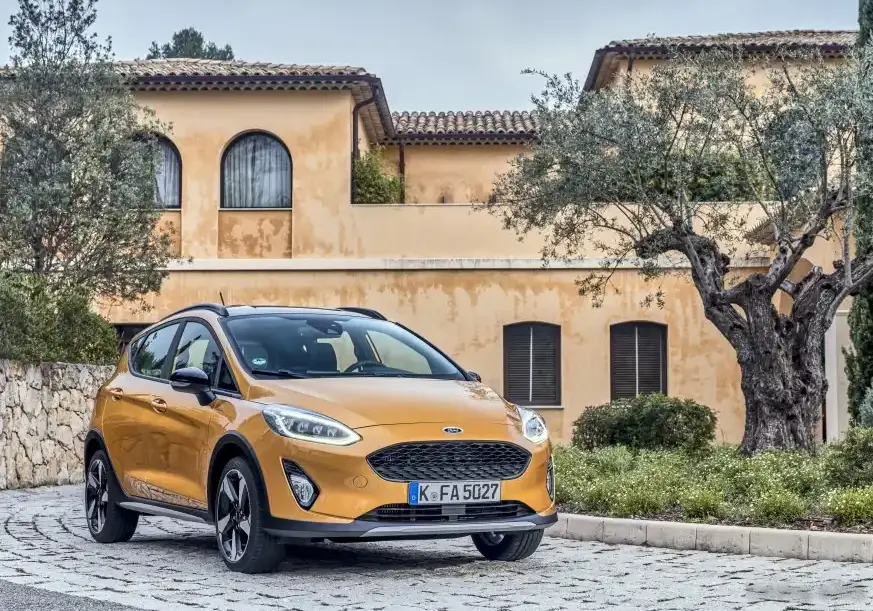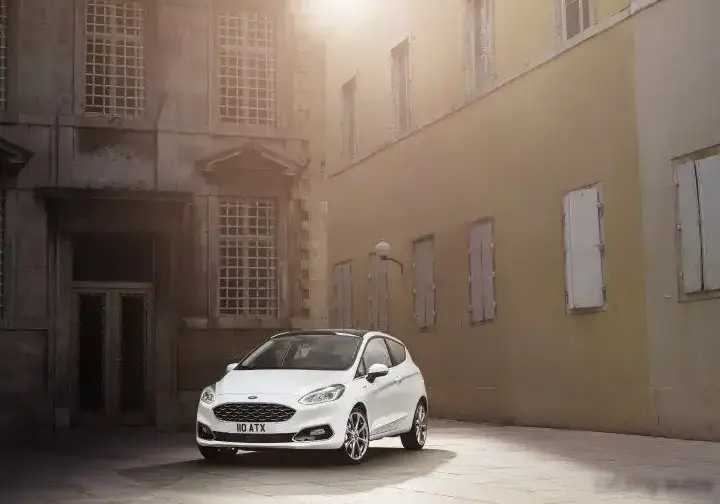
The Ford Fiesta Mk8, launched in late 2017 for the European market and 2019 for North America, represented a significant evolution for Ford’s long-running supermini. The 3-door 1.1 Ti-VCT (75 horsepower) variant, produced from October 2019 through 2021, served as the entry point into the Mk8 Fiesta range. Positioned as an affordable and fuel-efficient option, it targeted budget-conscious buyers and those prioritizing economy over outright performance. This model was part of the 1HX0/A3 platform generation, sharing underpinnings with other Ford models like the Puma. While the Fiesta has been discontinued in North America, it remains a popular choice in Europe and other global markets.
Technical Specifications
| Brand | Ford |
| Model | Fiesta |
| Generation | Fiesta VIII (Mk8) 3 door |
| Type (Engine) | 1.1 Ti-VCT (75 Hp) |
| Start of production | October, 2019 |
| End of production | 2021 |
| Powertrain Architecture | Internal Combustion engine |
| Body type | Hatchback |
| Seats | 5 |
| Doors | 3 |
| Fuel consumption at Low speed (WLTP) | 6.5 l/100 km (36.2 US mpg, 43.5 UK mpg, 15.4 km/l) |
| Fuel consumption at Medium speed (WLTP) | 5.1 l/100 km (46.1 US mpg, 55.4 UK mpg, 19.6 km/l) |
| Fuel consumption at high speed (WLTP) | 4.6 l/100 km (51.1 US mpg, 61.4 UK mpg, 21.7 km/l) |
| Fuel consumption at very high speed (WLTP) | 5.7 l/100 km (41.3 US mpg, 49.6 UK mpg, 17.5 km/l) |
| Combined fuel consumption (WLTP) | 5.3 l/100 km (44.4 US mpg, 53.3 UK mpg, 18.9 km/l) |
| CO2 emissions (WLTP) | 121 g/km |
| Fuel consumption (economy) – urban (NEDC) | 5.4-5.5 l/100 km (43.6 – 42.8 US mpg, 52.3 – 51.4 UK mpg, 18.5 – 18.2 km/l) |
| Fuel consumption (economy) – extra urban (NEDC) | 4-4.1 l/100 km (58.8 – 57.4 US mpg, 70.6 – 68.9 UK mpg, 25 – 24.4 km/l) |
| Fuel consumption (economy) – combined (NEDC) | 4.5-4.6 l/100 km (52.3 – 51.1 US mpg, 62.8 – 61.4 UK mpg, 22.2 – 21.7 km/l) |
| CO2 emissions (NEDC) | 102-106 g/km |
| Fuel Type | Petrol (Gasoline) |
| Acceleration 0 – 100 km/h | 14.5 sec |
| Acceleration 0 – 62 mph | 14.5 sec |
| Acceleration 0 – 60 mph | 13.8 sec |
| Maximum speed | 165 km/h (102.53 mph) |
| Emission standard | Euro 6d-ISC-FCM |
| Weight-to-power ratio | 14.4 kg/Hp, 69.6 Hp/tonne |
| Weight-to-torque ratio | 10.3 kg/Nm, 97.5 Nm/tonne |
| Power | 75 Hp @ 5500 rpm |
| Power per litre | 69.2 Hp/l |
| Torque | 105 Nm @ 3500 rpm (77.44 lb.-ft. @ 3500 rpm) |
| Engine layout | Front, Transverse |
| Engine Model/Code | FSJA, FSJB |
| Engine displacement | 1084 cm3 (66.15 cu. in.) |
| Number of cylinders | 3 |
| Engine configuration | Inline |
| Number of valves per cylinder | 4 |
| Fuel injection system | Multi-port manifold injection |
| Engine aspiration | Naturally aspirated engine |
| Valvetrain | DOHC |
| Engine oil capacity | 4.1 l (4.33 US qt, 3.61 UK qt) |
| Coolant | 5.5 l (5.81 US qt, 4.84 UK qt) |
| Kerb Weight | 1077 kg (2374.38 lbs.) |
| Max. weight | 1516 kg (3342.21 lbs.) |
| Max load | 439 kg (967.83 lbs.) |
| Trunk (boot) space – minimum | 292 l (10.31 cu. ft.) |
| Trunk (boot) space – maximum | 1093 l (38.6 cu. ft.) |
| Fuel tank capacity | 42 l (11.1 US gal, 9.24 UK gal) |
| Max. roof load | 50 kg (110.23 lbs.) |
| Length | 4040 mm (159.06 in.) |
| Width | 1735 mm (68.31 in.) |
| Width including mirrors | 1941 mm (76.42 in.) |
| Height | 1476 mm (58.11 in.) |
| Wheelbase | 2493 mm (98.15 in.) |
| Front overhang | 839 mm (33.03 in.) |
| Rear overhang | 708 mm (27.87 in.) |
| Ride height (ground clearance) | 133 mm (5.24 in.) |
| Minimum turning circle | 9.8 m (32.15 ft.) |
| Drivetrain Architecture | The Internal combustion engine (ICE) drives the front wheels of the vehicle. |
| Drive wheel | Front wheel drive |
| Number of gears and type of gearbox | 5 gears, manual transmission |
| Front suspension | Independent type McPherson, Transverse stabilizer |
| Rear suspension | Independent multi-link suspension, Transverse stabilizer |
| Assisting systems | ABS (Anti-lock braking system) |
| Steering type | Steering rack and pinion |
| Power steering | Electric Steering |
| Tires size | 195/60 R 15 |
| Wheel rims size | 6 J x 15 |
INTRODUCTION
The Ford Fiesta Mk8 1.1 Ti-VCT 75 hp 3-door model represents a core offering within the eighth generation of Ford’s globally successful Fiesta. Introduced in 2019, this variant was designed to provide an accessible and economical entry point to the Fiesta range. The 3-door body style, while becoming less common, offered a slightly sportier aesthetic and marginally reduced weight compared to the 5-door version. Powered by Ford’s 1.1-liter three-cylinder engine, this Fiesta aimed to balance affordability with reasonable fuel efficiency and everyday usability. It was a key competitor in the European supermini segment, facing rivals like the Volkswagen Polo, Renault Clio, and Peugeot 208.
Powertrain & Engine Architecture
At the heart of this Fiesta variant lies Ford’s 1.1-liter Ti-VCT (Titanium Intake Variable Camshaft Timing) three-cylinder petrol engine, designated as FSJA or FSJB depending on specific calibration. This engine is a member of Ford’s Dragon family, known for its compact design and efficiency. The engine utilizes multi-point fuel injection and a double overhead camshaft (DOHC) valvetrain with four valves per cylinder. The Ti-VCT system allows for variable control of the intake camshaft timing, optimizing performance and fuel economy across a wider range of engine speeds. The 75 horsepower output is achieved at 5500 rpm, with a peak torque of 105 Nm (77.44 lb-ft) delivered at 3500 rpm. The engine is paired with a 5-speed manual transmission, chosen for its simplicity and cost-effectiveness. The transmission features a conventional cable-operated shift mechanism.
Driving Characteristics
The 1.1 Ti-VCT engine, while adequate for urban driving, provides modest performance in the Fiesta. Acceleration from 0-60 mph takes approximately 13.8 seconds, and the top speed is around 102.53 mph. The engine feels somewhat strained when accelerating hard or climbing hills, requiring frequent downshifts to maintain momentum. The 5-speed gearbox is well-matched to the engine’s characteristics, offering a reasonable spread of ratios. However, the relatively long gearing contributes to the leisurely acceleration. Compared to higher-output Fiesta variants, such as the 1.0 EcoBoost models, the 1.1 Ti-VCT feels significantly less responsive. The manual transmission provides a more engaging driving experience than an automatic, but the overall driving experience is geared towards practicality and fuel economy rather than outright performance.
Equipment & Trim Levels
The 1.1 Ti-VCT 3-door Fiesta typically came equipped with a basic but functional level of standard features. These generally included power-assisted steering, ABS brakes, electronic stability control, front and rear electric windows, a basic audio system with Bluetooth connectivity, and air conditioning. Safety features such as multiple airbags were also standard. Higher trim levels, such as Trend or Titanium, added features like alloy wheels, a touchscreen infotainment system, cruise control, and parking sensors. Optional extras included a rear-view camera, upgraded audio systems, and various styling packages. Interior upholstery was typically cloth, with a relatively simple dashboard design.
Chassis & Braking
The Fiesta Mk8 utilizes a McPherson strut front suspension and an independent multi-link rear suspension. This setup provides a good balance of ride comfort and handling. The 1.1 Ti-VCT variant typically featured smaller diameter wheels and tires (195/60 R15) compared to higher-spec models. Braking duties are handled by disc brakes on the front wheels and drum brakes on the rear. ABS (Anti-lock Braking System) is standard, providing enhanced braking performance and stability. The suspension is tuned for comfort, resulting in a relatively soft ride quality. A transverse stabilizer bar is fitted to both the front and rear axles to reduce body roll during cornering.
Market Reception & Comparison
The 1.1 Ti-VCT Fiesta was generally well-received as an affordable and economical option. Critics praised its fuel efficiency and low running costs, but noted its lack of outright performance. Compared to the more popular 1.0 EcoBoost variants, the 1.1 Ti-VCT offered lower purchase price but significantly less power and refinement. The 1.0 EcoBoost engines, while more expensive, provided a more enjoyable driving experience and better fuel economy in real-world conditions. The 1.1 Ti-VCT was primarily targeted at buyers who prioritized affordability and fuel efficiency over performance and features. Its reliability was generally considered good, with the three-cylinder engine proving to be relatively robust.
Legacy
The 1.1 Ti-VCT Fiesta Mk8 remains a relatively common sight on used car markets. Its simple engine and transmission contribute to relatively low maintenance costs. While not known for its performance, the engine has proven to be reliable, and parts availability is generally good. The Fiesta Mk8, as a whole, established a strong reputation for its handling and overall refinement. The 1.1 Ti-VCT variant, while the entry-level model, provides a practical and economical transportation solution for budget-conscious buyers. Its continued presence in the used car market reflects its enduring appeal as a value-for-money supermini.