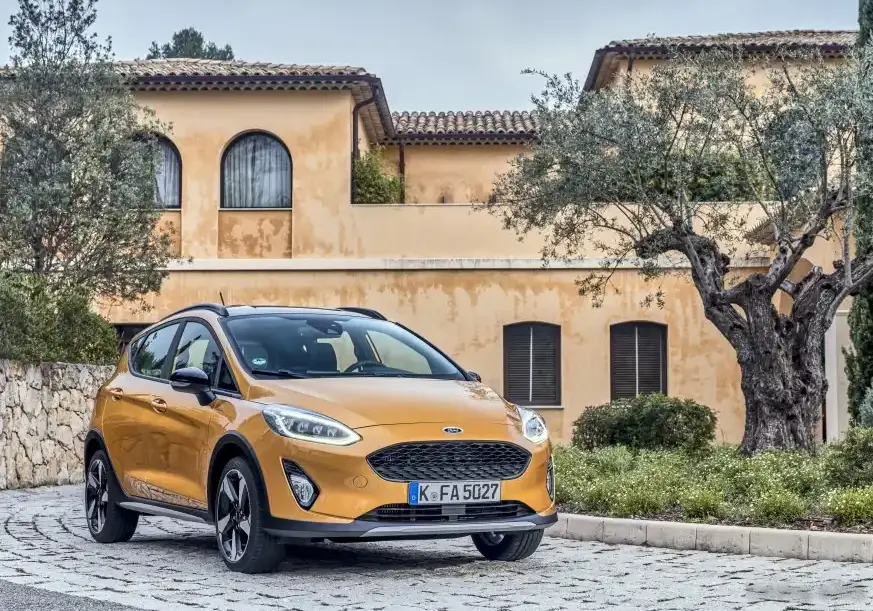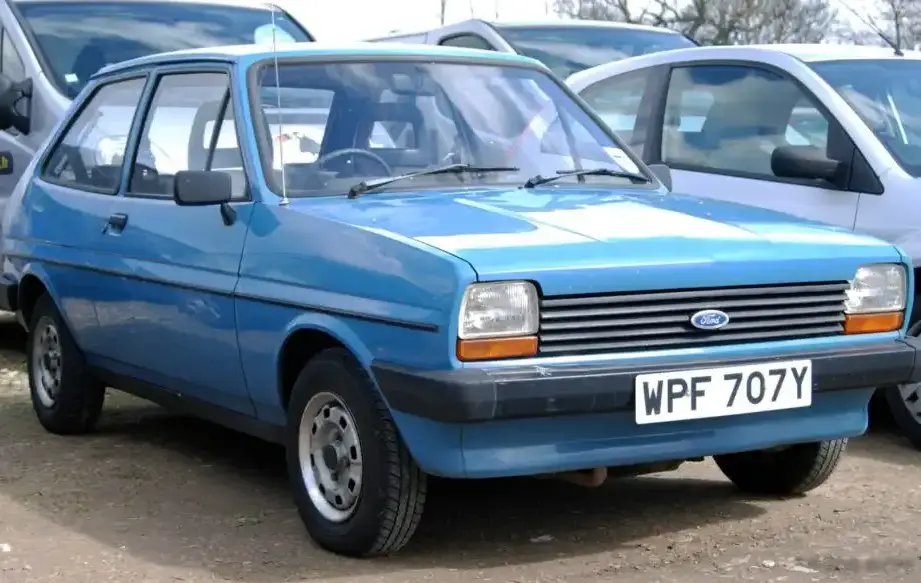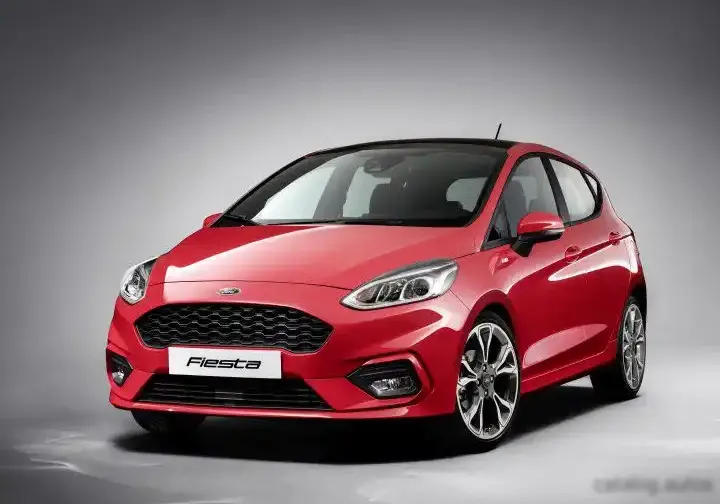
The Ford Fiesta Mk8, produced from 2017 to 2019, represented a significant evolution for Ford’s long-running supermini. The 1.1-liter (85 horsepower) Start-Stop variant, offered exclusively as a five-door hatchback, served as an entry point into the Mk8 range, prioritizing fuel efficiency and affordability. This model occupied the lower end of the Fiesta lineup, positioned below the 1.0 EcoBoost variants and the higher-performance ST models. It was primarily aimed at urban drivers and those seeking a low-cost-to-operate vehicle, particularly in European markets where smaller displacement engines were favored. The Mk8 Fiesta, built on the B720 platform, marked a departure from its predecessors with a more sophisticated design and a greater emphasis on technology.
Technical Specifications
| Brand | Ford |
| Model | Fiesta |
| Generation | Fiesta VIII (Mk8) 5 door |
| Type (Engine) | 1.1 (85 Hp) Start-Stop |
| Start of production | July, 2017 |
| End of production | October, 2019 |
| Powertrain Architecture | Internal Combustion engine |
| Body type | Hatchback |
| Seats | 5 |
| Doors | 5 |
| Fuel consumption (urban) | 5.6 l/100 km (42 US mpg, 50.4 UK mpg, 17.9 km/l) |
| Fuel consumption (extra urban) | 3.7 l/100 km (63.6 US mpg, 76.3 UK mpg, 27 km/l) |
| Fuel consumption (combined) | 4.4 l/100 km (53.5 US mpg, 64.2 UK mpg, 22.7 km/l) |
| CO2 emissions | 101 g/km |
| Fuel Type | Petrol (Gasoline) |
| Acceleration 0 – 100 km/h | 14 sec |
| Acceleration 0 – 62 mph | 14 sec |
| Acceleration 0 – 60 mph | 13.3 sec |
| Maximum speed | 170 km/h (105.63 mph) |
| Emission standard | Euro 6 |
| Weight-to-power ratio | 12.5 kg/Hp, 80.2 Hp/tonne |
| Weight-to-torque ratio | 9.6 kg/Nm, 103.8 Nm/tonne |
| Power | 85 Hp @ 6300 rpm |
| Power per litre | 78.4 Hp/l |
| Torque | 110 Nm @ 3500 rpm (81.13 lb.-ft. @ 3500 rpm) |
| Engine layout | Front, Transverse |
| Engine Model/Code | XYJA, XYJB, XYJC, XYJD, XYJE, XYJF |
| Engine displacement | 1084 cm3 (66.15 cu. in.) |
| Number of cylinders | 3 |
| Engine configuration | Inline |
| Cylinder Bore | 73 mm (2.87 in.) |
| Piston Stroke | 86.3 mm (3.4 in.) |
| Compression ratio | 12:1 |
| Number of valves per cylinder | 4 |
| Fuel injection system | Direct injection |
| Engine aspiration | Naturally aspirated engine |
| Valvetrain | DOHC, Ti-VCT |
| Engine oil capacity | 4.1 l (4.33 US qt | 3.61 UK qt) |
| Coolant | 5.5 l (5.81 US qt | 4.84 UK qt) |
| Kerb Weight | 1060-1135 kg (2336.9 – 2502.25 lbs.) |
| Max. weight | 1630-1640 kg (3593.53 – 3615.58 lbs.) |
| Max load | 505-570 kg (1113.33 – 1256.63 lbs.) |
| Trunk (boot) space – minimum | 303 l (10.7 cu. ft.) |
| Trunk (boot) space – maximum | 984 l (34.75 cu. ft.) |
| Fuel tank capacity | 42 l (11.1 US gal | 9.24 UK gal) |
| Max. roof load | 50 kg (110.23 lbs.) |
| Permitted trailer load with brakes (12%) | 750 kg (1653.47 lbs.) |
| Permitted trailer load without brakes | 565 kg (1245.61 lbs.) |
| Permitted towbar download | 65 kg (143.3 lbs.) |
| Length | 4040 mm (159.06 in.) |
| Width | 1735 mm (68.31 in.) |
| Width with mirrors folded | 1783 mm (70.2 in.) |
| Width including mirrors | 1941 mm (76.42 in.) |
| Height | 1476 mm (58.11 in.) |
| Wheelbase | 2493 mm (98.15 in.) |
| Drivetrain Architecture | The Internal combustion engine (ICE) drives the front wheels of the vehicle. |
| Drive wheel | Front wheel drive |
| Number of gears and type of gearbox | 5 gears, manual transmission |
| Front suspension | Independent, type McPherson with coil spring and anti-roll bar |
| Rear suspension | Semi-independent, coil spring, Elastic beam |
| Front brakes | Ventilated discs |
| Rear brakes | Drum |
| Assisting systems | ABS (Anti-lock braking system) |
| Steering type | Steering rack and pinion |
| Power steering | Electric Steering |
| Tires size | 195/60 R15; 195/55 R16; 205/45 R17; 205/40 R18 |
| Wheel rims size | 15J x 6; 16J x 6.5; 17J x 7; 18J x 7 |
Powertrain & Engine Architecture
The heart of this Fiesta variant is the 1.1-liter ‘Dragon’ three-cylinder petrol engine, specifically utilizing engine codes XYJA, XYJB, XYJC, XYJD, XYJE, and XYJF. This engine is a naturally aspirated unit featuring direct fuel injection and a double overhead camshaft (DOHC) valvetrain with Twin Independent Variable Camshaft Timing (Ti-VCT). The Ti-VCT system optimizes valve timing for improved performance and fuel economy across the engine’s operating range. The engine’s relatively high compression ratio of 12:1 contributes to its efficiency. The engine is transversely mounted at the front of the vehicle. The 1.1-liter engine was paired with a five-speed manual transmission, designed for smooth and efficient gear changes. The Start-Stop system automatically shuts off the engine when the vehicle is stationary (e.g., at traffic lights) to further reduce fuel consumption and emissions.
Driving Characteristics
The 1.1-liter Fiesta delivers modest performance, prioritizing fuel economy over outright speed. With 85 horsepower and 110 Nm (81 lb-ft) of torque, acceleration from 0 to 60 mph takes approximately 13.3 seconds, and 0-100 km/h in 14 seconds. The engine feels responsive enough for urban driving, but can feel strained when overtaking or climbing hills. The five-speed manual transmission is well-matched to the engine’s characteristics, offering reasonable gear spacing. Compared to the 1.0 EcoBoost variants, the 1.1 lacks the turbocharged punch and overall refinement, but it provides a simpler, more predictable driving experience. The gear ratios are tuned for economy, meaning the engine operates at relatively higher RPMs during highway cruising.
Equipment & Trim Levels
The 1.1-liter Fiesta typically came equipped with basic, but functional, features. Standard equipment generally included air conditioning, power front windows, a basic audio system with Bluetooth connectivity, and ABS brakes. Safety features such as Electronic Stability Control (ESC) were also standard. Interior upholstery was typically cloth, and the dashboard featured a simple, functional design. Optional extras included alloy wheels, upgraded audio systems, and parking sensors. Trim levels varied by market, but generally offered incremental upgrades in terms of interior trim and exterior styling.
Chassis & Braking
The Fiesta Mk8 utilizes a McPherson strut front suspension and a semi-independent elastic beam rear suspension. This setup provides a good balance between ride comfort and handling. The front brakes are ventilated discs, while the rear brakes are drums, a cost-saving measure typical of entry-level models. The electric power steering provides light and precise steering feel. Stabilizer bars are fitted to both the front and rear axles to reduce body roll during cornering.
Market Reception & Comparison
The 1.1-liter Fiesta was generally well-received as an affordable and economical city car. Critics praised its fuel efficiency and low running costs, but noted its lack of performance compared to higher-powered variants. Compared to the 1.0 EcoBoost models, the 1.1 offered lower purchase price and potentially lower maintenance costs, but at the expense of performance and refinement. The 1.0 EcoBoost offered significantly better fuel economy and acceleration, making it a more popular choice for drivers who prioritized performance. However, the 1.1’s simplicity and reliability appealed to a segment of buyers seeking a no-frills, dependable vehicle.
Legacy
The 1.1-liter Fiesta Mk8 powertrain has proven to be relatively reliable, with few widespread mechanical issues reported. The engine’s simplicity contributes to its durability. On the used car market, these models are typically available at very affordable prices, making them attractive to first-time buyers or those seeking a cheap and cheerful runabout. While not a performance icon, the 1.1-liter Fiesta Mk8 represents a practical and economical choice for urban driving, and its simplicity continues to appeal to a segment of the used car market.