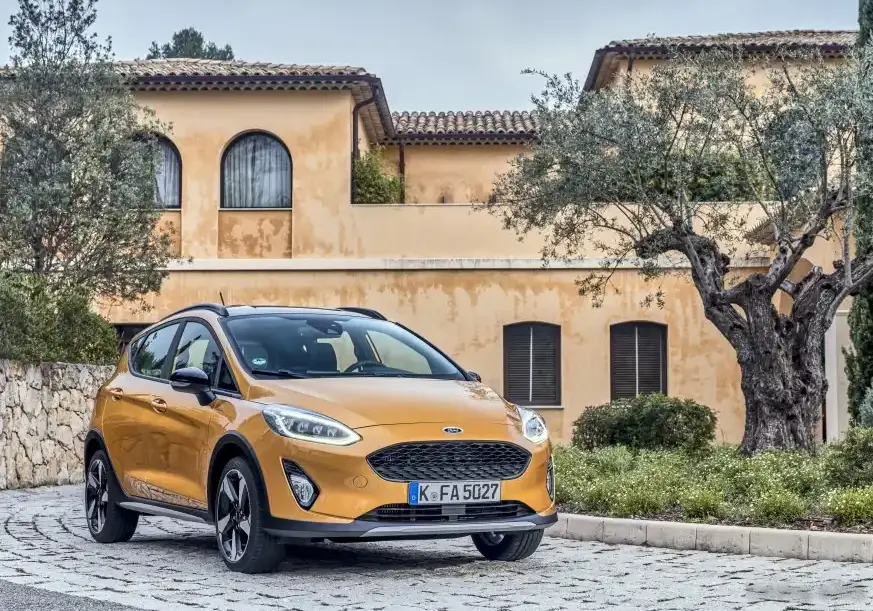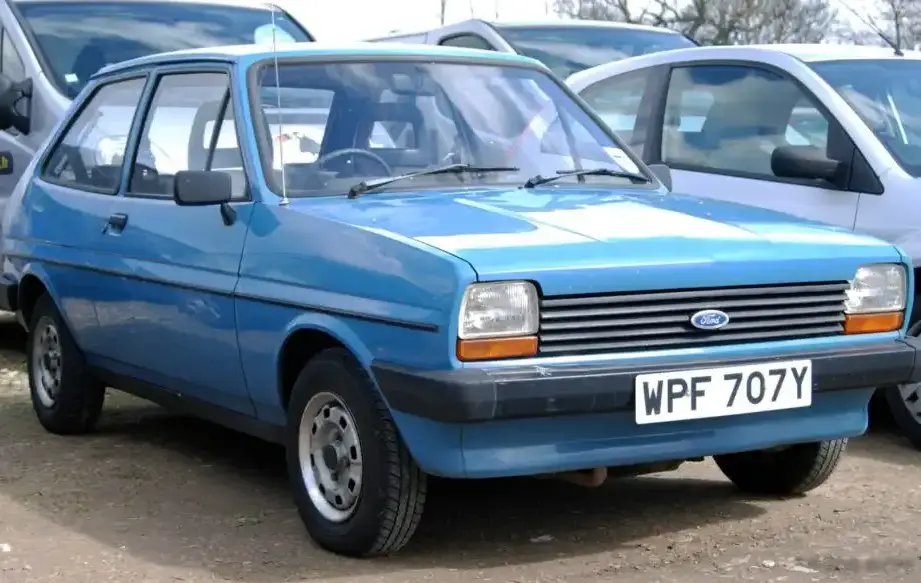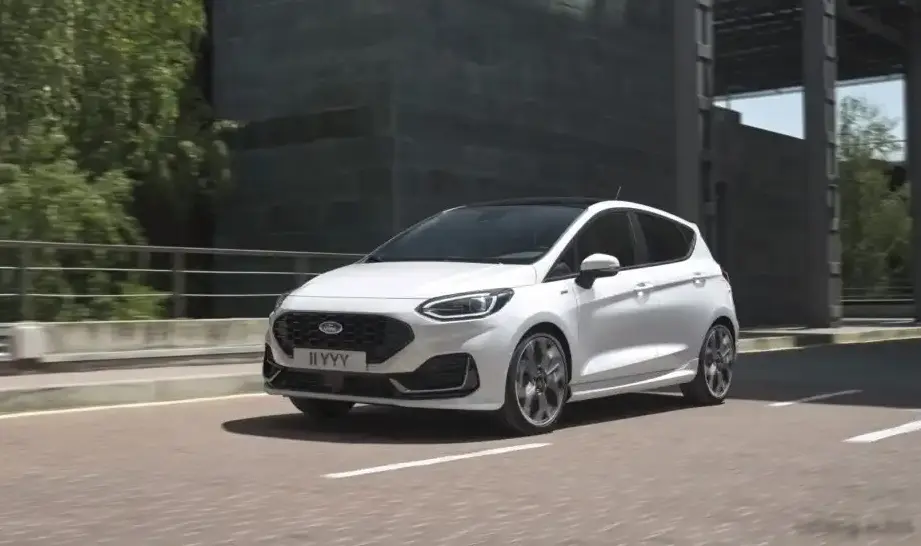
The Ford Fiesta VIII, specifically the facelifted model introduced in late 2021 and produced through July 2023, represented the final iteration of Ford’s long-running subcompact hatchback. Among the various engine and trim combinations offered, the 5-door 1.0 EcoBoost 125 hp Hybrid variant occupied a significant position in the lineup, appealing to buyers seeking a balance of fuel efficiency, reasonable performance, and modern features. This model, built on the global B-platform, aimed to provide an accessible entry point into the Fiesta range while incorporating Ford’s latest powertrain technology. It was primarily marketed in Europe and other regions where smaller, fuel-efficient vehicles are highly valued.
Technical Specifications
| Brand | Ford |
| Model | Fiesta |
| Generation | Fiesta VIII (Mk8, facelift 2022) 5 door |
| Type (Engine) | 1.0 EcoBoost (125 Hp) Hybrid |
| Start of production | November, 2021 |
| End of production | July, 2023 |
| Powertrain Architecture | MHEV (Mild Hybrid Electric Vehicle) |
| Body type | Hatchback |
| Seats | 5 |
| Doors | 5 |
| Fuel consumption at Low speed (WLTP) | 6.3-7.3 l/100 km (37.3 – 32.2 US mpg) |
| Fuel consumption at Medium speed (WLTP) | 4.6-5.5 l/100 km (51.1 – 42.8 US mpg) |
| Fuel consumption at high speed (WLTP) | 4.4-5.3 l/100 km (53.5 – 44.4 US mpg) |
| Fuel consumption at very high speed (WLTP) | 5.4-6.6 l/100 km (43.6 – 35.6 US mpg) |
| Combined fuel consumption (WLTP) | 5-6 l/100 km (47 – 39.2 US mpg) |
| CO2 emissions (WLTP) | 114-136 g/km |
| Fuel Type | Petrol (Gasoline) |
| Acceleration 0 – 100 km/h | 9.4 sec |
| Acceleration 0 – 62 mph | 9.4 sec |
| Acceleration 0 – 60 mph | 8.9 sec |
| Maximum speed | 200 km/h (124.27 mph) |
| Emission standard | Euro 6d-ISC-FCM |
| Weight-to-power ratio | 9.1 kg/Hp |
| Weight-to-torque ratio | 5.4 kg/Nm |
| Power | 125 Hp @ 6000 rpm |
| Torque | 210 Nm @ 1750 rpm (154.89 lb.-ft. @ 1750 rpm) |
| Engine layout | Front, Transverse |
| Engine Model/Code | B7JB |
| Engine displacement | 999 cm3 (60.96 cu. in.) |
| Number of cylinders | 3 |
| Engine configuration | Inline |
| Cylinder Bore | 71.9 mm (2.83 in.) |
| Piston Stroke | 82 mm (3.23 in.) |
| Compression ratio | 10.5:1 |
| Number of valves per cylinder | 4 |
| Fuel injection system | Direct injection |
| Engine aspiration | Turbocharger, Intercooler |
| Valvetrain | DOHC |
| Engine oil capacity | 4.52 l (4.78 US qt | 3.98 UK qt) |
| Coolant | 5.6 l (5.92 US qt | 4.93 UK qt) |
| Kerb Weight | 1136 kg (2504.45 lbs.) |
| Max. weight | 1690 kg (3725.81 lbs.) |
| Max load | 554 kg (1221.36 lbs.) |
| Trunk (boot) space – minimum | 292 l (10.31 cu. ft.) |
| Trunk (boot) space – maximum | 1093 l (38.6 cu. ft.) |
| Fuel tank capacity | 42 l (11.1 US gal | 9.24 UK gal) |
| Length | 4048-4069 mm (159.37 – 160.2 in.) |
| Width | 1735 mm (68.31 in.) |
| Height | 1484-1490 mm (58.43 – 58.66 in.) |
| Wheelbase | 2493 mm (98.15 in.) |
| Front suspension | Independent, type McPherson with coil spring and anti-roll bar |
| Rear suspension | Torsion |
| Front brakes | Ventilated discs, 262×23 mm |
| Rear brakes | Drum, 202.8 mm |
| Tires size | 195/60 R15; 205/45 R17 |
| Wheel rims size | 6J x 15; 7.5J x 17 |
| Number of gears and type of gearbox | 6 gears, manual transmission |
INTRODUCTION
The 1.0 EcoBoost 125 hp Hybrid variant of the Ford Fiesta Mk8 facelift, launched in November 2021, represented a key offering in Ford’s European and select global markets. Positioned as a mid-range option, it bridged the gap between the lower-powered EcoBoost engines and the more expensive, performance-oriented ST models. This version of the Fiesta was built upon the 1HX0/A3 platform, a versatile architecture shared with other Ford models like the Focus. The introduction of mild-hybrid technology aimed to improve fuel economy and reduce emissions without significantly impacting the driving experience. The facelift brought updated styling, enhanced technology, and refined powertrain options, solidifying the Fiesta’s position as a popular choice in the competitive subcompact segment.
Powertrain & Engine Architecture
At the heart of this Fiesta variant lies the 1.0-liter EcoBoost three-cylinder engine, designated with the code B7JB. This engine is a highly sophisticated design, featuring direct fuel injection, a single turbocharger with an intercooler, and a double overhead camshaft (DOHC) valvetrain. The mild-hybrid system incorporates a belt-driven integrated starter generator (BiSG) which assists the engine during acceleration and allows for extended periods of engine-off coasting, contributing to fuel savings. The engine produces 125 horsepower at 6000 rpm and 210 Nm (154.89 lb.-ft.) of torque at 1750 rpm. The BiSG system recovers energy during braking, storing it in a small 48-volt lithium-ion battery. The transmission is a 6-speed manual gearbox, chosen for its efficiency and driver engagement. Ford’s engineers focused on minimizing internal friction and optimizing combustion to maximize efficiency and reduce emissions.
Driving Characteristics
The 1.0 EcoBoost 125 hp Hybrid Fiesta offers a surprisingly lively driving experience for a small car. While not as quick as the higher-output EcoBoost or ST models, it provides sufficient power for everyday driving and even some spirited maneuvers. Acceleration from 0-60 mph takes approximately 8.9 seconds, and the car reaches a top speed of 124.27 mph. The turbocharger provides a noticeable boost in power, delivering strong acceleration from low to mid-range engine speeds. The manual transmission is well-matched to the engine’s characteristics, with precise shifts and a relatively short throw. The mild-hybrid system is largely seamless in operation, providing a subtle assist during acceleration. Compared to the lower-powered 75 hp or 100 hp EcoBoost variants, the 125 hp version feels significantly more capable, particularly when carrying passengers or luggage. However, it lacks the outright performance and sharper handling of the Fiesta ST.
Equipment & Trim Levels
The 1.0 EcoBoost 125 hp Hybrid Fiesta typically came equipped with a generous level of standard features. These included air conditioning, a touchscreen infotainment system with Apple CarPlay and Android Auto compatibility, Ford’s SYNC 3 voice control system, and a suite of driver-assistance technologies such as lane-keeping assist, automatic emergency braking, and traffic sign recognition. Interior upholstery was typically cloth, with options for upgraded materials and finishes. Higher trim levels offered additional features such as a larger touchscreen, a premium sound system, heated seats, and a rearview camera. Optional extras included a panoramic sunroof, keyless entry, and automatic headlights and wipers.
Chassis & Braking
The Fiesta Mk8 utilizes a McPherson strut front suspension and a torsion beam rear suspension. This setup provides a good balance of ride comfort and handling. The steering is precise and well-weighted, offering good feedback to the driver. The 1.0 EcoBoost 125 hp Hybrid variant typically featured ventilated front disc brakes (262×23 mm) and drum brakes on the rear (202.8 mm). Anti-lock braking system (ABS) was standard, along with electronic brake-force distribution (EBD). The suspension was tuned to provide a comfortable ride without sacrificing handling agility. Stabilizer bars were fitted to both the front and rear axles to reduce body roll during cornering.
Market Reception & Comparison
The 1.0 EcoBoost 125 hp Hybrid Fiesta was generally well-received by automotive critics. It was praised for its fuel efficiency, responsive engine, and comfortable ride. Critics noted that the mild-hybrid system provided a noticeable improvement in fuel economy, particularly in urban driving conditions. Compared to the lower-powered EcoBoost variants, the 125 hp version offered a more satisfying driving experience. However, some critics found the manual transmission to be slightly notchy, and the interior materials were considered somewhat basic. In terms of fuel economy, the 1.0 EcoBoost Hybrid consistently outperformed the higher-output EcoBoost engines and the diesel variants. Reliability was generally good, although some owners reported minor issues with the infotainment system.
Legacy
The 1.0 EcoBoost 125 hp Hybrid powertrain has proven to be a reliable and efficient unit. The engine’s robust design and advanced technology contribute to its longevity. On the used car market, these Fiesta variants hold their value reasonably well, particularly those with low mileage and a full service history. The mild-hybrid system has become increasingly common in modern vehicles, and the Fiesta’s implementation helped to pave the way for wider adoption of this technology. While the Fiesta itself is no longer in production, the 1.0 EcoBoost engine continues to be used in other Ford models, demonstrating its enduring appeal and versatility.