Technical Specifications
| Brand | Ford |
| Model | Figo |
| Generation | Figo II |
| Type (Engine) | 1.2 Ti-VCT (88 Hp) |
| Start of production | 2015 |
| End of production | 2018 |
| Powertrain Architecture | Internal Combustion engine |
| Body type | Hatchback |
| Seats | 5 |
| Doors | 5 |
| Fuel Type | Petrol (Gasoline) |
| Power | 88 Hp @ 6300 rpm |
| Power per litre | 73.6 Hp/l |
| Torque | 112 Nm @ 4000 rpm / 82.61 lb.-ft. @ 4000 rpm |
| Engine layout | Front, Transverse |
| Engine displacement | 1196 cm3 / 72.98 cu. in. |
| Number of cylinders | 4 |
| Engine configuration | Inline |
| Compression ratio | 11:1 |
| Number of valves per cylinder | 4 |
| Fuel injection system | Multi-port manifold injection |
| Engine aspiration | Naturally aspirated engine |
| Valvetrain | Ti-VCT |
| Engine oil capacity | 4.05 l / 4.28 US qt | 3.56 UK qt |
| Coolant | 6.3 l / 6.66 US qt | 5.54 UK qt |
| Trunk (boot) space – minimum | 257 l / 9.08 cu. ft. |
| Fuel tank capacity | 42 l / 11.1 US gal | 9.24 UK gal |
| Length | 3886 mm / 152.99 in. |
| Width | 1695 mm / 66.73 in. |
| Height | 1525 mm / 60.04 in. |
| Wheelbase | 2491 mm / 98.07 in. |
| Front track | 1492 mm / 58.74 in. |
| Rear (Back) track | 1484 mm / 58.43 in. |
| Ride height (ground clearance) | 174 mm / 6.85 in. |
| Minimum turning circle (turning diameter) | 9.8 m / 32.15 ft. |
| Drivetrain Architecture | The Internal combustion engine (ICE) drives the front wheels of the vehicle. |
| Drive wheel | Front wheel drive |
| Number of gears and type of gearbox | 5 gears, manual transmission |
| Front suspension | Independent, type McPherson with coil spring and anti-roll bar |
| Rear suspension | Semi-independent, coil spring |
| Front brakes | Ventilated discs |
| Rear brakes | Drum |
| Assisting systems | ABS (Anti-lock braking system) |
| Steering type | Steering rack and pinion |
| Power steering | Electric Steering |
| Tires size | 175/65 R14 |
| Wheel rims size | 14 |
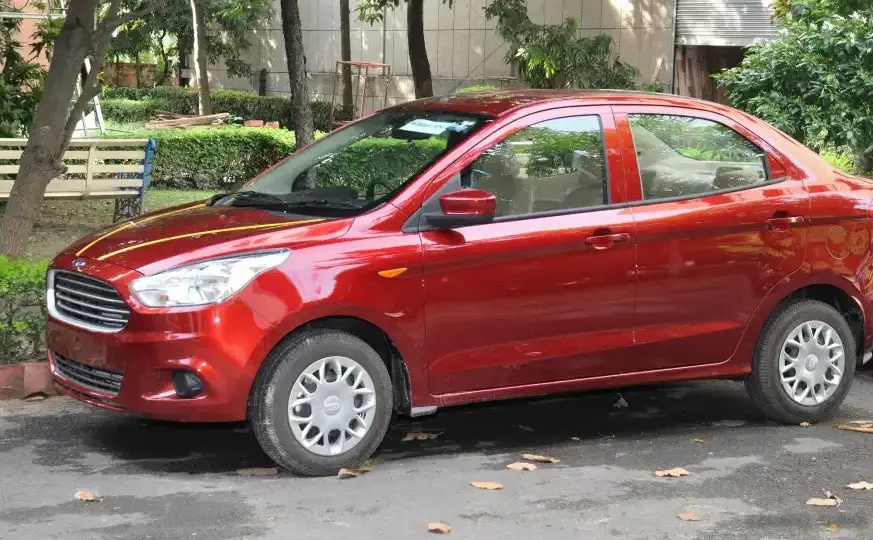
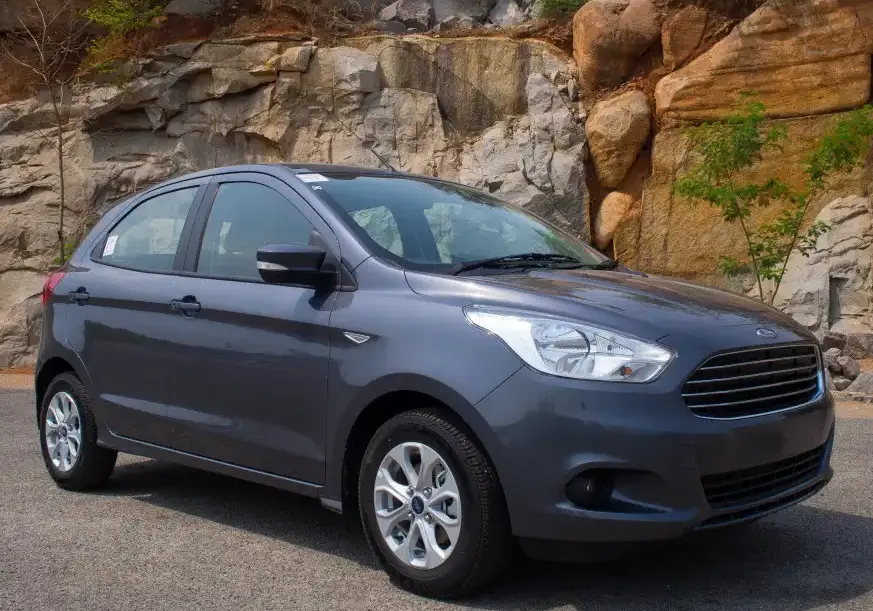
The Ford Figo II 1.2 Ti-VCT (88 hp) was a subcompact hatchback produced by Ford between 2015 and 2018, primarily aimed at emerging markets like India, Brazil, and South Africa. It represented a substantial improvement over the first-generation Figo, built on the global Ford B-platform. This particular variant, powered by the 1.2-liter Ti-VCT engine, served as the entry-level option in the Figo II range, offering a balance between affordability and fuel efficiency. It was positioned below the 1.5-liter variants in terms of performance and features, appealing to buyers who prioritized economy and practicality.
Powertrain & Engine Architecture
The core of this Figo variant is the Duratec 1.2-liter Ti-VCT inline-four cylinder engine. The ‘Ti-VCT’ designation stands for Twin Independent Variable Camshaft Timing, a technology designed to optimize valve timing for improved performance and fuel efficiency across the engine’s operating range. This engine employs a multi-point fuel injection system, delivering fuel directly into the intake ports. The engine’s 11:1 compression ratio contributes to its efficiency, while the four valves per cylinder enhance airflow. It produces 88 horsepower at 6,300 rpm and 112 Nm (82.61 lb-ft) of torque at 4,000 rpm. The engine is transversely mounted at the front of the vehicle, driving the front wheels. A 5-speed manual transmission was the standard gearbox option for this trim level in most markets.
Driving Characteristics
The 1.2 Ti-VCT engine, coupled with the 5-speed manual transmission, delivered adequate, though not particularly exciting, performance. Acceleration was best described as relaxed, with an estimated 0-60 mph time of around 13-14 seconds. The gear ratios were tuned for fuel economy rather than outright speed. The engine felt relatively responsive in the lower gears, making it well-suited for city driving. However, overtaking maneuvers on highways required careful planning and downshifting. Compared to the more powerful 1.5-liter versions, the 1.2 felt noticeably less potent, especially when carrying passengers and cargo. The manual transmission provided a more engaging driving experience than an automatic would have, allowing drivers to make the most of the available power.
Equipment & Trim Levels
The 1.2 Ti-VCT trim typically represented the base model in the Figo II lineup. Standard equipment generally included air conditioning, power steering, front power windows, and a basic audio system with USB connectivity. Safety features included ABS (Anti-lock Braking System) and dual front airbags. Interior upholstery was typically cloth, with a functional, if somewhat basic, dashboard layout. Optional extras, depending on the market, could include rear power windows, central locking, and an upgraded audio system. Higher trim levels added features like alloy wheels, fog lamps, and a more sophisticated infotainment system.
Chassis & Braking
The Figo II utilized a McPherson strut front suspension with a coil spring and anti-roll bar, providing a comfortable ride quality. The rear suspension was a semi-independent coil spring setup. The front brakes were ventilated discs, offering adequate stopping power, while the rear brakes were drums, a cost-saving measure common in this segment. The electric power steering provided light and easy steering, making it ideal for urban environments. The ride height of 174 mm (6.85 inches) provided reasonable ground clearance for navigating rough roads.
Market Reception & Comparison
The Ford Figo II 1.2 Ti-VCT was generally well-received as an affordable and practical hatchback. Critics praised its fuel efficiency and comfortable ride. However, the engine’s lack of power was a frequent criticism. Compared to competitors like the Maruti Suzuki Swift and Hyundai Grand i10, the Figo offered a competitive package, particularly in terms of value for money. The 1.5-liter Figo variants offered significantly better performance but came at a higher price point. The 1.2 Ti-VCT appealed to buyers who prioritized fuel economy and affordability over outright performance.
Legacy
The 1.2 Ti-VCT engine proved to be a relatively reliable unit, with few major reported issues. The Figo II, in general, gained a reputation for being a durable and dependable vehicle. On the used car market, the 1.2 Ti-VCT variants are often sought after by first-time car buyers or those looking for an economical city car. Maintenance costs are generally low, and parts availability is good. While not a performance icon, the Ford Figo II 1.2 Ti-VCT served as a practical and affordable transportation solution for many buyers, and continues to offer value in the used car market today.