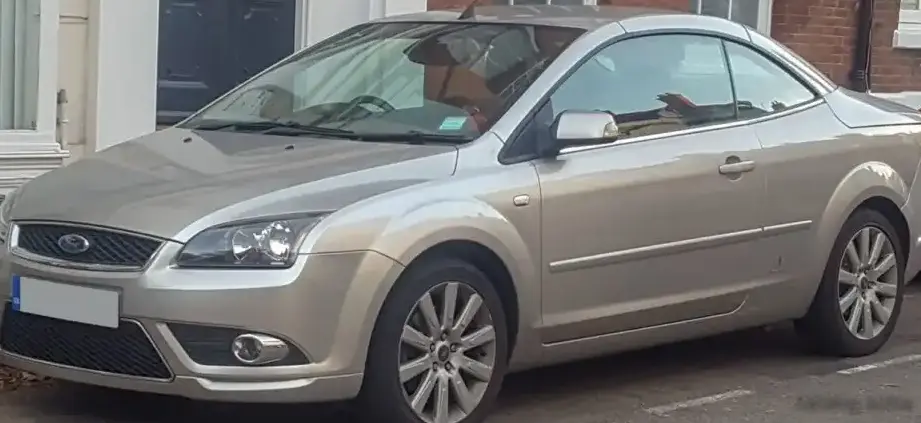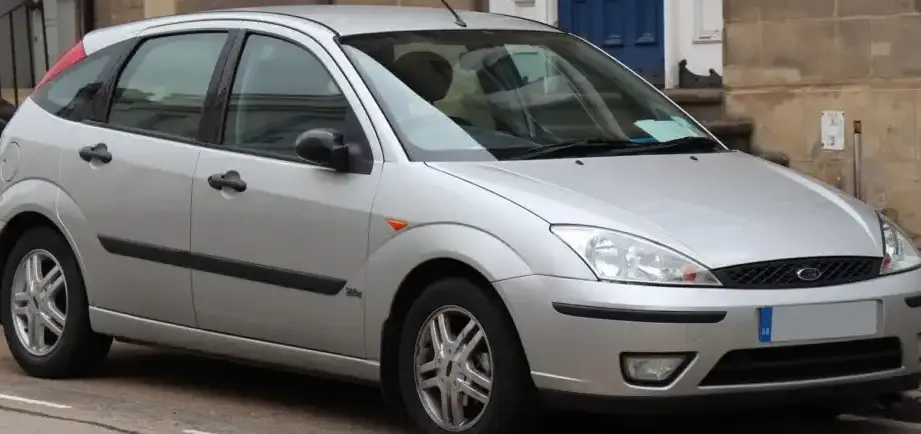
The Ford Focus Hatchback, launched in 1998 as a replacement for the Escort, represented a significant step forward for Ford of Europe in the compact family car segment. Production of the first generation (Mk1) continued through 2004, with a facelift occurring in 2002. The 1.4 16V variant, producing 75 horsepower, was a mainstay of the early Focus lineup, primarily offered between 1999 and 2005. This model served as the entry point into the Focus range, appealing to buyers seeking affordable, economical transportation. It was available in both 3-door and 5-door body styles.
Technical Specifications
| Brand | Ford |
| Model | Focus |
| Generation | Focus Hatchback I |
| Type (Engine) | 1.4 16V (75 Hp) |
| Start of production | 1999 |
| End of production | 2005 |
| Powertrain Architecture | Internal Combustion engine |
| Body type | Hatchback |
| Seats | 5 |
| Doors | 3/5 |
| Fuel consumption (urban) | 9.5 l/100 km (24.8 US mpg) |
| Fuel consumption (extra urban) | 5.2 l/100 km (45.2 US mpg) |
| Fuel consumption (combined) | 6.7 l/100 km (35.1 US mpg) |
| Fuel Type | Petrol (Gasoline) |
| Acceleration 0 – 100 km/h | 14.1 sec |
| Acceleration 0 – 62 mph | 14.1 sec |
| Acceleration 0 – 60 mph | 13.4 sec |
| Maximum speed | 171 km/h (106.25 mph) |
| Weight-to-power ratio | 14.2 kg/Hp |
| Weight-to-torque ratio | 8.5 kg/Nm |
| Power | 75 Hp @ 5000 rpm |
| Torque | 125 Nm @ 3500 rpm (92.2 lb.-ft. @ 3500 rpm) |
| Engine layout | Front, Transverse |
| Engine Model/Code | FXDA, FXDC, FXDB, FXDD |
| Engine displacement | 1388 cm3 (84.7 cu. in.) |
| Number of cylinders | 4 |
| Engine configuration | Inline |
| Cylinder Bore | 76 mm (2.99 in.) |
| Piston Stroke | 76.5 mm (3.01 in.) |
| Compression ratio | 11:1 |
| Number of valves per cylinder | 4 |
| Fuel injection system | Multi-port manifold injection |
| Engine aspiration | Naturally aspirated |
| Valvetrain | DOHC |
| Engine oil capacity | 3.75 l (3.96 US qt | 3.3 UK qt) |
| Coolant capacity | 5 l (5.28 US qt | 4.4 UK qt) |
| Kerb Weight | 1068 kg (2354.54 lbs.) |
| Max. weight | 1570 kg (3461.26 lbs.) |
| Max load | 502 kg (1106.72 lbs.) |
| Trunk (boot) space – minimum | 350 l (12.36 cu. ft.) |
| Trunk (boot) space – maximum | 1210 l (42.73 cu. ft.) |
| Fuel tank capacity | 55 l (14.53 US gal | 12.1 UK gal) |
| Length | 4152 mm (163.46 in.) |
| Width | 1698 mm (66.85 in.) |
| Height | 1430 mm (56.3 in.) |
| Wheelbase | 2615 mm (102.95 in.) |
| Front track | 1484 mm (58.43 in.) |
| Rear track | 1477 mm (58.15 in.) |
| Drivetrain Architecture | Front wheel drive |
| Number of gears | 5 |
| Gearbox type | Manual transmission |
| Front suspension | Wishbone |
| Rear suspension | Coil spring |
| Front brakes | Disc |
| Rear brakes | Drum |
| Assisting systems | ABS (Anti-lock braking system) |
| Steering type | Steering rack and pinion |
| Power steering | Hydraulic |
| Tires size | 175/70 R14 |
Introduction
The Ford Focus 1.4 16V, introduced in 1999, was a crucial component of the Mk1 Focus range. Positioned as the entry-level model, it aimed to provide affordable and reliable transportation for a broad customer base. Built on Ford’s C170 platform (often referred to as the 1HX0 platform in Europe), the Focus represented a departure from the aging Escort, offering improved handling, safety, and interior space. The 1.4L engine was a key offering in markets where smaller displacement engines were favored due to taxation or fuel economy concerns.
Powertrain & Engine Architecture
The heart of the Focus 1.4 is the FXDA (and variants like FXDC, FXDB, FXDD) 1.4-liter inline-four cylinder engine. This engine featured a dual overhead camshaft (DOHC) valvetrain with four valves per cylinder, contributing to its relatively efficient operation. It utilized a multi-port fuel injection system, delivering fuel directly to the intake ports. The engine produced 75 horsepower at 5000 rpm and 92.2 lb.-ft. of torque at 3500 rpm. The engine’s design prioritized fuel efficiency over outright performance. The 1.4L engine was paired with a five-speed manual transmission as standard, though a four-speed automatic transmission was also available. The automatic transmission, while offering convenience, was known to slightly diminish fuel economy and acceleration compared to the manual version.
Driving Characteristics
The 1.4L Focus, particularly with the automatic transmission, offered a comfortable but unhurried driving experience. Acceleration from 0-60 mph took around 13.4 seconds, and top speed was approximately 106 mph. The automatic transmission’s gear ratios were tuned for economy, resulting in a noticeable delay during acceleration. Compared to the higher-output 1.6L or 1.8L variants, the 1.4 felt noticeably slower, especially when fully loaded or tackling inclines. However, the Focus’s well-engineered chassis and suspension provided a stable and predictable ride, making it a pleasant daily driver. The steering was light and precise, contributing to its ease of maneuverability.
Equipment & Trim Levels
The 1.4L Focus typically came with a basic level of equipment. Standard features generally included power steering, central locking, and an adjustable steering column. Interior upholstery was typically cloth, and the dashboard featured a simple, functional design. Optional extras included air conditioning, alloy wheels, and a CD player. Trim levels varied slightly depending on the market, but the 1.4 generally represented the base model, with fewer frills than the higher-spec 1.6 or 1.8 variants. Safety features included driver and passenger airbags, and ABS was often included as standard or an optional extra.
Chassis & Braking
The Mk1 Focus boasted a fully independent front suspension utilizing MacPherson struts and a multi-link rear suspension. This setup provided excellent handling and ride comfort. The 1.4L models typically featured disc brakes on the front wheels and drum brakes on the rear. ABS (Anti-lock Braking System) was a common feature, enhancing braking performance and safety. The suspension was tuned to provide a balance between comfort and handling, making it suitable for a variety of driving conditions. Stabilizer bars were fitted to both the front and rear axles to reduce body roll during cornering.
Market Reception & Comparison
The 1.4L Focus was generally well-received as an affordable and practical family car. Critics praised its handling and ride quality, but noted its lack of outright performance. Compared to the 1.6L and 1.8L models, the 1.4 offered better fuel economy but significantly less power. The automatic transmission version was often criticized for its sluggishness. However, its lower price point and reasonable running costs made it an attractive option for budget-conscious buyers. The 1.4L also compared favorably to competitors like the Vauxhall/Opel Astra and Volkswagen Golf in terms of value for money.
Legacy
The Ford Focus 1.4 16V has proven to be a relatively reliable and durable vehicle. The FXDA engine, while not particularly powerful, is known for its longevity when properly maintained. Common issues include oil leaks and occasional problems with the cooling system. In the used car market, the 1.4L Focus remains an affordable option for those seeking a practical and economical hatchback. Its simple mechanical design makes it relatively easy and inexpensive to repair. While not a performance icon, the 1.4L Focus played a vital role in establishing the Focus as a popular and respected compact car.