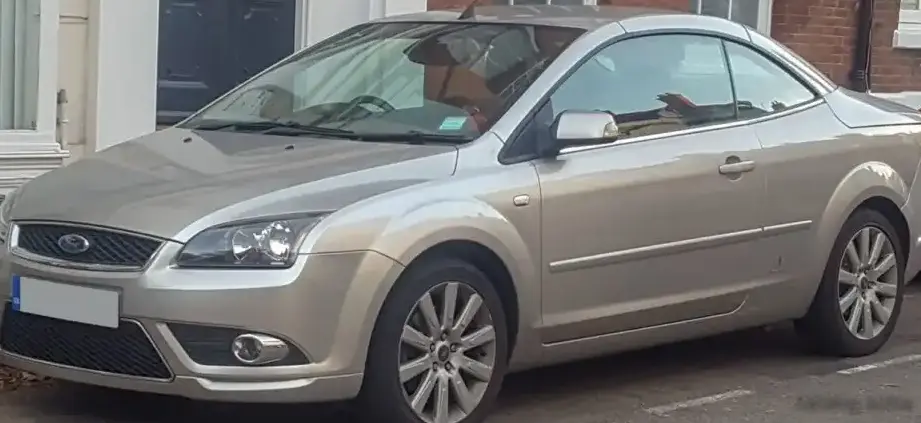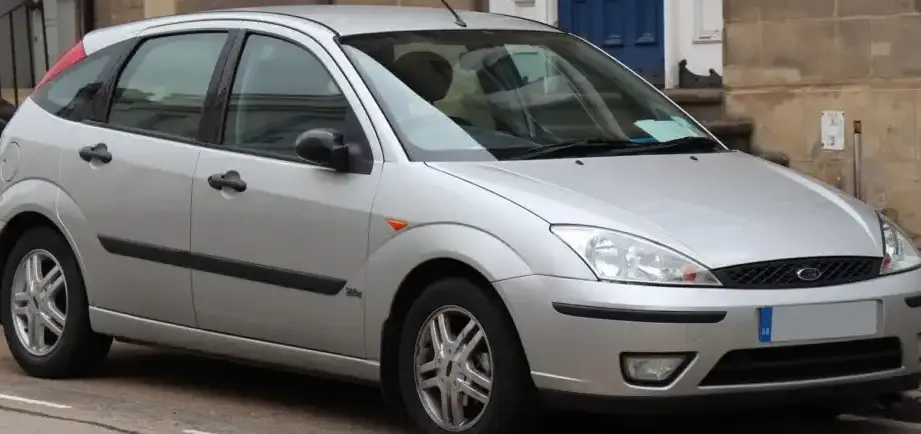
The Ford Focus Hatchback, launched in 1998 as a replacement for the Escort, represented a significant step forward for Ford of Europe in the compact segment. The first generation, internally designated as the Mk1, was produced from 1998 to 2004 (with some production extending into 2005). Among the various engine and trim combinations offered, the 1.6-liter 16V engine producing 100 horsepower paired with a five-speed manual transmission was a popular choice, particularly in European markets. This variant occupied a mid-range position in the Focus lineup, offering a balance between affordability, fuel efficiency, and acceptable performance. It aimed to appeal to buyers seeking a practical and reliable family car without the expense of higher-powered options.
Technical Specifications
| Brand | Ford |
| Model | Focus |
| Generation | Focus Hatchback I |
| Type (Engine) | 1.6 16V (100 Hp) |
| Start of production | 1999 |
| End of production | 2005 |
| Powertrain Architecture | Internal Combustion engine |
| Body type | Hatchback |
| Seats | 5 |
| Doors | 3/5 |
| Fuel consumption (urban) | 9.7 l/100 km (24.2 US mpg, 29.1 UK mpg, 10.3 km/l) |
| Fuel consumption (extra urban) | 7 l/100 km (33.6 US mpg, 40.4 UK mpg, 14.3 km/l) |
| Fuel consumption (combined) | 8 l/100 km (29.4 US mpg, 35.3 UK mpg, 12.5 km/l) |
| Fuel Type | Petrol (Gasoline) |
| Acceleration 0 – 100 km/h | 11.2 sec |
| Acceleration 0 – 62 mph | 11.2 sec |
| Acceleration 0 – 60 mph | 10.6 sec |
| Maximum speed | 185 km/h (114.95 mph) |
| Weight-to-power ratio | 10.7 kg/Hp, 93.5 Hp/tonne |
| Weight-to-torque ratio | 7.5 kg/Nm, 133.6 Nm/tonne |
| Power | 100 Hp @ 6000 rpm |
| Power per litre | 62.7 Hp/l |
| Torque | 143 Nm @ 4000 rpm (105.47 lb.-ft. @ 4000 rpm) |
| Engine layout | Front, Transverse |
| Engine Model/Code | FYDA, FYDC, FYDB, FYDD, FYDH |
| Engine displacement | 1596 cm3 (97.39 cu. in.) |
| Number of cylinders | 4 |
| Engine configuration | Inline |
| Cylinder Bore | 79 mm (3.11 in.) |
| Piston Stroke | 81.4 mm (3.2 in.) |
| Compression ratio | 11:1 |
| Number of valves per cylinder | 4 |
| Fuel injection system | Multi-port manifold injection |
| Engine aspiration | Naturally aspirated engine |
| Valvetrain | DOHC |
| Engine oil capacity | 4.25 l (4.49 US qt | 3.74 UK qt) |
| Coolant | 5 l (5.28 US qt | 4.4 UK qt) |
| Kerb Weight | 1070 kg (2358.95 lbs.) |
| Max. weight | 1590 kg (3505.35 lbs.) |
| Max load | 520 kg (1146.4 lbs.) |
| Trunk (boot) space – minimum | 350 l (12.36 cu. ft.) |
| Trunk (boot) space – maximum | 1210 l (42.73 cu. ft.) |
| Fuel tank capacity | 55 l (14.53 US gal | 12.1 UK gal) |
| Length | 4152 mm (163.46 in.) |
| Width | 1698 mm (66.85 in.) |
| Height | 1430 mm (56.3 in.) |
| Wheelbase | 2615 mm (102.95 in.) |
| Front track | 1484 mm (58.43 in.) |
| Rear (Back) track | 1477 mm (58.15 in.) |
| Minimum turning circle | 10.4 m (34.12 ft.) |
| Drivetrain Architecture | Front wheel drive |
| Drive wheel | Front wheel drive |
| Number of gears | 5 gears, manual transmission |
| Front suspension | Wishbone |
| Rear suspension | Coil spring |
| Front brakes | Ventilated discs |
| Rear brakes | Drum |
| Assisting systems | ABS (Anti-lock braking system) |
| Steering type | Steering rack and pinion |
| Power steering | Hydraulic Steering |
| Tires size | 185/60 R15 |
| Wheel rims size | 15 |
Powertrain & Engine Architecture
The 1.6-liter engine, identified by engine codes such as FYDA, FYDC, FYDB, FYDD, and FYDH, was a Zetec-E series engine. This engine family was known for its relatively simple design and durability. It featured a cast iron block with an aluminum cylinder head, incorporating a double overhead camshaft (DOHC) valvetrain with four valves per cylinder. This configuration allowed for improved breathing and higher engine speeds compared to older designs. Fuel delivery was managed by a multi-port fuel injection system, providing precise fuel metering for optimal combustion. The engine’s 100 horsepower output was achieved at 6000 rpm, while peak torque of 143 Nm (105.47 lb-ft) was delivered at 4000 rpm. The five-speed manual transmission offered smooth gear changes and was well-matched to the engine’s power characteristics.
Driving Characteristics
The 1.6-liter Focus offered a reasonably engaging driving experience, though it wasn’t particularly quick. Acceleration from 0 to 60 mph took around 10.6 seconds, and the top speed was approximately 115 mph. The engine felt responsive enough for everyday driving, with adequate power for overtaking and merging onto highways. The five-speed gearbox allowed drivers to keep the engine in its optimal power band. Compared to the higher-performance 1.8-liter and 2.0-liter variants, the 1.6-liter model felt less powerful, but it also offered better fuel economy. The manual transmission provided more driver involvement than the optional automatic, which was often criticized for being sluggish and impacting fuel efficiency.
Equipment & Trim Levels
The 1.6-liter Focus typically came equipped with a reasonable level of standard features. These included power steering, central locking, electric front windows, and an adjustable steering column. Interior upholstery was typically cloth, with a relatively simple dashboard layout. Optional extras included air conditioning, alloy wheels, a CD player, and upgraded trim levels with more luxurious interior appointments. Trim levels varied by market, but generally included base models (like the ‘Style’ or ‘LX’) and more equipped versions (like the ‘Zetec’). The 1.6L engine was commonly found in the base and mid-range trims.
Chassis & Braking
The Mk1 Focus was praised for its excellent handling characteristics. It featured independent front suspension with MacPherson struts and a multi-link rear suspension, providing a comfortable ride and precise steering. Front brakes were ventilated discs, offering good stopping power, while rear brakes were typically drum brakes on the 1.6-liter models to keep costs down. Anti-lock Braking System (ABS) was standard equipment, enhancing safety. The chassis was relatively lightweight, contributing to the car’s agility. Stabilizer bars were fitted front and rear to reduce body roll during cornering.
Market Reception & Comparison
The 1.6-liter Focus Hatchback was well-received by automotive critics as a practical and affordable family car. It was praised for its handling, ride comfort, and fuel efficiency. However, some critics noted that the engine lacked outright power, particularly when fully loaded. Compared to the 1.8-liter and 2.0-liter variants, the 1.6-liter model offered lower running costs but less performance. The 1.8-liter was often seen as a better all-around choice for those willing to spend a bit more, while the 1.6-liter appealed to budget-conscious buyers. Fuel economy figures of around 29-35 mpg combined made it a competitive option in its class.
Legacy
The 1.6-liter Zetec-E engine in the Mk1 Focus proved to be a reliable and durable unit. With proper maintenance, these engines can last for many years and high mileages. The Mk1 Focus, in general, has gained a following among enthusiasts for its engaging driving dynamics and affordability. Today, well-maintained examples of the 1.6-liter Focus Hatchback are sought after as classic cars and affordable transportation. Parts availability remains good, making them relatively easy to maintain and repair. While not the fastest or most luxurious version of the Focus, the 1.6-liter model represents a solid and dependable choice for those seeking a practical and enjoyable compact hatchback.