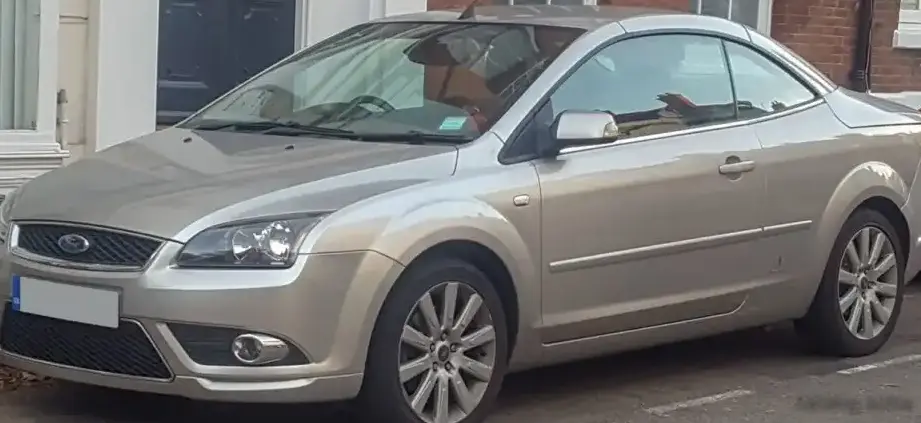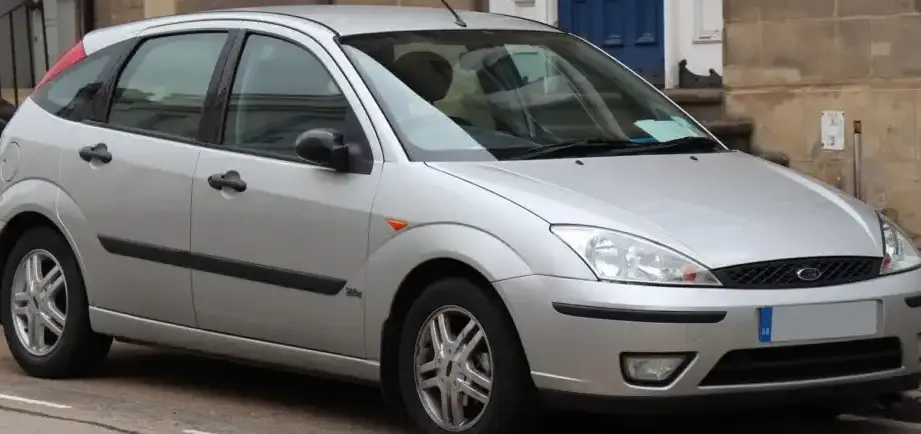
The Ford Focus Hatchback I, produced from 1998 to 2004, represented a significant step forward for Ford in the European small family car segment. Introduced as a replacement for the Escort, the Focus aimed to offer a more modern and refined driving experience. The 1.6i Duratec 8V (98 hp) variant, available from 2002-2005, served as an entry-level option within the first generation Focus range, appealing to buyers prioritizing affordability and fuel efficiency. It was offered in both 3-door and 5-door body styles, catering to different lifestyle needs. This model played a crucial role in establishing the Focus as a popular choice in Europe, and later, in North America after its introduction to the US market.
Technical Specifications
| Brand | Ford |
| Model | Focus |
| Generation | Focus Hatchback I |
| Type (Engine) | 1.6 i Duratec 8V (98 Hp) |
| Start of production | 2002 |
| End of production | 2005 |
| Powertrain Architecture | Internal Combustion engine |
| Body type | Hatchback |
| Seats | 5 |
| Doors | 3/5 |
| Fuel consumption (urban) | 9.4 l/100 km (25 US mpg, 30.1 UK mpg, 10.6 km/l) |
| Fuel consumption (extra urban) | 5.6 l/100 km (42 US mpg, 50.4 UK mpg, 17.9 km/l) |
| Fuel consumption (combined) | 7 l/100 km (33.6 US mpg, 40.4 UK mpg, 14.3 km/l) |
| Fuel Type | Petrol (Gasoline) |
| Acceleration 0 – 100 km/h | 12.8 sec |
| Acceleration 0 – 62 mph | 12.8 sec |
| Acceleration 0 – 60 mph | 12.2 sec |
| Maximum speed | 180 km/h (111.85 mph) |
| Power | 98 Hp @ 5500 rpm |
| Power per litre | 61.4 Hp/l |
| Torque | 140 Nm @ 4300 rpm (103.26 lb.-ft. @ 4300 rpm) |
| Engine layout | Front, Transverse |
| Engine Model/Code | ZH16DEAR |
| Engine displacement | 1597 cm3 (97.45 cu. in.) |
| Number of cylinders | 4 |
| Engine configuration | Inline |
| Cylinder Bore | 82.07 mm (3.23 in.) |
| Piston Stroke | 75.48 mm (2.97 in.) |
| Compression ratio | 9.5:1 |
| Number of valves per cylinder | 2 |
| Fuel injection system | Multi-port manifold injection |
| Engine aspiration | Naturally aspirated engine |
| Valvetrain | OHC |
| Engine oil capacity | 4.35 l (4.6 US qt | 3.83 UK qt) |
| Coolant capacity | 6.15 l (6.5 US qt | 5.41 UK qt) |
| Trunk (boot) space – minimum | 350 l (12.36 cu. ft.) |
| Trunk (boot) space – maximum | 1210 l (42.73 cu. ft.) |
| Fuel tank capacity | 53 l (14 US gal | 11.66 UK gal) |
| Length | 4152 mm (163.46 in.) |
| Width | 1698 mm (66.85 in.) |
| Height | 1430 mm (56.3 in.) |
| Wheelbase | 2615 mm (102.95 in.) |
| Front track | 1484 mm (58.43 in.) |
| Rear track | 1477 mm (58.15 in.) |
| Drivetrain Architecture | Front wheel drive |
| Number of gears | 5 |
| Gearbox type | Manual transmission |
| Front suspension | Wishbone |
| Rear suspension | Coil spring |
| Front brakes | Ventilated discs |
| Rear brakes | Disc |
| Assisting systems | ABS (Anti-lock braking system) |
| Steering type | Steering rack and pinion |
| Power steering | Hydraulic Steering |
| Tires size | 185/60 R14 |
Powertrain & Engine Architecture
The 1.6i Duratec engine, designated ZH16DEAR, is a naturally aspirated, inline-four cylinder petrol engine. It features a single overhead camshaft (SOHC) valvetrain operating two valves per cylinder. The Duratec engine family was designed to be modular and relatively simple, prioritizing reliability and affordability. Fuel delivery is managed by a multi-port fuel injection system, providing adequate atomization for efficient combustion. The 98 horsepower output is achieved at 5500 rpm, while peak torque of 140 Nm (103 lb-ft) arrives at 4300 rpm. This engine was paired with a 5-speed manual transmission in this configuration, offering a balance between fuel economy and drivability. The engine’s design emphasized low-end torque, making it suitable for everyday driving conditions.
Driving Characteristics
The 1.6i Duratec with the 5-speed manual transmission provided a reasonably responsive driving experience, although it wasn’t designed for outright performance. Acceleration from 0-60 mph took around 12.2 seconds, and top speed was limited to 111.85 mph. The gear ratios were tuned for fuel efficiency, meaning the engine needed to be revved to access its full potential. Compared to the higher-output 1.8L or the diesel variants, this engine felt less powerful, particularly when fully loaded or tackling steep inclines. However, its lighter weight and simpler mechanicals contributed to a more nimble feel in city driving. The manual transmission offered more driver engagement than the optional automatic, allowing for better control over the engine’s power band.
Equipment & Trim Levels
The 1.6i Duratec variant typically represented the base trim level of the Focus Hatchback I. Standard equipment generally included power steering, ABS brakes, front airbags, and a basic audio system. Interior upholstery was typically cloth, and the dashboard featured a functional, if somewhat spartan, design. Optional extras included air conditioning, electric windows, alloy wheels, and upgraded audio systems. The Focus offered a relatively spacious interior for its class, with ample headroom and legroom for passengers. The 3-door version prioritized a sportier aesthetic, while the 5-door offered greater practicality.
Chassis & Braking
The first-generation Focus boasted a fully independent front suspension utilizing a MacPherson strut and wishbone setup, contributing to its renowned handling characteristics. The rear suspension employed a semi-independent coil spring arrangement. Braking duties were handled by ventilated discs at the front and solid discs at the rear, providing adequate stopping power for the vehicle’s weight and performance. The hydraulic power steering offered a good balance between assistance and feedback, enhancing the driving experience. The chassis was designed to be rigid and lightweight, further contributing to the Focus’s agile handling.
Market Reception & Comparison
The 1.6i Duratec variant of the Focus was generally well-received as an affordable and practical option. Critics praised its fuel efficiency and comfortable ride, but noted its lack of outright performance compared to higher-spec models. Compared to the 1.8L variant, the 1.6L offered lower running costs but sacrificed some power and refinement. The diesel models, such as the 1.8 TDI, provided superior fuel economy and torque but came with a higher purchase price. The 1.6i Duratec appealed to buyers seeking a reliable and economical small family car, making it a popular choice for first-time car owners and those on a budget.
Legacy
The 1.6i Duratec engine proved to be a relatively reliable unit, with many examples still on the road today. While not known for its exceptional performance, its simplicity and durability have contributed to its longevity. The first-generation Focus, as a whole, established a strong reputation for handling and build quality, setting the standard for subsequent generations. In the used car market, the 1.6i Duratec variant remains an affordable and practical option, particularly for those seeking a low-cost entry point into Focus ownership. However, potential buyers should be aware of the typical wear and tear associated with older vehicles, such as suspension components and exhaust systems.