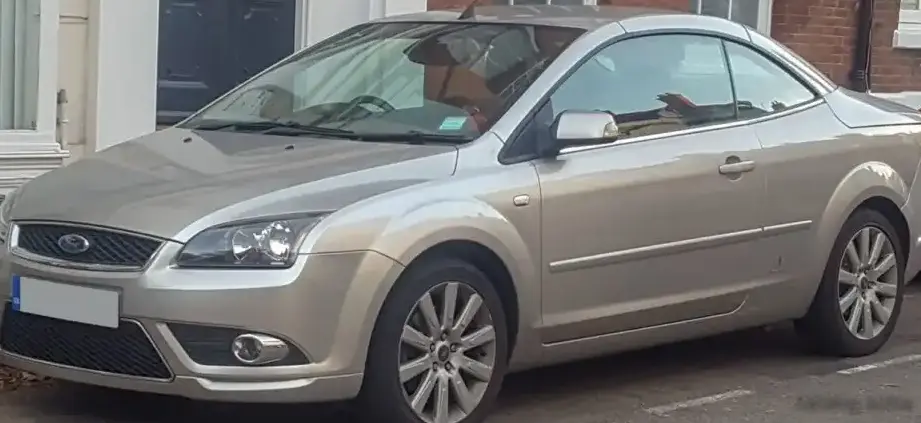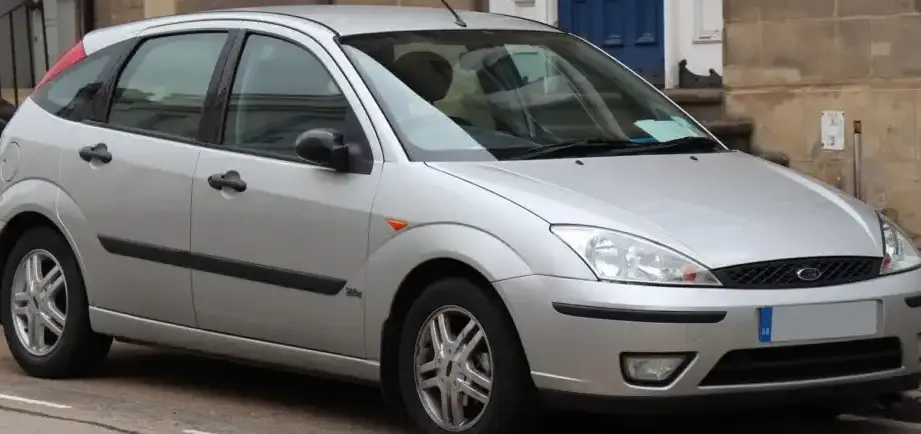
The Ford Focus Hatchback, launched in 1998, represented a significant departure for Ford of Europe, moving away from the aging Escort and embracing a more modern, contemporary design philosophy. The first generation, internally designated as the Mk1, was produced from 1998 to 2004 (with some production extending into 2005). The 1.8 16V variant, offered from 1999 onwards, occupied a middle ground in the Focus lineup, providing a balance between affordability and performance. This model was available in both 3-door and 5-door body styles, catering to a broad range of buyers. It played a crucial role in establishing the Focus as a popular choice in the European C-segment, competing with rivals like the Volkswagen Golf and Opel/Vauxhall Astra.
Technical Specifications
| Brand | Ford |
| Model | Focus |
| Generation | Focus Hatchback I |
| Type (Engine) | 1.8 16V (115 Hp) |
| Start of production | 1999 year |
| End of production | 2005 year |
| Powertrain Architecture | Internal Combustion engine |
| Body type | Hatchback |
| Seats | 5 |
| Doors | 3/5 |
| Fuel consumption (urban) | 10.3 l/100 km (22.8 US mpg, 27.4 UK mpg, 9.7 km/l) |
| Fuel consumption (extra urban) | 6 l/100 km (39.2 US mpg, 47.1 UK mpg, 16.7 km/l) |
| Fuel consumption (combined) | 7.6 l/100 km (30.9 US mpg, 37.2 UK mpg, 13.2 km/l) |
| Fuel Type | Petrol (Gasoline) |
| Acceleration 0 – 100 km/h | 10.2 sec |
| Acceleration 0 – 62 mph | 10.2 sec |
| Acceleration 0 – 60 mph | 9.7 sec |
| Maximum speed | 198 km/h (123.03 mph) |
| Weight-to-power ratio | 9.8 kg/Hp, 102.2 Hp/tonne |
| Weight-to-torque ratio | 7 kg/Nm, 142.2 Nm/tonne |
| Power | 115 Hp @ 5750 rpm |
| Power per litre | 64 Hp/l |
| Torque | 160 Nm @ 4500 rpm (118.01 lb.-ft. @ 4500 rpm) |
| Engine layout | Front, Transverse |
| Engine Model/Code | EYDC, EYDB, EYDD, EYDE, EYDG, EYDI, EYDJ, EYDL |
| Engine displacement | 1796 cm3 (109.6 cu. in.) |
| Number of cylinders | 4 |
| Engine configuration | Inline |
| Cylinder Bore | 80.6 mm (3.17 in.) |
| Piston Stroke | 88 mm (3.46 in.) |
| Compression ratio | 9.8:1 |
| Number of valves per cylinder | 4 |
| Fuel injection system | Multi-port manifold injection |
| Engine aspiration | Naturally aspirated engine |
| Valvetrain | DOHC |
| Engine oil capacity | 4.25 l (4.49 US qt | 3.74 UK qt) |
| Coolant | 5.75 l (6.08 US qt | 5.06 UK qt) |
| Kerb Weight | 1125 kg (2480.2 lbs.) |
| Max. weight | 1650 kg (3637.63 lbs.) |
| Max load | 525 kg (1157.43 lbs.) |
| Trunk (boot) space – minimum | 350 l (12.36 cu. ft.) |
| Trunk (boot) space – maximum | 1210 l (42.73 cu. ft.) |
| Fuel tank capacity | 55 l (14.53 US gal | 12.1 UK gal) |
| Length | 4152 mm (163.46 in.) |
| Width | 1698 mm (66.85 in.) |
| Height | 1430 mm (56.3 in.) |
| Wheelbase | 2615 mm (102.95 in.) |
| Front track | 1484 mm (58.43 in.) |
| Rear (Back) track | 1477 mm (58.15 in.) |
| Drivetrain Architecture | The Internal combustion engine (ICE) drives the front wheels of the vehicle. |
| Drive wheel | Front wheel drive |
| Number of gears and type of gearbox | 5 gears, manual transmission |
| Front suspension | Wishbone |
| Rear suspension | Coil spring |
| Front brakes | Ventilated discs |
| Rear brakes | Disc |
| Assisting systems | ABS (Anti-lock braking system) |
| Steering type | Steering rack and pinion |
| Power steering | Hydraulic Steering |
| Tires size | 185/60 R14 |
Powertrain & Engine Architecture
The 1.8 16V engine, utilizing various engine codes like EYDC, EYDB, and others depending on the specific market and year, was a naturally aspirated, inline-four cylinder petrol engine. It featured a dual overhead camshaft (DOHC) valvetrain operating four valves per cylinder, contributing to its relatively high output for its displacement. Fuel delivery was managed by a multi-port fuel injection system, providing precise fuel metering for improved efficiency and performance. The engine’s 9.8:1 compression ratio was a typical value for the era, balancing performance and fuel economy. The 1.8L engine was paired with a 5-speed manual transmission as standard, but a 4-speed automatic transmission was also offered, which is the focus of this article. This automatic transmission, while providing convenience, was known for its less-than-sporty shift characteristics and a slight reduction in fuel economy compared to the manual version.
Driving Characteristics
The 1.8L 16V engine with the automatic transmission delivered adequate, but not exhilarating, performance. Acceleration from 0-60 mph took around 9.7 seconds, and top speed was approximately 123 mph. The automatic transmission’s gear ratios were geared towards fuel efficiency and smooth cruising rather than rapid acceleration. Compared to the manual transmission version, the automatic felt noticeably slower, particularly during overtaking maneuvers. The power delivery was linear, but the engine lacked the low-end torque of some of its competitors. The automatic transmission, while reliable, didn’t offer manual shift control, limiting driver engagement. The overall driving experience was comfortable and refined, making it well-suited for daily commuting and long-distance journeys.
Equipment & Trim Levels
The 1.8 16V automatic typically came equipped with features such as power steering, central locking, electric front windows, and an AM/FM radio. Higher trim levels, such as the Zetec, added features like alloy wheels, air conditioning, and upgraded interior trim. Optional extras included a sunroof, rear electric windows, and a CD player. Interior upholstery was typically cloth, with a relatively simple and functional dashboard layout. The Focus Mk1 prioritized practicality and ergonomics over luxurious appointments.
Chassis & Braking
The Focus Mk1 featured an independent front suspension with wishbones and a coil spring rear suspension. This setup provided a good balance between ride comfort and handling. The 1.8L models typically used ventilated disc brakes on the front wheels and solid discs on the rear. Anti-lock Braking System (ABS) was standard, enhancing safety. The chassis was relatively lightweight, contributing to the car’s nimble handling characteristics. Stabilizer bars were fitted front and rear to reduce body roll during cornering.
Market Reception & Comparison
The 1.8 16V automatic Focus was generally well-received by critics as a practical and reliable family car. However, the automatic transmission was often criticized for its sluggish performance and lack of responsiveness. Compared to the 1.8L manual version, the automatic offered less driver engagement and slightly worse fuel economy (around 31 mpg combined). The higher-output 2.0L Duratec engine offered significantly more performance, but at a higher price point. The 1.4L and 1.6L models were more affordable but provided less power. The 1.8 automatic appealed to buyers who prioritized comfort and convenience over sporty driving dynamics.
Legacy
The Ford Focus Mk1 1.8 16V automatic has proven to be a relatively reliable powertrain. The engine is generally durable, and the automatic transmission, while not known for its performance, is reasonably robust. In the used car market, these models are often sought after for their affordability and practicality. Common issues include corrosion, particularly on older examples, and wear and tear on suspension components. However, parts availability is good, and maintenance costs are generally reasonable. The Focus Mk1 established the Focus nameplate as a strong contender in the C-segment, paving the way for subsequent generations that continued to build on its success.