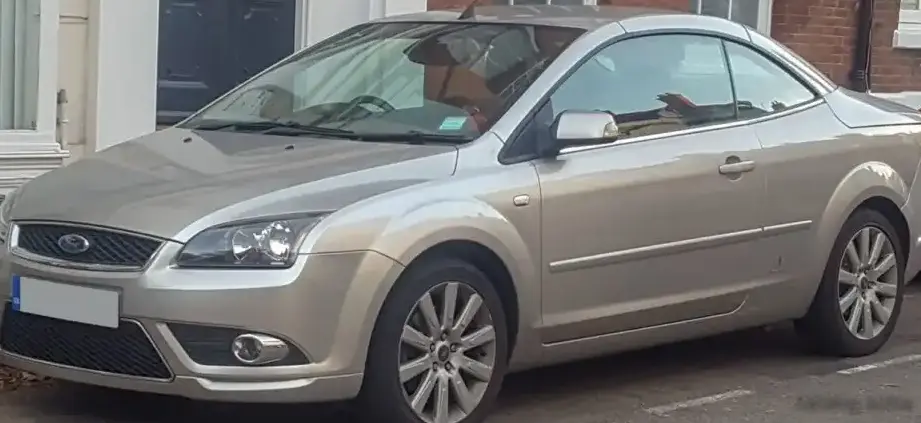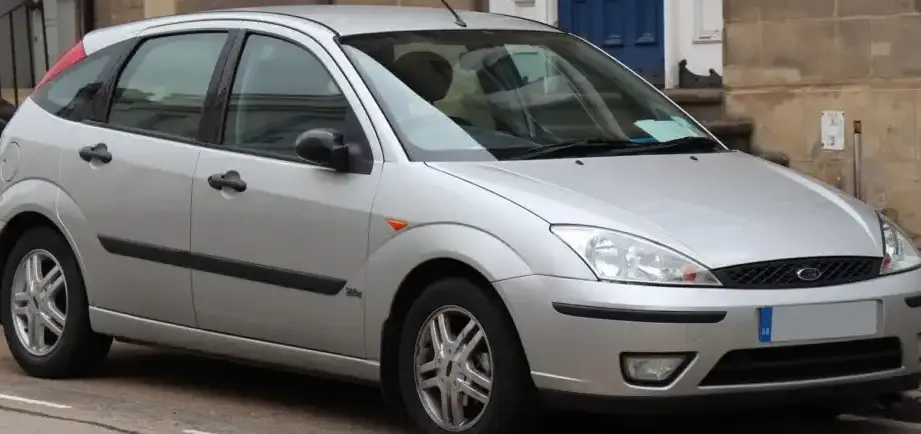
The Ford Focus Hatchback I 1.8 DI, produced between 1999 and 2005, represented an entry point into the first generation Focus range, particularly in European markets. Positioned as a fuel-efficient and practical option, it utilized a direct injection diesel engine paired with a five-speed manual transmission. This variant played a significant role in establishing the Focus as a popular choice for buyers seeking a compact, affordable, and economical vehicle. It was part of the larger Focus Mk1 family, built on the C170 platform, which also underpinned models like the Ford Fiesta and Mazda 323.
Technical Specifications
| Brand | Ford |
| Model | Focus |
| Generation | Focus Hatchback I |
| Type (Engine) | 1.8 DI (75 Hp) |
| Start of production | 1999 |
| End of production | 2005 |
| Powertrain Architecture | Internal Combustion engine |
| Body type | Hatchback |
| Seats | 5 |
| Doors | 3/5 |
| Fuel consumption (urban) | 6.7 l/100 km (35.1 US mpg, 42.2 UK mpg, 14.9 km/l) |
| Fuel consumption (extra urban) | 4 l/100 km (58.8 US mpg, 70.6 UK mpg, 25 km/l) |
| Fuel consumption (combined) | 5.1 l/100 km (46.1 US mpg, 55.4 UK mpg, 19.6 km/l) |
| Fuel Type | Diesel |
| Acceleration 0 – 100 km/h | 14.7 sec |
| Acceleration 0 – 62 mph | 14.7 sec |
| Acceleration 0 – 60 mph | 14 sec |
| Maximum speed | 168 km/h (104.39 mph) |
| Weight-to-power ratio | 15.8 kg/Hp, 63.4 Hp/tonne |
| Weight-to-torque ratio | 6.8 kg/Nm, 147.9 Nm/tonne |
| Power | 75 Hp @ 4000 rpm |
| Power per litre | 42.8 Hp/l |
| Torque | 175 Nm @ 1800 rpm (129.07 lb.-ft. @ 1800 rpm) |
| Engine layout | Front, Transverse |
| Engine Model/Code | BHDA, BHDB |
| Engine displacement | 1753 cm3 (106.97 cu. in.) |
| Number of cylinders | 4 |
| Engine configuration | Inline |
| Cylinder Bore | 82.5 mm (3.25 in.) |
| Piston Stroke | 82 mm (3.23 in.) |
| Compression ratio | 19.4:1 |
| Number of valves per cylinder | 2 |
| Fuel injection system | Diesel Commonrail |
| Engine aspiration | Turbocharger |
| Valvetrain | DOHC |
| Engine oil capacity | 5.6 l (5.92 US qt | 4.93 UK qt) |
| Coolant | 6.5 l (6.87 US qt | 5.72 UK qt) |
| Kerb Weight | 1183 kg (2608.07 lbs.) |
| Max. weight | 1685 kg (3714.79 lbs.) |
| Max load | 502 kg (1106.72 lbs.) |
| Trunk (boot) space – minimum | 350 l (12.36 cu. ft.) |
| Trunk (boot) space – maximum | 1210 l (42.73 cu. ft.) |
| Fuel tank capacity | 53 l (14 US gal | 11.66 UK gal) |
| Length | 4152 mm (163.46 in.) |
| Width | 1698 mm (66.85 in.) |
| Height | 1430 mm (56.3 in.) |
| Wheelbase | 2615 mm (102.95 in.) |
| Front track | 1484 mm (58.43 in.) |
| Rear (Back) track | 1477 mm (58.15 in.) |
| Drivetrain Architecture | The Internal combustion engine (ICE) drives the front wheels of the vehicle. |
| Drive wheel | Front wheel drive |
| Number of gears and type of gearbox | 5 gears, manual transmission |
| Front suspension | Wishbone |
| Rear suspension | Coil spring |
| Front brakes | Ventilated discs |
| Rear brakes | Disc |
| Assisting systems | ABS (Anti-lock braking system) |
| Steering type | Steering rack and pinion |
| Power steering | Hydraulic Steering |
| Tires size | 175/70 R14 |
INTRODUCTION
The Ford Focus 1.8 DI, launched in 1999, was a key component of Ford’s strategy to offer a modern and competitive compact car in the European market. It arrived as part of the Mk1 Focus range, replacing the Escort, and represented a significant leap forward in terms of handling, interior quality, and overall refinement. The 1.8 DI variant specifically targeted buyers prioritizing fuel economy and low running costs, making it a popular choice for fleet operators and private drivers alike. Available in both 3-door and 5-door hatchback configurations, it occupied the lower-mid range of the Focus lineup, sitting below the more powerful petrol variants and above the base 1.4-liter models.
Powertrain & Engine Architecture
The heart of the 1.8 DI was the BHDA or BHDB engine code, a 1.8-liter inline-four cylinder diesel engine. This engine utilized direct fuel injection, a relatively new technology at the time, which improved efficiency and reduced emissions compared to older indirect injection systems. The engine featured a turbocharger, boosting power output to 75 horsepower and 175 Nm (129 lb-ft) of torque. The fuel injection system was a common rail diesel injection (CRDI) system, allowing for precise control of fuel delivery and contributing to smoother operation and reduced noise. The engine employed a double overhead camshaft (DOHC) valvetrain with two valves per cylinder. The five-speed manual transmission was the only gearbox option available with this engine, providing a balance between fuel economy and drivability.
Driving Characteristics
The 1.8 DI Focus offered a practical and economical driving experience. While not particularly quick – acceleration from 0 to 60 mph took around 14 seconds – it provided sufficient power for everyday driving situations. The turbocharger helped to mitigate some of the inherent lag associated with diesel engines, delivering a usable amount of torque from relatively low engine speeds. The five-speed gearbox was well-matched to the engine’s characteristics, allowing drivers to keep the engine in its optimal power band. Compared to the higher-output petrol versions, the 1.8 DI felt noticeably slower, but it excelled in fuel efficiency, achieving combined fuel economy figures of around 46 mpg (US) or 55 mpg (UK). The manual transmission offered a more engaging driving experience than the automatic options available on other Focus models.
Equipment & Trim Levels
The 1.8 DI typically came equipped with a reasonable level of standard features, though it was generally positioned as a more basic trim level. Standard equipment often included power steering, central locking, electric front windows, and an adjustable steering column. Interior upholstery was typically cloth, and the dashboard featured a functional, if somewhat utilitarian, design. Optional extras included air conditioning, alloy wheels, a CD player, and upgraded interior trim. Higher trim levels, such as Zetec, offered additional features like sports suspension, fog lights, and more luxurious interior appointments. The 1.8 DI was often chosen by buyers who prioritized practicality and affordability over luxury features.
Chassis & Braking
The Focus Mk1 was renowned for its excellent handling, and the 1.8 DI variant benefited from the same well-engineered chassis. The front suspension utilized independent wishbones, while the rear suspension employed a coil spring setup. This configuration provided a good balance between ride comfort and handling precision. Braking duties were handled by ventilated discs at the front and solid discs at the rear. Anti-lock Braking System (ABS) was standard, enhancing safety and control during emergency braking situations. The relatively lightweight nature of the 1.8 DI model contributed to its nimble handling characteristics.
Market Reception & Comparison
The Ford Focus 1.8 DI received generally positive reviews from automotive critics. It was praised for its fuel efficiency, practicality, and comfortable ride. However, some reviewers noted its relatively modest performance compared to the petrol-powered models. Compared to other diesel-powered compact cars of the time, such as the Volkswagen Golf TDI, the Focus 1.8 DI offered a competitive combination of price, fuel economy, and driving dynamics. The Golf TDI often commanded a premium price, while the Focus provided a more affordable alternative. Reliability was generally good, although some owners reported issues with the turbocharger and fuel injection system over the long term.
Legacy
The Ford Focus 1.8 DI remains a relatively common sight on used car markets today. Its robust engine and simple mechanical design contribute to its longevity, although high mileage examples may require maintenance on components like the turbocharger and fuel injectors. The 1.8 DI powertrain is generally considered reliable, but regular servicing is essential to ensure its continued smooth operation. The Focus Mk1, including the 1.8 DI variant, established Ford as a major player in the European compact car segment and laid the foundation for the continued success of the Focus model line. It’s remembered as a practical, economical, and enjoyable car that offered a compelling alternative to its rivals.