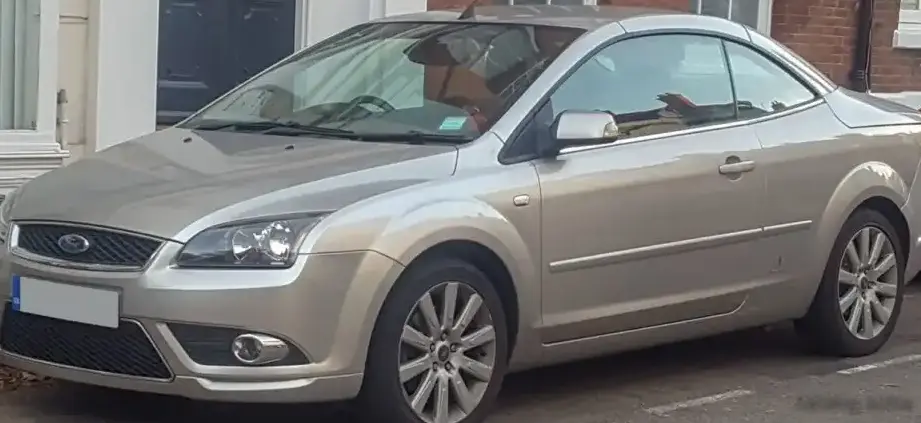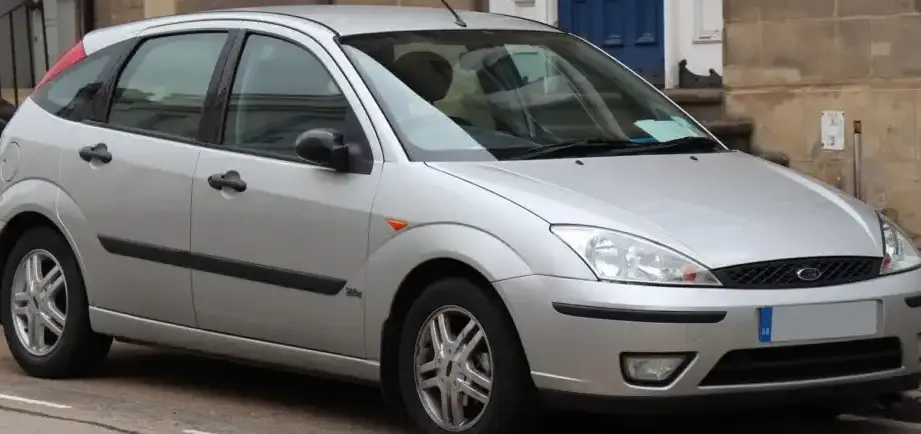
The Ford Focus Hatchback, launched in 1998, represented a significant departure for Ford of Europe, moving away from the aging Escort and embracing a more modern, contemporary design philosophy. The first generation, internally designated as the Mk1, was produced from 1998 to 2004, with a facelift occurring in 2002. The 2.0-liter 16V variant, producing 130 horsepower, arrived in 2001 as part of the facelifted range and offered a step up in performance compared to the lower-displacement engines. This model aimed to provide a balance between fuel efficiency and driving enjoyment, appealing to buyers seeking a more engaging experience than the base models offered. It was available in both 3-door and 5-door body styles.
Technical Specifications
| Brand | Ford |
| Model | Focus |
| Generation | Focus Hatchback I |
| Type (Engine) | 2.0 16V (130 Hp) |
| Start of production | 2001 |
| End of production | 2005 |
| Powertrain Architecture | Internal Combustion engine |
| Body type | Hatchback |
| Seats | 5 |
| Doors | 3/5 |
| Fuel consumption (urban) | 11.8 l/100 km (19.9 US mpg) |
| Fuel consumption (extra urban) | 7.2 l/100 km (32.7 US mpg) |
| Fuel consumption (combined) | 8.7 l/100 km (27 US mpg) |
| Fuel Type | Petrol (Gasoline) |
| Acceleration 0 – 100 km/h | 9.2 sec |
| Acceleration 0 – 62 mph | 9.2 sec |
| Acceleration 0 – 60 mph | 8.7 sec |
| Maximum speed | 201 km/h (124.9 mph) |
| Weight-to-power ratio | 8.8 kg/Hp |
| Weight-to-torque ratio | 6.6 kg/Nm |
| Power | 130 Hp @ 5500 rpm |
| Torque | 173 Nm @ 4250 rpm (127.6 lb.-ft. @ 4250 rpm) |
| Engine layout | Front, Transverse |
| Engine Model/Code | EDDC, EDDB, EDDD, EDDF |
| Engine displacement | 1988 cm3 (121.32 cu. in.) |
| Number of cylinders | 4 |
| Engine configuration | Inline |
| Cylinder Bore | 84.8 mm (3.34 in.) |
| Piston Stroke | 88 mm (3.46 in.) |
| Compression ratio | 10:1 |
| Number of valves per cylinder | 4 |
| Fuel injection system | Multi-port manifold injection |
| Engine aspiration | Naturally aspirated engine |
| Valvetrain | DOHC |
| Engine oil capacity | 4.25 l (4.49 US qt | 3.74 UK qt) |
| Coolant capacity | 5.75 l (6.08 US qt | 5.06 UK qt) |
| Kerb Weight | 1146 kg (2526.5 lbs.) |
| Max. weight | 1670 kg (3681.72 lbs.) |
| Max load | 524 kg (1155.22 lbs.) |
| Trunk (boot) space – minimum | 350 l (12.36 cu. ft.) |
| Trunk (boot) space – maximum | 1210 l (42.73 cu. ft.) |
| Fuel tank capacity | 55 l (14.53 US gal | 12.1 UK gal) |
| Length | 4178 mm (164.49 in.) |
| Width | 1702 mm (67.01 in.) |
| Height | 1481 mm (58.31 in.) |
| Wheelbase | 2615 mm (102.95 in.) |
| Front track | 1494 mm (58.82 in.) |
| Rear track | 1477 mm (58.15 in.) |
| Drivetrain Architecture | Front wheel drive |
| Number of gears | 5 |
| Gearbox type | Manual transmission |
| Front suspension | Wishbone |
| Rear suspension | Coil spring |
| Front brakes | Ventilated discs |
| Rear brakes | Disc |
| Assisting systems | ABS (Anti-lock braking system) |
| Steering type | Steering rack and pinion |
| Power steering | Hydraulic Steering |
| Tires size | 195/60 R15 |
| Wheel rims size | 15 |
Powertrain & Engine Architecture
The 2.0-liter engine, identified by engine codes such as EDDC, EDDB, EDDD, and EDDF, was a naturally aspirated, inline-four cylinder powerplant. It featured a dual overhead camshaft (DOHC) valvetrain with four valves per cylinder, contributing to its relatively high output for its displacement. Fuel delivery was handled by a multi-port fuel injection system, providing precise fuel metering for improved efficiency and performance. The engine’s 10:1 compression ratio was a typical value for the era, balancing power output with fuel economy. The 5-speed manual transmission was the standard pairing for this engine, offering a direct connection between the engine and the front wheels. This transmission was known for its relatively smooth shifts and durable construction.
Driving Characteristics
The 2.0-liter Focus offered a noticeable improvement in performance over the 1.4 and 1.6-liter variants. Acceleration to 60 mph took approximately 8.7 seconds, making it a competitive performer in its class. While not a sports car, the 130 hp engine provided sufficient power for confident overtaking and comfortable cruising. The manual transmission allowed drivers to fully exploit the engine’s powerband, while the gear ratios were well-chosen for both city driving and highway speeds. Compared to the later, more powerful ST models, the 2.0-liter offered a more refined and economical driving experience. It lacked the aggressive tuning and sporty suspension of the ST, but provided a more comfortable ride and better fuel economy.
Equipment & Trim Levels
The 2.0-liter Focus was typically offered in mid-range trim levels, such as Zetec or Ghia, depending on the market. Standard equipment often included power steering, central locking, electric front windows, and an adjustable steering column. Higher trim levels added features like alloy wheels, air conditioning, a CD player, and upgraded interior trim. Interior upholstery was typically cloth, with options for leather available on some models. The dashboard layout was functional and straightforward, with easy-to-read gauges and well-placed controls.
Chassis & Braking
The Mk1 Focus was praised for its excellent handling characteristics. The front suspension utilized independent wishbones, providing precise steering and good cornering stability. The rear suspension employed a coil spring setup, offering a comfortable ride without sacrificing handling. Braking duties were handled by ventilated discs on the front wheels and solid discs on the rear, providing adequate stopping power for most driving situations. Anti-lock Braking System (ABS) was standard equipment, enhancing safety and control during emergency braking.
Market Reception & Comparison
The 2.0-liter Focus Hatchback was generally well-received by automotive critics. It was praised for its balanced performance, comfortable ride, and refined handling. Fuel economy was considered respectable for its class, averaging around 27 mpg in combined driving. Compared to rivals like the Volkswagen Golf and Opel/Vauxhall Astra, the Focus offered a more engaging driving experience and a more modern interior design. However, some critics noted that the interior plastics felt somewhat low-rent compared to some competitors. The 2.0-liter variant offered a compelling alternative to the diesel engines available at the time, providing a smoother and quieter driving experience.
Legacy
The 2.0-liter Focus Hatchback has proven to be a relatively reliable vehicle, with many examples still on the road today. The engine is known for its durability, although regular maintenance is essential to prevent issues such as oil leaks and timing belt failure. The manual transmission is also generally reliable, but clutch wear is a common concern on higher-mileage examples. In the used car market, the 2.0-liter Focus Hatchback represents a good value proposition, offering a practical and enjoyable driving experience at an affordable price. It remains a popular choice for those seeking a well-rounded and reliable hatchback.