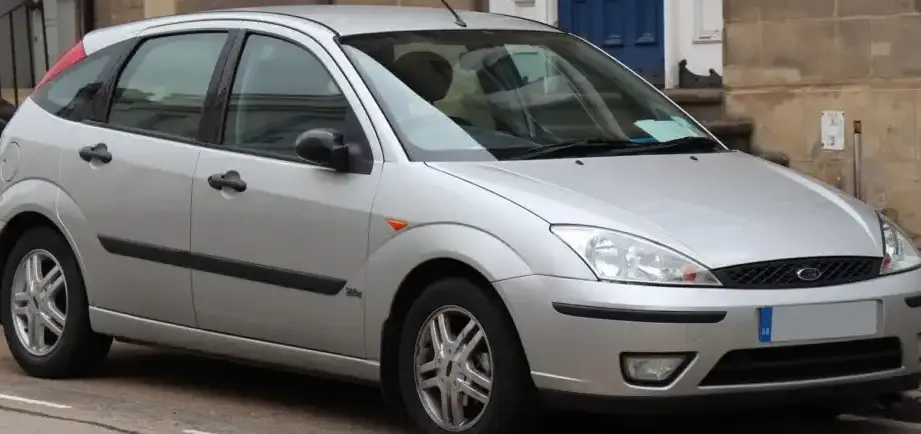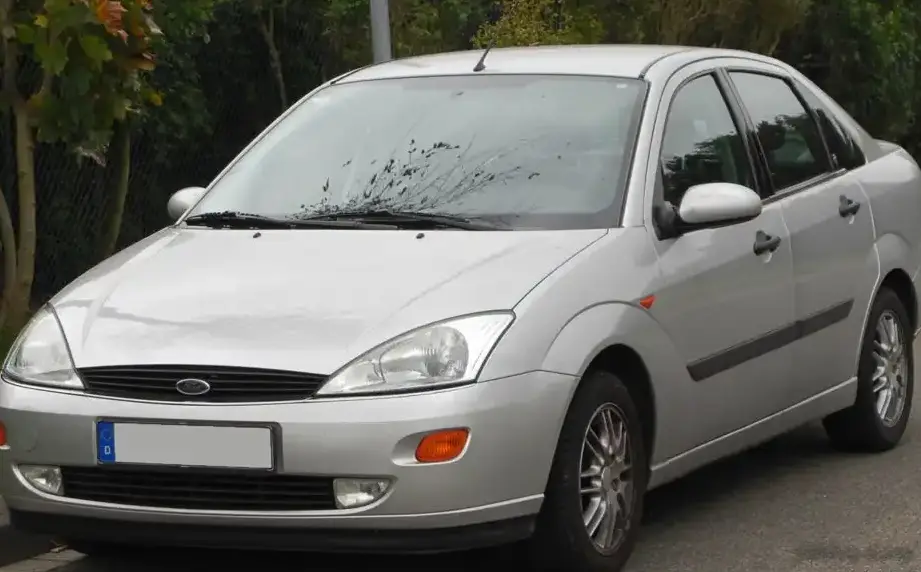
The Ford Focus I Sedan 1.4 16V, produced from 1998 to 2005, represented the entry point into the first generation of the globally successful Focus range. Positioned as an affordable and practical family sedan, this variant played a crucial role in establishing the Focus as a competitor in the compact car segment, particularly in European and Asian markets. It was built on the Ford C170 platform, later known as the 1HX0 for the hatchback and wagon versions, and offered a more modern alternative to the Escort it replaced. This specific 1.4L engine and 5-speed manual transmission combination was designed for fuel efficiency and accessibility, targeting budget-conscious buyers.
Technical Specifications
| Brand | Ford |
| Model | Focus |
| Generation | Focus I Sedan |
| Type (Engine) | 1.4 16V (75 Hp) |
| Start of production | 1998 |
| End of production | 2005 |
| Powertrain Architecture | Internal Combustion engine |
| Body type | Sedan |
| Seats | 5 |
| Doors | 4 |
| Fuel consumption (urban) | 8.7 l/100 km (27 US mpg, 32.5 UK mpg, 11.5 km/l) |
| Fuel consumption (extra urban) | 5.3 l/100 km (44.4 US mpg, 53.3 UK mpg, 18.9 km/l) |
| Fuel consumption (combined) | 7 l/100 km (33.6 US mpg, 40.4 UK mpg, 14.3 km/l) |
| Fuel Type | Petrol (Gasoline) |
| Acceleration 0 – 100 km/h | 14.4 sec |
| Acceleration 0 – 62 mph | 14.4 sec |
| Acceleration 0 – 60 mph | 13.7 sec |
| Maximum speed | 171 km/h (106.25 mph) |
| Weight-to-power ratio | 14.5 kg/Hp, 68.7 Hp/tonne |
| Weight-to-torque ratio | 8.7 kg/Nm, 114.6 Nm/tonne |
| Power | 75 Hp @ 5000 rpm |
| Power per litre | 54 Hp/l |
| Torque | 125 Nm @ 3500 rpm (92.2 lb.-ft. @ 3500 rpm) |
| Engine layout | Front, Transverse |
| Engine Model/Code | FXDA, FXDC, FXDB, FXDD |
| Engine displacement | 1388 cm3 (84.7 cu. in.) |
| Number of cylinders | 4 |
| Engine configuration | Inline |
| Cylinder Bore | 76 mm (2.99 in.) |
| Piston Stroke | 76.5 mm (3.01 in.) |
| Compression ratio | 11:1 |
| Number of valves per cylinder | 4 |
| Fuel injection system | Multi-port manifold injection |
| Engine aspiration | Naturally aspirated engine |
| Valvetrain | DOHC |
| Engine oil capacity | 3.75 l (3.96 US qt | 3.3 UK qt) |
| Coolant | 5 l (5.28 US qt | 4.4 UK qt) |
| Kerb Weight | 1091 kg (2405.24 lbs.) |
| Max. weight | 1595 kg (3516.37 lbs.) |
| Max load | 504 kg (1111.13 lbs.) |
| Trunk (boot) space – minimum | 490 l (17.3 cu. ft.) |
| Fuel tank capacity | 55 l (14.53 US gal | 12.1 UK gal) |
| Length | 4362 mm (171.73 in.) |
| Width | 1698 mm (66.85 in.) |
| Height | 1430 mm (56.3 in.) |
| Wheelbase | 2615 mm (102.95 in.) |
| Front track | 1484 mm (58.43 in.) |
| Rear (Back) track | 1477 mm (58.15 in.) |
| Drivetrain Architecture | The Internal combustion engine (ICE) drives the front wheels of the vehicle. |
| Drive wheel | Front wheel drive |
| Number of gears and type of gearbox | 5 gears, manual transmission |
| Front suspension | Wishbone |
| Rear suspension | Coil spring |
| Front brakes | Ventilated discs |
| Rear brakes | Disc |
| Assisting systems | ABS (Anti-lock braking system) |
| Steering type | Steering rack and pinion |
| Power steering | Hydraulic Steering |
| Tires size | 175/70 R14 |
Powertrain & Engine Architecture
The heart of this Focus variant was the Ford FXDA (and related FXDC, FXDB, FXDD) 1.4-liter inline-four engine. This engine featured a dual overhead camshaft (DOHC) valvetrain operating four valves per cylinder, a design intended to improve breathing and efficiency. Fuel delivery was handled by a multi-port fuel injection system, providing precise fuel metering for optimal combustion. The engine’s 11:1 compression ratio contributed to its modest power output. The 5-speed manual transmission was a standard offering, chosen for its efficiency and driver engagement. The transmission featured typical gear ratios for a front-wheel-drive compact car, prioritizing acceleration in lower gears and fuel economy at highway speeds.
Driving Characteristics
The 1.4L Focus Sedan offered a practical, if not particularly exhilarating, driving experience. With 75 horsepower, acceleration was leisurely, taking approximately 14.4 seconds to reach 62 mph. The engine felt most comfortable in the mid-range, providing adequate power for everyday driving situations. The 5-speed manual transmission allowed drivers to keep the engine in its optimal power band, but frequent downshifting was often necessary for overtaking or climbing hills. Compared to the higher-output 1.6L or 1.8L versions of the Focus, this variant lacked the punch for spirited driving. However, it excelled in fuel economy, making it a cost-effective choice for commuters.
Equipment & Trim Levels
The 1.4 16V Focus Sedan typically came with a basic level of equipment. Standard features generally included power steering, central locking, and an adjustable steering column. Interior upholstery was typically cloth, and the dashboard featured a functional, if somewhat spartan, design. Optional extras included air conditioning, electric windows, and an upgraded audio system. Trim levels were often differentiated by the addition of these optional features, with higher trims offering more comfort and convenience. Safety features were relatively basic for the time, typically including driver and passenger airbags and ABS brakes.
Chassis & Braking
The Focus I Sedan utilized a MacPherson strut front suspension and a coil spring rear suspension. This setup provided a reasonable balance between ride comfort and handling. The front brakes were ventilated discs, offering good stopping power, while the rear brakes were solid discs. The chassis was designed to be lightweight, contributing to the car’s overall fuel efficiency. Stabilizer bars were fitted to both the front and rear axles to reduce body roll during cornering. The steering was a hydraulic power-assisted rack and pinion system, providing precise and responsive steering feel.
Market Reception & Comparison
The 1.4L Focus Sedan was generally well-received as an affordable and reliable family car. Critics praised its fuel efficiency and comfortable ride, but noted its lack of outright performance. Compared to the 1.6L and 1.8L variants, the 1.4L offered a lower price point but sacrificed performance. The 1.6L provided a noticeable improvement in power, while the 1.8L offered a more refined driving experience. In terms of reliability, the 1.4L engine proved to be relatively robust, with few major issues reported. Its fuel economy was competitive with other cars in its class, making it an attractive option for budget-conscious buyers.
Legacy
The Ford Focus I Sedan 1.4 16V remains a relatively common sight on used car markets today. The FXDA engine, while not known for its high performance, is generally considered to be durable and reliable, provided it has been properly maintained. Parts availability is generally good, and maintenance costs are relatively low. These factors have contributed to its continued popularity as an affordable and practical used car. While it may not offer the excitement of higher-performance variants, the 1.4L Focus Sedan represents a solid and dependable choice for those seeking a budget-friendly compact car.