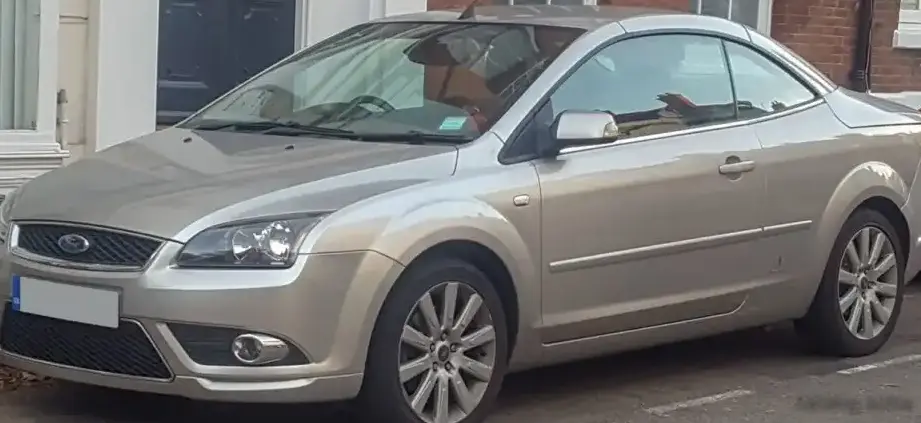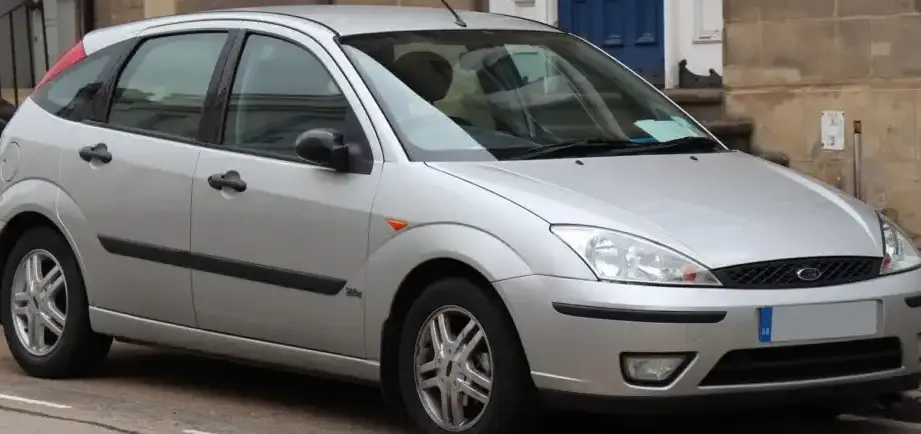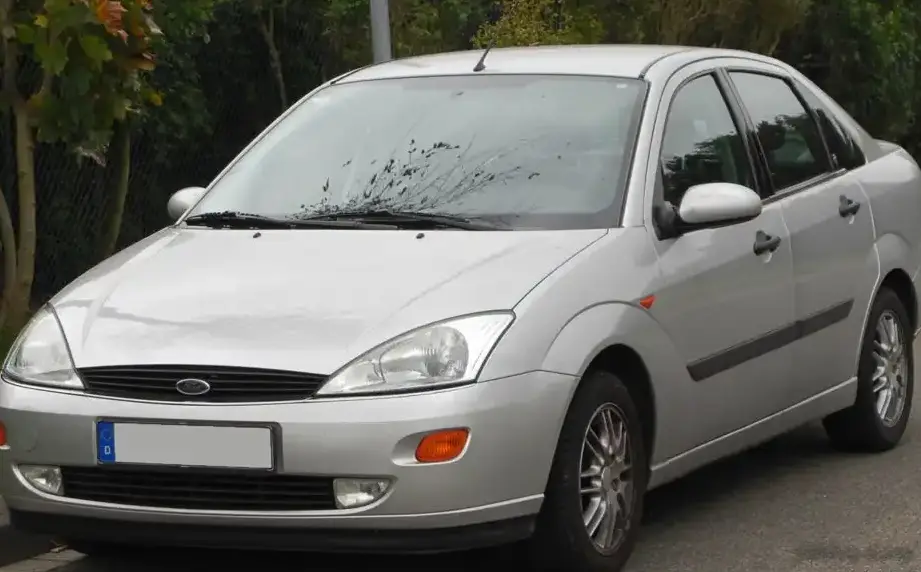
The Ford Focus I Sedan 1.6 16V, produced from 1998 to 2005, represented a significant step forward for Ford in the compact car segment. This variant, powered by the Zetec-Roche engine, was a mainstay of the first-generation Focus (internally designated the 1HX0/A3 platform) lineup, particularly in markets outside of North America where the sedan body style was more popular. Positioned as a mid-range offering, it bridged the gap between the base models and the more performance-oriented trims. The 1.6L engine and 5-speed manual transmission combination aimed to provide a balance of affordability, fuel efficiency, and acceptable performance for everyday driving.
Technical Specifications
| Brand | Ford |
| Model | Focus |
| Generation | Focus I Sedan |
| Type (Engine) | 1.6 16V (100 Hp) |
| Start of production | 1998 |
| End of production | 2005 |
| Powertrain Architecture | Internal Combustion engine |
| Body type | Sedan |
| Seats | 5 |
| Doors | 4 |
| Fuel consumption (urban) | 9.7 l/100 km (24.2 US mpg) |
| Fuel consumption (extra urban) | 6 l/100 km (39.2 US mpg) |
| Fuel consumption (combined) | 7 l/100 km (33.6 US mpg) |
| Fuel Type | Petrol (Gasoline) |
| Acceleration 0 – 100 km/h | 11 sec |
| Acceleration 0 – 62 mph | 11 sec |
| Acceleration 0 – 60 mph | 10.5 sec |
| Maximum speed | 185 km/h (114.95 mph) |
| Weight-to-power ratio | 10.9 kg/Hp |
| Weight-to-torque ratio | 7.6 kg/Nm |
| Power | 100 Hp @ 6000 rpm |
| Torque | 143 Nm @ 4000 rpm (105.47 lb.-ft. @ 4000 rpm) |
| Engine layout | Front, Transverse |
| Engine Model/Code | FYDA, FYDC, FYDB, FYDD, FYDH |
| Engine displacement | 1596 cm3 (97.39 cu. in.) |
| Number of cylinders | 4 |
| Engine configuration | Inline |
| Cylinder Bore | 79 mm (3.11 in.) |
| Piston Stroke | 81.4 mm (3.2 in.) |
| Compression ratio | 11:1 |
| Number of valves per cylinder | 4 |
| Fuel injection system | Multi-port manifold injection |
| Engine aspiration | Naturally aspirated engine |
| Valvetrain | DOHC |
| Engine oil capacity | 4.25 l (4.49 US qt | 3.74 UK qt) |
| Coolant capacity | 5 l (5.28 US qt | 4.4 UK qt) |
| Kerb Weight | 1091 kg (2405.24 lbs.) |
| Max. weight | 1615 kg (3560.47 lbs.) |
| Max load | 524 kg (1155.22 lbs.) |
| Trunk (boot) space | 490 l (17.3 cu. ft.) |
| Fuel tank capacity | 55 l (14.53 US gal | 12.1 UK gal) |
| Length | 4362 mm (171.73 in.) |
| Width | 1698 mm (66.85 in.) |
| Height | 1430 mm (56.3 in.) |
| Wheelbase | 2615 mm (102.95 in.) |
| Front track | 1484 mm (58.43 in.) |
| Rear track | 1477 mm (58.15 in.) |
| Drivetrain Architecture | Front wheel drive |
| Number of gears | 5 |
| Gearbox type | Manual transmission |
| Front suspension | Wishbone |
| Rear suspension | Coil spring |
| Front brakes | Ventilated discs |
| Rear brakes | Disc |
| Assisting systems | ABS (Anti-lock braking system) |
| Steering type | Steering rack and pinion |
| Power steering | Hydraulic Steering |
| Tires size | 175/70 R14; 185/65 R14; 195/60R15 |
| Wheel rims size | 5.5Jx14 ET47.5 4×10⁸; 5.5Jx14 ET43.5 4×10⁸; 6Jx15 ET50 4×10⁸ |
Powertrain & Engine Architecture
The heart of the Focus 1.6 16V was the Zetec-Roche engine, a 1.6-liter inline-four cylinder powerplant. Engine codes varied depending on the market and year, commonly including FYDA, FYDC, FYDB, FYDD, and FYDH. This engine featured a dual overhead camshaft (DOHC) valvetrain operating four valves per cylinder, contributing to its relatively high specific output for its displacement. Fuel delivery was handled by a multi-port fuel injection system, providing precise fuel metering for improved efficiency and emissions. The engine’s 11:1 compression ratio further enhanced performance. The 5-speed manual transmission was the standard offering, providing a reasonably direct driving experience. Gear ratios were tuned for a balance of acceleration and fuel economy, with a final drive ratio typically around 3.62:1.
Driving Characteristics
The 100 horsepower and 105 lb-ft of torque produced by the 1.6L engine provided adequate, but not exhilarating, performance. Acceleration from 0-60 mph took around 10.5 to 11 seconds, making it competitive with other cars in its class. The engine felt relatively responsive at higher RPMs, but lacked significant low-end torque. This meant drivers often needed to downshift to maintain momentum when climbing hills or overtaking. Compared to the higher-output 1.8L or the diesel variants, the 1.6L felt noticeably slower. The manual transmission allowed for more driver control and a slightly more engaging driving experience, but the gear ratios weren’t particularly sporty. Handling was a strong point of the first-generation Focus, thanks to its well-tuned suspension and precise steering.
Equipment & Trim Levels
The 1.6 16V typically came equipped with a reasonable level of standard features. Base models often included power steering, central locking, and an AM/FM radio. Higher trim levels, such as the LX or Zetec, added features like air conditioning, electric windows, alloy wheels, and upgraded interior trim. Interior upholstery was typically cloth, with a relatively simple dashboard layout. Optional extras included a sunroof, upgraded audio systems, and side airbags. The overall interior design prioritized functionality and durability over luxury.
Chassis & Braking
The Focus I Sedan utilized an independent front suspension with MacPherson struts and a twist-beam rear suspension. This setup provided a good balance of ride comfort and handling. Braking duties were handled by ventilated discs on the front wheels and solid discs on the rear. Anti-lock Braking System (ABS) was often included as standard equipment, enhancing safety. The chassis was relatively lightweight, contributing to the car’s nimble handling characteristics. Stabilizer bars were fitted to both the front and rear axles to reduce body roll during cornering.
Market Reception & Comparison
The Ford Focus 1.6 16V was generally well-received by automotive critics as a practical and affordable compact car. It was praised for its handling, ride quality, and fuel efficiency. However, some critics noted that the engine lacked power, particularly when compared to its rivals. Compared to the 1.8L variant, the 1.6L offered better fuel economy but significantly less performance. The diesel models provided even better fuel economy and more torque, but at a higher initial cost. In terms of reliability, the 1.6L engine proved to be generally robust, although issues with the cooling system and occasional oil leaks were reported.
Legacy
The Ford Focus I Sedan 1.6 16V remains a popular choice in the used car market, particularly for those seeking an affordable and reliable compact car. The Zetec-Roche engine, while not particularly powerful, is known for its durability and relatively low maintenance costs. Parts availability is generally good, making it a relatively easy car to maintain. While not a performance icon, the 1.6L Focus played a crucial role in establishing the Focus as a successful and well-regarded model in the compact car segment, paving the way for future generations.