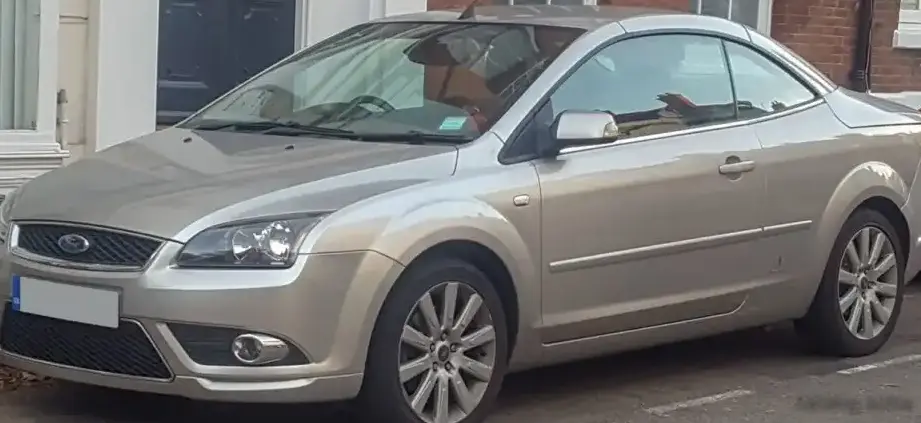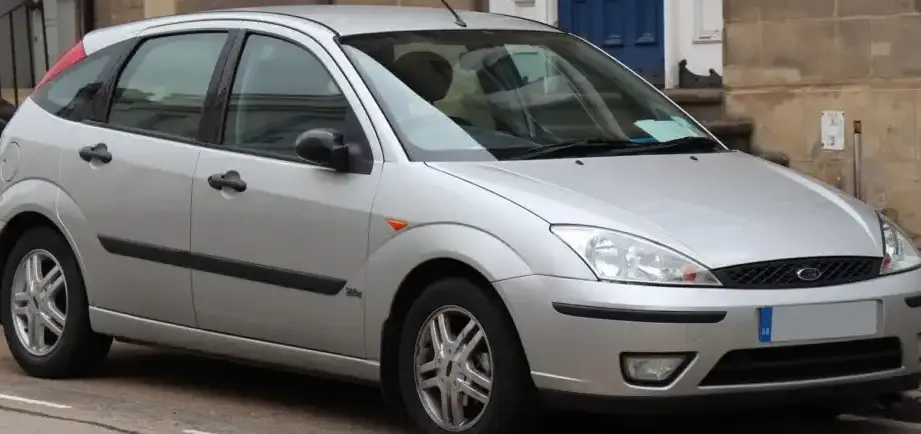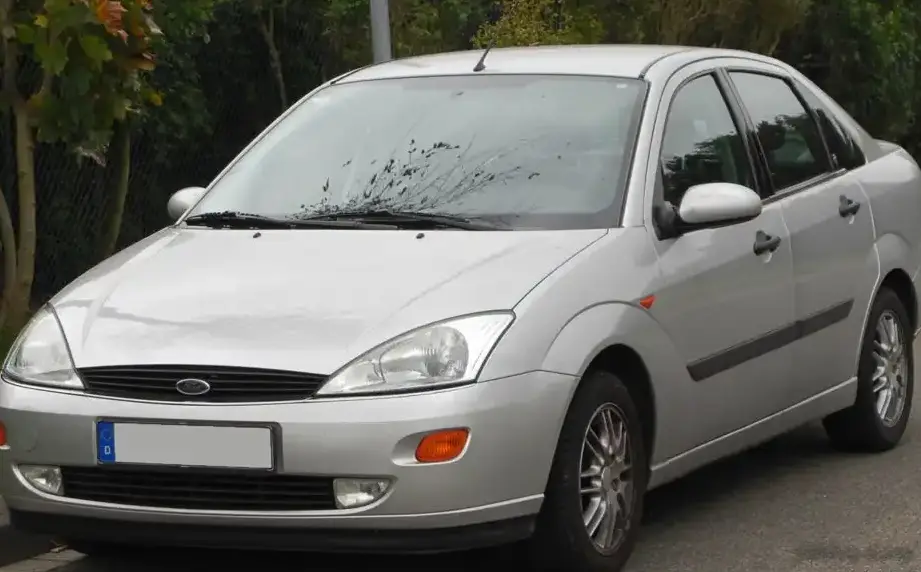
The Ford Focus I Sedan 1.6 16V Automatic, produced between 1998 and 2005, represented a key entry point into the first generation of the globally successful Focus range. Positioned as a practical and affordable family sedan, this variant was primarily aimed at buyers seeking comfortable transportation with reasonable fuel economy. It was a significant model for Ford, marking a shift towards a more modern and unified global platform – the C170 series, also known as the 1HX0 for the sedan. The Focus replaced the aging Escort and was intended to appeal to a broader demographic with its improved dynamics and contemporary styling. This particular 1.6L engine and automatic transmission combination offered a balance between cost and convenience, making it a popular choice in many markets, particularly in Europe and regions where manual transmissions weren’t as prevalent.
Technical Specifications
| Brand | Ford |
| Model | Focus |
| Generation | Focus I Sedan |
| Type (Engine) | 1.6 16V (100 Hp) Automatic |
| Start of production | 1998 |
| End of production | 2005 |
| Powertrain Architecture | Internal Combustion engine |
| Body type | Sedan |
| Seats | 5 |
| Doors | 4 |
| Fuel consumption (urban) | 11.6 l/100 km (20.3 US mpg, 24.4 UK mpg, 8.6 km/l) |
| Fuel consumption (extra urban) | 6.5 l/100 km (36.2 US mpg, 43.5 UK mpg, 15.4 km/l) |
| Fuel consumption (combined) | 7.8 l/100 km (30.2 US mpg, 36.2 UK mpg, 12.8 km/l) |
| Fuel Type | Petrol (Gasoline) |
| Acceleration 0 – 100 km/h | 12.4 sec |
| Acceleration 0 – 62 mph | 12.4 sec |
| Acceleration 0 – 60 mph | 11.8 sec |
| Maximum speed | 176 km/h (109.36 mph) |
| Weight-to-power ratio | 10.9 kg/Hp, 91.7 Hp/tonne |
| Weight-to-torque ratio | 7.6 kg/Nm, 131.1 Nm/tonne |
| Power | 100 Hp @ 6000 rpm |
| Power per litre | 62.7 Hp/l |
| Torque | 143 Nm @ 4000 rpm (105.47 lb.-ft. @ 4000 rpm) |
| Engine layout | Front, Transverse |
| Engine Model/Code | FYDA, FYDC, FYDB, FYDD, FYDH |
| Engine displacement | 1596 cm3 (97.39 cu. in.) |
| Number of cylinders | 4 |
| Engine configuration | Inline |
| Cylinder Bore | 79 mm (3.11 in.) |
| Piston Stroke | 81.4 mm (3.2 in.) |
| Compression ratio | 11:1 |
| Number of valves per cylinder | 4 |
| Fuel injection system | Multi-port manifold injection |
| Engine aspiration | Naturally aspirated engine |
| Valvetrain | DOHC |
| Engine oil capacity | 4.25 l (4.49 US qt | 3.74 UK qt) |
| Coolant capacity | 5 l (5.28 US qt | 4.4 UK qt) |
| Kerb Weight | 1091 kg (2405.24 lbs.) |
| Max. weight | 1615 kg (3560.47 lbs.) |
| Max load | 524 kg (1155.22 lbs.) |
| Trunk (boot) space – minimum | 490 l (17.3 cu. ft.) |
| Fuel tank capacity | 55 l (14.53 US gal | 12.1 UK gal) |
| Length | 4362 mm (171.73 in.) |
| Width | 1698 mm (66.85 in.) |
| Height | 1430 mm (56.3 in.) |
| Wheelbase | 2615 mm (102.95 in.) |
| Front track | 1484 mm (58.43 in.) |
| Rear (Back) track | 1477 mm (58.15 in.) |
| Drivetrain Architecture | The Internal combustion engine (ICE) drives the front wheels of the vehicle. |
| Drive wheel | Front wheel drive |
| Number of gears and type of gearbox | 4 gears, automatic transmission |
| Front suspension | Wishbone |
| Rear suspension | Coil spring |
| Front brakes | Ventilated discs |
| Rear brakes | Disc |
| Assisting systems | ABS (Anti-lock braking system) |
| Steering type | Steering rack and pinion |
| Power steering | Hydraulic Steering |
| Tires size | 185/60 R14 |
| Wheel rims size | 14 |
Powertrain & Engine Architecture
The heart of this Focus variant was the Ford Zetec-E 1.6-liter inline-four cylinder engine. Engine codes such as FYDA, FYDC, FYDB, FYDD, and FYDH were commonly found, with minor variations depending on the specific market and emissions regulations. This engine featured a dual overhead camshaft (DOHC) valvetrain with four valves per cylinder, contributing to its relatively efficient breathing. Fuel delivery was handled by a multi-port fuel injection system, providing precise fuel metering for improved performance and reduced emissions. The engine produced 100 horsepower at 6000 rpm and 143 Nm (105.47 lb-ft) of torque at 4000 rpm. Paired with this engine was a four-speed automatic transmission, designed for smooth and convenient operation. While not known for its sportiness, this transmission provided adequate performance for everyday driving. The automatic transmission was a conventional hydraulic control unit, lacking the electronic sophistication of later designs.
Driving Characteristics
The 1.6L automatic Focus Sedan offered a comfortable, if not particularly exhilarating, driving experience. Acceleration from 0-60 mph took around 11.8 seconds, and top speed was approximately 109 mph. The automatic transmission, while smooth, did detract from the engine’s available power, resulting in a noticeable delay during acceleration. Compared to the five-speed manual version, the automatic felt less responsive. The gear ratios were optimized for fuel economy and cruising comfort rather than outright performance. In real-world conditions, the car was best suited for city driving and highway cruising, where its relaxed nature and comfortable ride were appreciated. It wasn’t a car designed for spirited driving or aggressive cornering.
Equipment & Trim Levels
The 1.6 16V Automatic typically represented a mid-range trim level within the Focus Sedan lineup. Standard equipment generally included power steering, central locking, electric front windows, and an AM/FM radio. Air conditioning was often an optional extra, as were alloy wheels and upgraded interior trim. Interior upholstery was typically cloth, with a relatively simple dashboard layout. Safety features included ABS (Anti-lock Braking System) as standard, a significant improvement over previous Ford models. Higher trim levels, such as the Ghia, offered additional features like leather upholstery, climate control, and premium audio systems, but at a higher price point.
Chassis & Braking
The Focus I Sedan utilized a MacPherson strut front suspension and a coil spring rear suspension. This setup provided a good balance between ride comfort and handling. The front brakes were ventilated discs, offering good stopping power, while the rear brakes were solid discs. The chassis was relatively lightweight, contributing to the car’s decent fuel economy. Stabilizer bars were fitted to both the front and rear axles to reduce body roll during cornering. The hydraulic power steering provided light and easy steering, making it easy to maneuver in tight spaces.
Market Reception & Comparison
The Ford Focus I Sedan 1.6 16V Automatic was generally well-received by critics as a practical and affordable family car. It was praised for its comfortable ride, spacious interior, and improved handling compared to the Escort it replaced. However, the automatic transmission was often criticized for its lack of responsiveness and its impact on fuel economy. Compared to other trims, such as the 1.8L or diesel variants, the 1.6L automatic offered less performance but was more affordable to purchase and insure. Fuel economy was respectable, averaging around 30.2 US mpg in combined driving, but the diesel models offered significantly better fuel efficiency.
Legacy
The Ford Focus I Sedan 1.6 16V Automatic has proven to be a relatively reliable vehicle, with many examples still on the road today. The Zetec-E engine is known for its durability, although regular maintenance is essential to prevent issues such as oil leaks and timing belt failure. The automatic transmission, while not the most sophisticated, is generally reliable if properly serviced. In the used car market, these Focus Sedans are often sought after as affordable and practical transportation. They represent a significant step forward in Ford’s engineering and design, and laid the foundation for the continued success of the Focus model line.