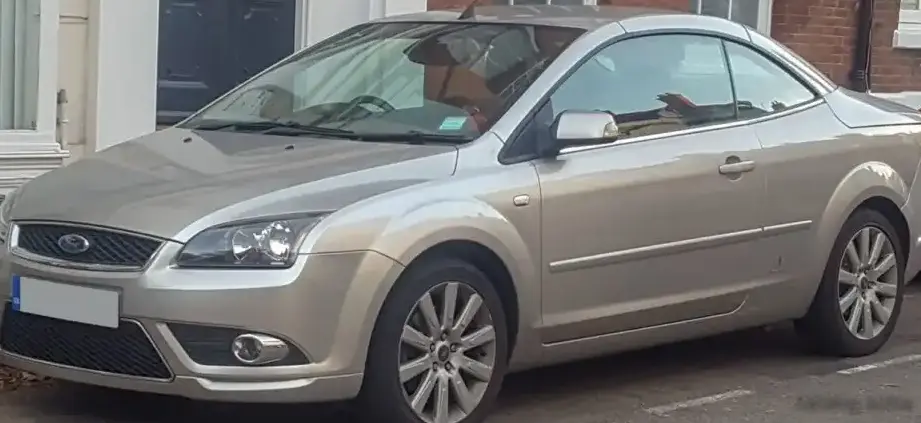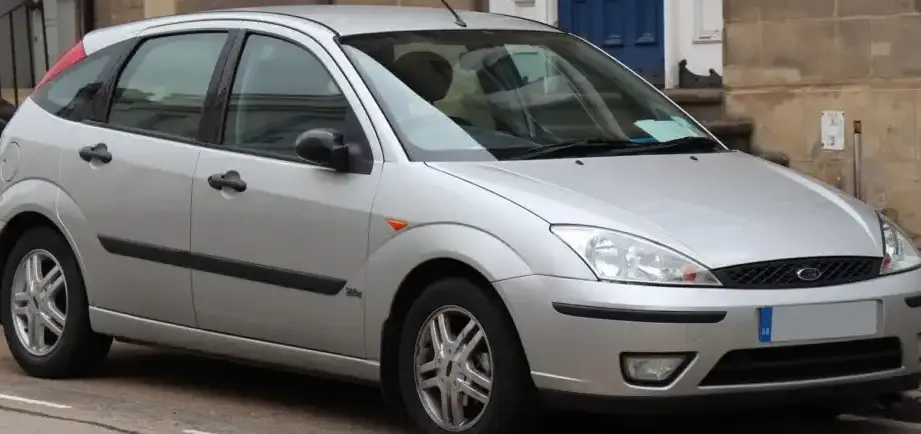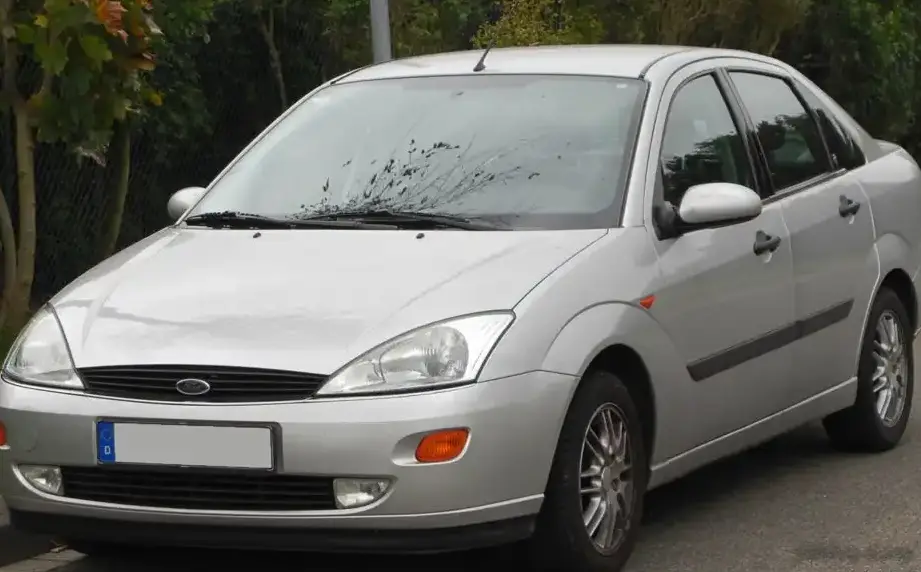
The Ford Focus I Sedan 1.6 i Duratec 8V (98 hp) was a mainstream offering within the first generation of the globally successful Ford Focus range, produced between 2002 and 2005. Positioned as an entry-level to mid-range trim, it provided a balance of affordability and practicality for the North American and European markets. This variant was part of the larger Focus Mk1 (internally designated as the C307) platform, which aimed to replace the aging Escort and provide a more modern, competitive compact car. The sedan body style, while less common in Europe, was specifically tailored for the North American market where sedans traditionally held a larger share of consumer preference.
Technical Specifications
| Brand | Ford |
| Model | Focus |
| Generation | Focus I Sedan |
| Type (Engine) | 1.6 i Duratec 8V (98 Hp) |
| Start of production | 2002 |
| End of production | 2005 |
| Powertrain Architecture | Internal Combustion engine |
| Body type | Sedan |
| Seats | 5 |
| Doors | 4 |
| Fuel consumption (urban) | 9.4 l/100 km (25 US mpg, 30.1 UK mpg) |
| Fuel consumption (extra urban) | 5.6 l/100 km (42 US mpg, 50.4 UK mpg) |
| Fuel consumption (combined) | 7 l/100 km (33.6 US mpg, 40.4 UK mpg) |
| Fuel Type | Petrol (Gasoline) |
| Acceleration 0 – 100 km/h | 12.9 sec |
| Acceleration 0 – 62 mph | 12.9 sec |
| Acceleration 0 – 60 mph | 12.3 sec |
| Maximum speed | 180 km/h (111.85 mph) |
| Power | 98 Hp @ 5500 rpm |
| Power per litre | 61.4 Hp/l |
| Torque | 140 Nm @ 4300 rpm (103.26 lb.-ft. @ 4300 rpm) |
| Engine layout | Front, Transverse |
| Engine Model/Code | ZH16DEAR |
| Engine displacement | 1597 cm3 (97.45 cu. in.) |
| Number of cylinders | 4 |
| Engine configuration | Inline |
| Cylinder Bore | 82.07 mm (3.23 in.) |
| Piston Stroke | 75.48 mm (2.97 in.) |
| Compression ratio | 9.5:1 |
| Number of valves per cylinder | 2 |
| Fuel injection system | Multi-port manifold injection |
| Engine aspiration | Naturally aspirated engine |
| Valvetrain | OHC |
| Engine oil capacity | 4.35 l (4.6 US qt | 3.83 UK qt) |
| Coolant | 6.15 l (6.5 US qt | 5.41 UK qt) |
| Trunk (boot) space (minimum) | 490 l (17.3 cu. ft.) |
| Fuel tank capacity | 53 l (14 US gal | 11.66 UK gal) |
| Length | 4369 mm (172.01 in.) |
| Width | 1702 mm (67.01 in.) |
| Height | 1481 mm (58.31 in.) |
| Wheelbase | 2615 mm (102.95 in.) |
| Front track | 1484 mm (58.43 in.) |
| Rear track | 1477 mm (58.15 in.) |
| Drivetrain Architecture | Front wheel drive |
| Number of gears and type of gearbox | 5 gears, manual transmission |
| Front suspension | Wishbone |
| Rear suspension | Coil spring |
| Front brakes | Ventilated discs |
| Rear brakes | Disc |
| Assisting systems | ABS (Anti-lock braking system) |
| Steering type | Steering rack and pinion |
| Power steering | Hydraulic Steering |
| Tires size | 195/60 R15 |
Powertrain & Engine Architecture
The heart of this Focus variant was the Ford Duratec 1.6-liter inline-four cylinder engine, bearing the internal code ZH16DEAR. This engine was part of the Duratec family, known for its relatively simple design and focus on reliability. It featured a single overhead camshaft (SOHC) valvetrain operating two valves per cylinder. Fuel delivery was managed by a multi-port fuel injection system, providing adequate, though not exceptional, performance. The 98 horsepower output at 5500 rpm and 140 Nm (103 lb-ft) of torque at 4300 rpm were typical figures for an engine of this displacement and configuration in the early 2000s. The engine was transversely mounted, driving the front wheels. The standard transmission was a five-speed manual, although a four-speed automatic transmission was also offered, impacting performance and fuel economy.
Driving Characteristics
The 1.6L Duratec with the five-speed manual transmission offered adequate performance for everyday driving. Acceleration to 60 mph took around 12.3 seconds, making it competitive with other vehicles in its class. The automatic transmission, while providing convenience, noticeably reduced acceleration times and felt less responsive. The gear ratios were tuned for fuel efficiency rather than outright performance. The engine was generally smooth and quiet at cruising speeds, but could become somewhat strained when pushed hard, particularly when fully loaded. Compared to the higher-output 2.0L Duratec or the diesel options available in Europe, this variant prioritized fuel economy and affordability over sporty driving dynamics.
Equipment & Trim Levels
The 1.6 i Duratec 8V typically represented the base or near-base trim level for the Focus Sedan. Standard equipment generally included power steering, air conditioning, and an AM/FM radio. Safety features such as dual front airbags and ABS were also standard. Interior upholstery was typically cloth, and the dashboard featured a relatively simple design. Optional extras included power windows, power door locks, a CD player, and alloy wheels. Higher trim levels, such as the Zetec, offered more luxurious features and a sportier appearance.
Chassis & Braking
The Focus I Sedan utilized a MacPherson strut front suspension and a coil spring rear suspension. This setup provided a comfortable ride and predictable handling. The front brakes were ventilated discs, offering good stopping power, while the rear brakes were solid discs. The chassis was relatively lightweight, contributing to the car’s agility. Stabilizer bars were included to reduce body roll during cornering, though their thickness was modest on the base models. The hydraulic power steering provided light and easy steering input.
Market Reception & Comparison
The 1.6L Focus Sedan was generally well-received as a practical and affordable compact car. Critics praised its comfortable ride, spacious interior, and good fuel economy. However, some reviewers noted that the engine lacked power, particularly when paired with the automatic transmission. Compared to the 2.0L Duratec variant, the 1.6L offered significantly less performance but boasted better fuel economy. The diesel options, available in Europe, provided even better fuel efficiency and torque but came with a higher purchase price. In the North American market, it competed with vehicles like the Honda Civic, Toyota Corolla, and Mazda3.
Legacy
The Duratec 1.6L engine proved to be a reliable and durable powerplant. While not known for its high performance, it was generally trouble-free and relatively inexpensive to maintain. Today, used examples of the Focus I Sedan 1.6 i Duratec 8V are readily available and often represent a good value for budget-conscious buyers. Common issues are typically related to age and mileage, such as worn suspension components and minor oil leaks. The engine’s simplicity makes it relatively easy to diagnose and repair, contributing to its continued popularity in the used car market. The Focus I generation, as a whole, is remembered as a significant step forward for Ford, establishing a new benchmark for compact car design and driving dynamics.