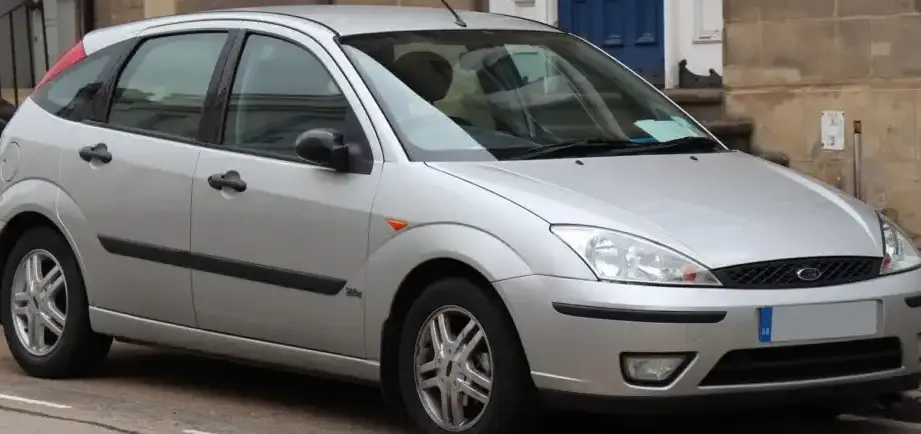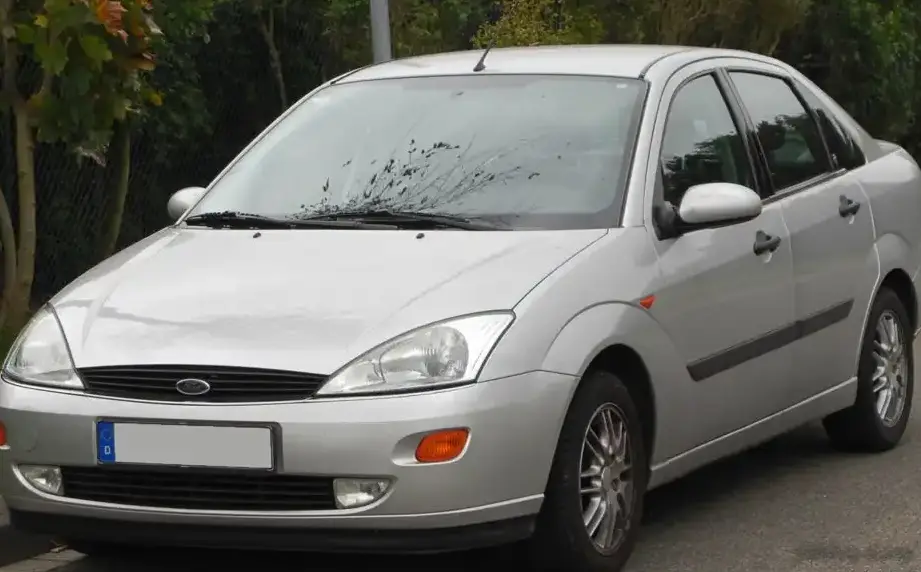
The Ford Focus I Sedan 1.8 Turbo DI (90 hp) represents a specific configuration within the first generation of the globally successful Ford Focus range, produced from 1998 to 2005. Positioned as an entry-level diesel option, particularly in European markets, this variant aimed to provide fuel efficiency and reasonable performance for everyday commuting and family use. It was part of the larger Focus Mk1 series (internally designated as the 1HX0/A3 platform), which marked a significant departure from the aging Escort it replaced, offering a more modern and refined driving experience. This sedan body style was particularly popular in regions where three-box designs were preferred over hatchbacks.
Technical Specifications
| Brand | Ford |
| Model | Focus |
| Generation | Focus I Sedan |
| Type (Engine) | 1.8 Turbo DI (90 Hp) |
| Start of production | 1998 |
| End of production | 2005 |
| Powertrain Architecture | Internal Combustion engine |
| Body type | Sedan |
| Seats | 5 |
| Doors | 4 |
| Fuel consumption (urban) | 6.7 l/100 km (35.1 US mpg, 42.2 UK mpg, 14.9 km/l) |
| Fuel consumption (extra urban) | 4 l/100 km (58.8 US mpg, 70.6 UK mpg, 25 km/l) |
| Fuel consumption (combined) | 5.4 l/100 km (43.6 US mpg, 52.3 UK mpg, 18.5 km/l) |
| Fuel Type | Diesel |
| Acceleration 0 – 100 km/h | 14.9 sec |
| Acceleration 0 – 62 mph | 14.9 sec |
| Acceleration 0 – 60 mph | 14.2 sec |
| Maximum speed | 168 km/h (104.39 mph) |
| Weight-to-power ratio | 13.4 kg/Hp, 74.7 Hp/tonne |
| Weight-to-torque ratio | 6 kg/Nm, 166 Nm/tonne |
| Power | 90 Hp @ 4000 rpm |
| Power per litre | 51.3 Hp/l |
| Torque | 200 Nm @ 2000 rpm (147.51 lb.-ft. @ 2000 rpm) |
| Engine layout | Front, Transverse |
| Engine Model/Code | C9DC, C9DA, C9DB |
| Engine displacement | 1753 cm3 (106.97 cu. in.) |
| Number of cylinders | 4 |
| Engine configuration | Inline |
| Cylinder Bore | 82.5 mm (3.25 in.) |
| Piston Stroke | 82 mm (3.23 in.) |
| Compression ratio | 19.4:1 |
| Number of valves per cylinder | 2 |
| Fuel injection system | Direct injection |
| Engine aspiration | Turbocharger |
| Valvetrain | OHC |
| Engine oil capacity | 5.6 l (5.92 US qt | 4.93 UK qt) |
| Coolant | 6.5 l (6.87 US qt | 5.72 UK qt) |
| Kerb Weight | 1205 kg (2656.57 lbs.) |
| Max. weight | 1715 kg (3780.93 lbs.) |
| Max load | 510 kg (1124.36 lbs.) |
| Trunk (boot) space – minimum | 490 l (17.3 cu. ft.) |
| Fuel tank capacity | 53 l (14 US gal | 11.66 UK gal) |
| Length | 4362 mm (171.73 in.) |
| Width | 1698 mm (66.85 in.) |
| Height | 1430 mm (56.3 in.) |
| Wheelbase | 2615 mm (102.95 in.) |
| Front track | 1484 mm (58.43 in.) |
| Rear (Back) track | 1477 mm (58.15 in.) |
| Drivetrain Architecture | The Internal combustion engine (ICE) drives the front wheels of the vehicle. |
| Drive wheel | Front wheel drive |
| Number of gears and type of gearbox | 5 gears, manual transmission |
| Front suspension | Wishbone |
| Rear suspension | Coil spring |
| Front brakes | Ventilated discs |
| Rear brakes | Disc |
| Assisting systems | ABS (Anti-lock braking system) |
| Steering type | Steering rack and pinion |
| Power steering | Hydraulic Steering |
| Tires size | 175/70 R14 |
Powertrain & Engine Architecture
The heart of this Focus variant is the 1.8-liter, inline-four cylinder diesel engine, utilizing direct injection and a turbocharger. Engine codes C9DC, C9DA, and C9DB were commonly used, with minor variations depending on specific market requirements. This engine employed a Bosch EDC (Electronic Diesel Control) system for fuel management, optimizing injection timing and duration for improved efficiency and reduced emissions. The engine featured an overhead camshaft (OHC) valvetrain with two valves per cylinder. The turbocharger, a Garrett unit in many cases, provided a boost in power and torque compared to naturally aspirated diesel engines of similar displacement. The five-speed manual transmission was the standard offering, chosen for its balance of fuel economy and driver engagement. While an automatic transmission was available in some markets with the 1.8L engine, it was less common and often paired with lower-output versions.
Driving Characteristics
The 90 hp output and 200 Nm (147 lb-ft) of torque delivered by the 1.8 Turbo DI engine resulted in a driving experience geared towards practicality rather than outright performance. Acceleration from 0-60 mph took around 14.2 seconds, and top speed was limited to approximately 104 mph. The engine’s torque peak at 2000 rpm provided adequate pulling power for everyday driving situations, including highway overtaking. Compared to the higher-output 1.8L petrol versions or the later 2.0L diesels, this variant felt noticeably slower. However, its fuel economy was a significant advantage. The five-speed manual transmission offered a reasonable spread of gear ratios, allowing drivers to keep the engine within its optimal operating range. The gear ratios were tuned for economy, meaning the engine could feel strained when pushed hard.
Equipment & Trim Levels
The 1.8 Turbo DI typically represented an entry-level trim within the Focus sedan range. Standard equipment generally included power steering, central locking, electric front windows, and an AM/FM radio. Air conditioning and alloy wheels were often optional extras. Interior upholstery was typically cloth, with a relatively basic dashboard layout. Higher trim levels, such as the Ghia, offered more luxurious appointments, including upgraded upholstery, climate control, and additional features like rear electric windows and a trip computer. Safety features were relatively basic for the time, typically including driver and passenger airbags and ABS brakes.
Chassis & Braking
The Focus Mk1 utilized a MacPherson strut front suspension and a coil spring rear suspension. The 1.8 Turbo DI variant, due to its lower power output and weight, often featured slightly softer spring rates compared to higher-performance models. Front brakes were ventilated discs, providing adequate stopping power, while rear brakes were typically solid discs. ABS (Anti-lock Braking System) was standard, enhancing safety during emergency braking situations. The steering system employed a hydraulic power steering rack and pinion, offering a reasonable level of assistance without feeling overly light or disconnected.
Market Reception & Comparison
The Ford Focus 1.8 Turbo DI was generally well-received as a fuel-efficient and practical family car. Critics praised its comfortable ride, responsive steering, and spacious interior. However, the engine’s performance was often cited as a drawback, particularly when compared to petrol alternatives. Compared to the 1.6L petrol engine, the 1.8 Turbo DI offered significantly better fuel economy but less overall power. The later 2.0L TDCi diesel engines provided a substantial performance upgrade, but at a higher price point. Reliability was generally good, although some owners reported issues with the turbocharger and fuel injection system over the long term.
Legacy
The 1.8 Turbo DI engine, while not the most powerful in the Focus lineup, proved to be a relatively durable and reliable unit when properly maintained. Today, these vehicles are increasingly sought after by enthusiasts and collectors, particularly those looking for a classic Ford with good fuel economy. Parts availability is generally good, although some specific components may be becoming harder to find. The Focus Mk1, in all its variants, established the Focus nameplate as a major player in the global compact car market, and the 1.8 Turbo DI played a significant role in its initial success, offering a compelling blend of practicality, efficiency, and affordability.