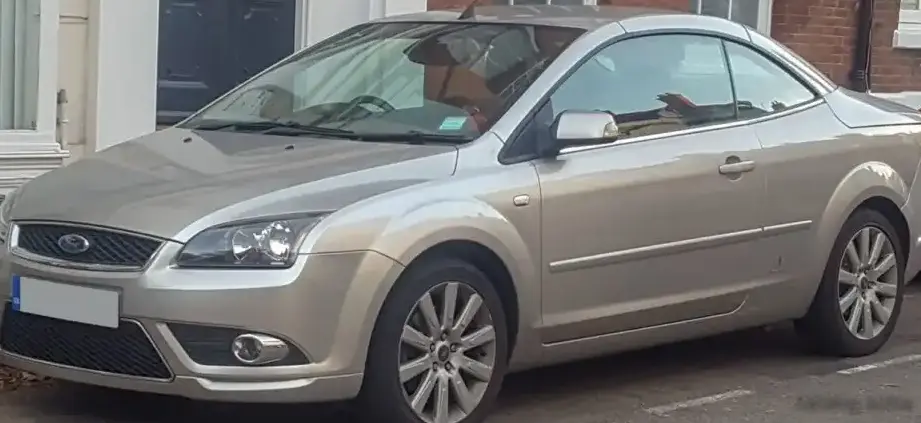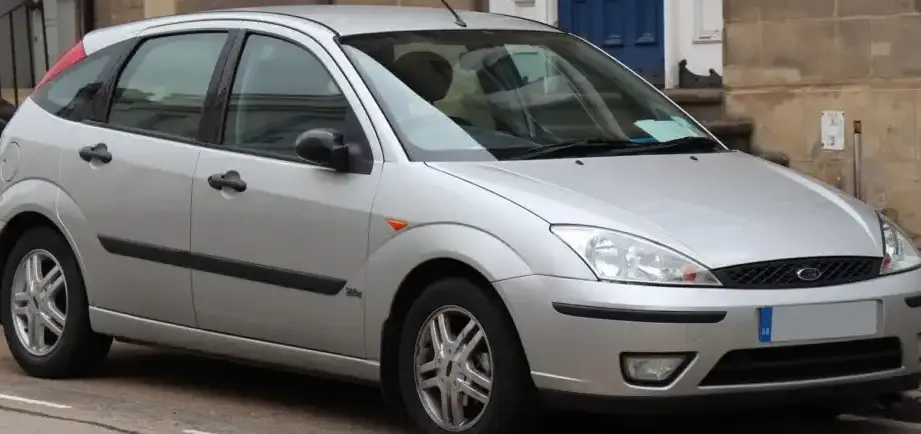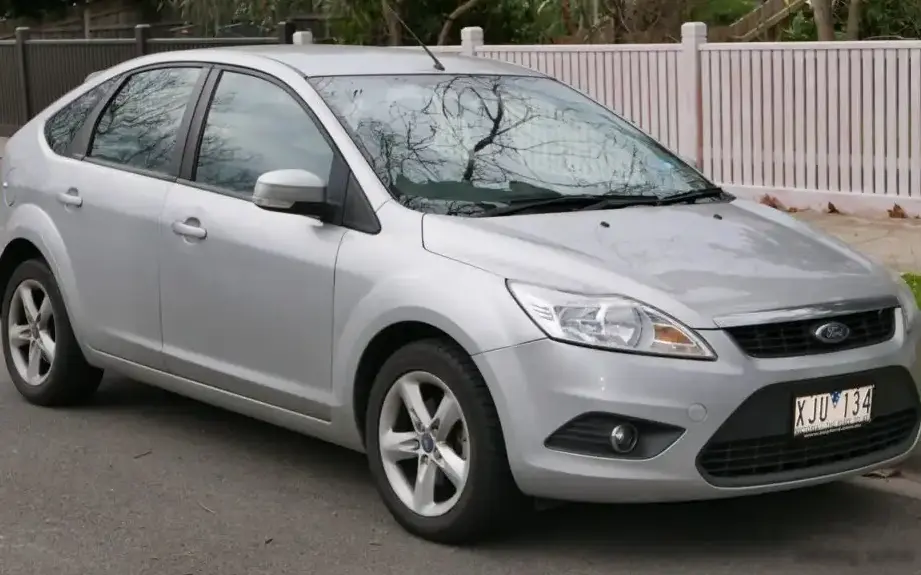
The Ford Focus II Hatchback, produced from 2005 to 2010, represented a significant step forward for Ford’s compact offering in the European market and, to a lesser extent, North America. Within the second generation Focus (internally designated the 1HX0/A3 platform), the 1.6 Duratec 16V variant, producing 100 horsepower, served as a key entry point into the range. This model aimed to provide affordable and practical transportation, prioritizing fuel efficiency and everyday usability over outright performance. It was available in both 3-door and 5-door hatchback configurations, catering to a broad spectrum of buyers. The 1.6L engine was a mainstay of the Focus II lineup, offering a balance between cost and capability.
Technical Specifications
| Brand | Ford |
| Model | Focus |
| Generation | Focus II Hatchback |
| Type (Engine) | 1.6 Duratec 16V (100 Hp) |
| Start of production | 2005 |
| End of production | 2010 |
| Powertrain Architecture | Internal Combustion engine |
| Body type | Hatchback |
| Seats | 5 |
| Doors | 3/5 |
| Fuel consumption (urban) | 8.7 l/100 km (27 US mpg, 32.5 UK mpg, 11.5 km/l) |
| Fuel consumption (extra urban) | 5.5 l/100 km (42.8 US mpg, 51.4 UK mpg, 18.2 km/l) |
| Fuel consumption (combined) | 6.7 l/100 km (35.1 US mpg, 42.2 UK mpg, 14.9 km/l) |
| Fuel Type | Petrol (Gasoline) |
| Acceleration 0 – 100 km/h | 11.9 sec |
| Acceleration 0 – 62 mph | 11.9 sec |
| Acceleration 0 – 60 mph | 11.3 sec |
| Maximum speed | 180 km/h (111.85 mph) |
| Weight-to-power ratio | 12.4 kg/Hp, 80.5 Hp/tonne |
| Weight-to-torque ratio | 8.7 kg/Nm, 115.1 Nm/tonne |
| Power | 100 Hp @ 6000 rpm |
| Power per litre | 62.7 Hp/l |
| Torque | 143 Nm @ 4000 rpm (105.47 lb.-ft. @ 4000 rpm) |
| Engine layout | Front, Transverse |
| Engine Model/Code | HWDA, HWDB, SHDA, SHDB, SHDC |
| Engine displacement | 1596 cm3 (97.39 cu. in.) |
| Number of cylinders | 4 |
| Engine configuration | Inline |
| Cylinder Bore | 79 mm (3.11 in.) |
| Piston Stroke | 81.4 mm (3.2 in.) |
| Compression ratio | 11:1 |
| Number of valves per cylinder | 4 |
| Fuel injection system | Multi-port manifold injection |
| Engine aspiration | Naturally aspirated engine |
| Valvetrain | DOHC |
| Engine oil capacity | 4.1 l (4.33 US qt | 3.61 UK qt) |
| Coolant | 5.5 l (5.81 US qt | 4.84 UK qt) |
| Kerb Weight | 1242 kg (2738.14 lbs.) |
| Max. weight | 1710 kg (3769.9 lbs.) |
| Max load | 468 kg (1031.76 lbs.) |
| Trunk (boot) space – minimum | 385 l (13.6 cu. ft.) |
| Trunk (boot) space – maximum | 1247 l (44.04 cu. ft.) |
| Fuel tank capacity | 55 l (14.53 US gal | 12.1 UK gal) |
| Length | 4342 mm (170.94 in.) |
| Width | 1840 mm (72.44 in.) |
| Height | 1497 mm (58.94 in.) |
| Wheelbase | 2640 mm (103.94 in.) |
| Front track | 1535 mm (60.43 in.) |
| Rear (Back) track | 1531 mm (60.28 in.) |
| Drivetrain Architecture | The Internal combustion engine (ICE) drives the front wheels of the vehicle. |
| Drive wheel | Front wheel drive |
| Number of gears and type of gearbox | 5 gears, manual transmission |
| Front suspension | Spring Strut |
| Rear suspension | Transverse stabilizer |
| Front brakes | Ventilated discs |
| Rear brakes | Drum |
| Steering type | Steering rack and pinion |
| Tires size | 195/65 R15 |
| Wheel rims size | 6J x 15 |
Powertrain & Engine Architecture
The heart of this Focus variant was the 1.6-liter Duratec 16V engine, specifically the HWDA, HWDB, SHDA, SHDB, or SHDC engine codes depending on the specific market and year. This engine was a member of Ford’s Duratec family, known for its relatively simple and robust design. It featured a cast iron block with an aluminum cylinder head, incorporating a double overhead camshaft (DOHC) valvetrain with four valves per cylinder. Fuel delivery was handled by a multi-port fuel injection system, providing adequate atomization for efficient combustion. The engine’s 100 horsepower output at 6000 rpm and 143 Nm (105 lb-ft) of torque at 4000 rpm were considered modest, but sufficient for everyday driving. The engine was typically paired with a five-speed manual transmission, although a four-speed automatic transmission was also available, albeit less common. The automatic transmission, while offering convenience, did impact acceleration and fuel economy.
Driving Characteristics
The 1.6L Focus with the manual transmission offered a reasonably engaging driving experience, though it wasn’t particularly quick. Acceleration to 60 mph took around 11.3 seconds, and top speed was limited to 111.85 mph. The engine felt responsive enough for city driving and highway cruising, but required downshifting for overtaking maneuvers. The automatic transmission version, while smoother, noticeably dulled performance. Gear ratios were optimized for fuel efficiency rather than outright speed. The suspension provided a comfortable ride, absorbing bumps and imperfections in the road well. Steering was precise and offered decent feedback, contributing to a confident feel behind the wheel.
Equipment & Trim Levels
The 1.6L Duratec models typically represented the base or near-base trim level in the Focus II range. Standard equipment generally included power steering, central locking, electric front windows, and an AM/FM radio. Air conditioning was often an optional extra. Interior upholstery was typically cloth, with a relatively simple dashboard layout. Higher trim levels, such as the Ghia or Titanium, offered additional features like alloy wheels, upgraded audio systems, climate control, and more luxurious interior appointments. The base trim focused on providing essential features at an affordable price point.
Chassis & Braking
The Focus II utilized a MacPherson strut front suspension and a twist-beam rear suspension. This setup provided a good balance between ride comfort and handling. Front brakes were ventilated discs, offering adequate stopping power, while rear brakes were typically drum brakes on the base models, contributing to cost savings. Stabilizer bars were fitted to both the front and rear axles to reduce body roll during cornering. The chassis was designed to be lightweight, contributing to improved fuel efficiency and handling. The 15-inch wheels were typically fitted with 195/65 R15 tires.
Market Reception & Comparison
The 1.6L Focus was generally well-received as a practical and affordable family car. Critics praised its comfortable ride, decent handling, and fuel efficiency. However, the engine’s modest power output was often cited as a drawback, particularly when compared to higher-performance variants like the 2.0L Duratec or the diesel-powered models. The 1.8L version offered a noticeable performance upgrade, while the diesel engines provided superior fuel economy. The automatic transmission version was often criticized for its sluggishness and impact on fuel consumption. Compared to rivals like the Volkswagen Golf and Opel/Vauxhall Astra, the Focus offered a competitive package in terms of price, features, and driving dynamics.
Legacy
The 1.6L Duratec engine, in general, proved to be a reliable and durable unit. While not without its minor issues (such as occasional oil leaks), it was generally considered a robust powertrain. The Focus II, as a whole, established a strong reputation for reliability and practicality. Today, these vehicles are readily available on the used car market at affordable prices. The 1.6L automatic variant, while not the most desirable version, remains a viable option for buyers seeking a budget-friendly and economical hatchback. Maintenance costs are generally reasonable, and parts availability is good, making it a sensible choice for those seeking a dependable and inexpensive mode of transportation.