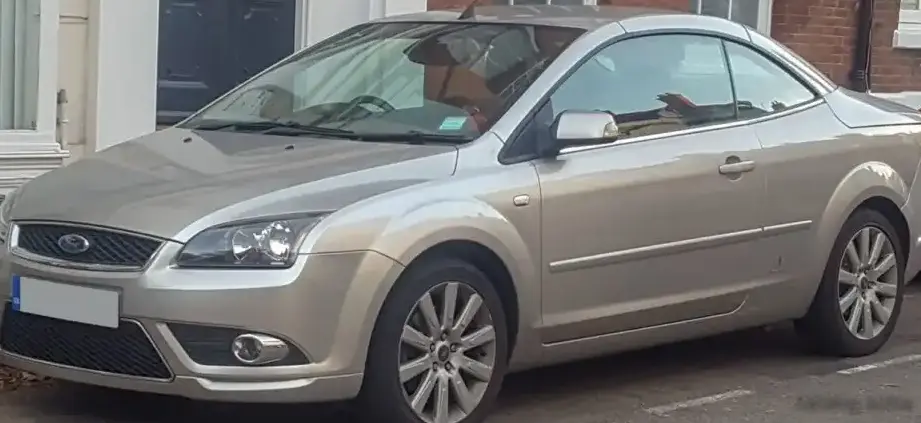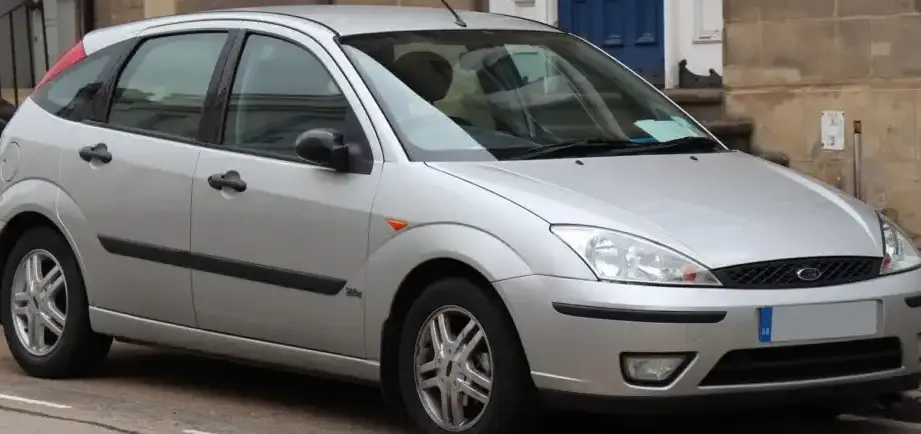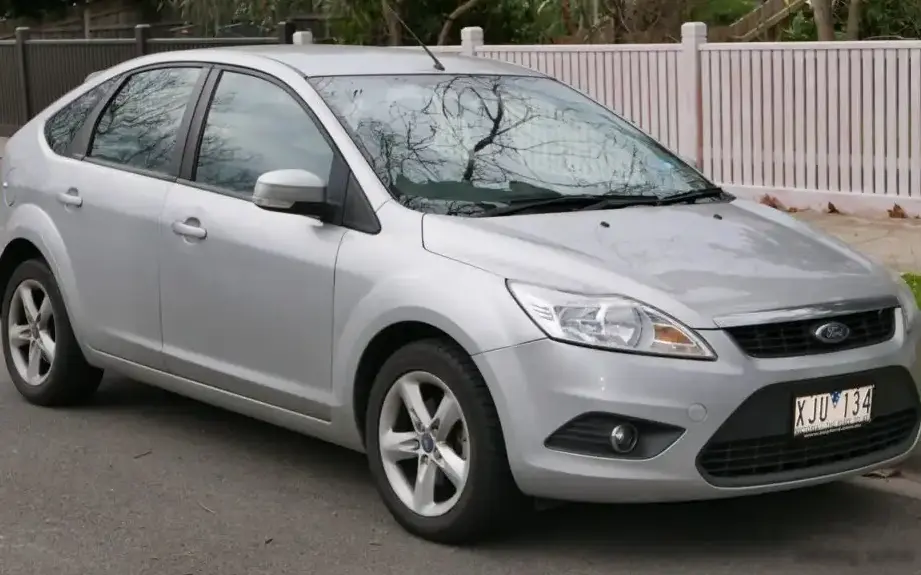
The Ford Focus II Hatchback, produced from 2005 to 2010, represented a significant step forward for Ford’s compact offering in the European market and, to a lesser extent, North America. Within the second generation Focus (internally designated the 1HX0/A3 platform), the 1.6 Duratec 16V 100 horsepower automatic variant occupied an entry to mid-level position in the lineup. It was designed to appeal to buyers prioritizing affordability and ease of use over outright performance, offering a practical and fuel-efficient option within a broader range of engine and transmission choices. This model aimed to provide a comfortable and convenient driving experience for everyday commuting and family use.
Technical Specifications
| Brand | Ford |
| Model | Focus |
| Generation | Focus II Hatchback |
| Type (Engine) | 1.6 Duratec 16V (100 Hp) Automatic |
| Start of production | 2005 |
| End of production | 2010 |
| Powertrain Architecture | Internal Combustion engine |
| Body type | Hatchback |
| Seats | 5 |
| Doors | 3/5 |
| Fuel consumption (urban) | 10.4 l/100 km (22.6 US mpg, 27.2 UK mpg, 9.6 km/l) |
| Fuel consumption (extra urban) | 5.9 l/100 km (39.9 US mpg, 47.9 UK mpg, 16.9 km/l) |
| Fuel consumption (combined) | 7.5 l/100 km (31.4 US mpg, 37.7 UK mpg, 13.3 km/l) |
| Fuel Type | Petrol (Gasoline) |
| Acceleration 0 – 100 km/h | 13.6 sec |
| Acceleration 0 – 62 mph | 13.6 sec |
| Acceleration 0 – 60 mph | 12.9 sec |
| Maximum speed | 172 km/h (106.88 mph) |
| Weight-to-power ratio | 12.4 kg/Hp, 80.5 Hp/tonne |
| Weight-to-torque ratio | 8.7 kg/Nm, 115.1 Nm/tonne |
| Power | 100 Hp @ 6000 rpm |
| Power per litre | 62.7 Hp/l |
| Torque | 143 Nm @ 4000 rpm (105.47 lb.-ft. @ 4000 rpm) |
| Engine layout | Front, Transverse |
| Engine Model/Code | HWDA, HWDB, SHDA, SHDB, SHDC |
| Engine displacement | 1596 cm3 (97.39 cu. in.) |
| Number of cylinders | 4 |
| Engine configuration | Inline |
| Cylinder Bore | 79 mm (3.11 in.) |
| Piston Stroke | 81.4 mm (3.2 in.) |
| Compression ratio | 11:1 |
| Number of valves per cylinder | 4 |
| Fuel injection system | Multi-port manifold injection |
| Engine aspiration | Naturally aspirated engine |
| Valvetrain | DOHC |
| Engine oil capacity | 4.1 l (4.33 US qt | 3.61 UK qt) |
| Coolant | 5.5 l (5.81 US qt | 4.84 UK qt) |
| Kerb Weight | 1242 kg (2738.14 lbs.) |
| Max. weight | 1710 kg (3769.9 lbs.) |
| Max load | 468 kg (1031.76 lbs.) |
| Trunk (boot) space – minimum | 385 l (13.6 cu. ft.) |
| Trunk (boot) space – maximum | 1247 l (44.04 cu. ft.) |
| Fuel tank capacity | 55 l (14.53 US gal | 12.1 UK gal) |
| Length | 4342 mm (170.94 in.) |
| Width | 1840 mm (72.44 in.) |
| Height | 1497 mm (58.94 in.) |
| Wheelbase | 2640 mm (103.94 in.) |
| Front track | 1535 mm (60.43 in.) |
| Rear (Back) track | 1531 mm (60.28 in.) |
| Drivetrain Architecture | The Internal combustion engine (ICE) drives the front wheels of the vehicle. |
| Drive wheel | Front wheel drive |
| Number of gears and type of gearbox | 4 gears, automatic transmission |
| Front suspension | Spring Strut |
| Rear suspension | Transverse stabilizer |
| Front brakes | Ventilated discs |
| Rear brakes | Drum |
| Steering type | Steering rack and pinion |
| Tires size | 195/65 R15 |
| Wheel rims size | 6J x 15 |
Powertrain & Engine Architecture
The heart of this Focus variant is the 1.6-liter Duratec 16V engine, identified by engine codes such as HWDA, HWDB, SHDA, SHDB, and SHDC. This engine is a naturally aspirated, inline-four cylinder unit featuring a double overhead camshaft (DOHC) valvetrain and four valves per cylinder. It utilizes a multi-port fuel injection system, delivering fuel directly into the intake ports. The Duratec engine family was known for its relatively simple design and robust construction. Paired with this engine was a four-speed automatic transmission. While not the most modern transmission available at the time, it provided smooth and convenient gear changes, prioritizing ease of driving over sporty performance. The transmission’s gear ratios were tuned for fuel efficiency and comfortable cruising, rather than rapid acceleration.
Driving Characteristics
The 1.6L Duratec with the four-speed automatic delivered a decidedly un-sporty driving experience. Acceleration from 0-60 mph took around 12.9 seconds, and top speed was limited to 106.88 mph. Compared to the more powerful 2.0-liter variants or even the diesel options, this version felt noticeably slower. The automatic transmission, while smooth, lacked the responsiveness of a manual gearbox and contributed to a somewhat lethargic feel. However, the engine provided adequate power for everyday driving situations, such as commuting and highway cruising. The focus was on providing a comfortable and predictable driving experience, making it suitable for drivers who prioritized ease of use over performance.
Equipment & Trim Levels
The 1.6L Automatic Focus typically came equipped with a reasonable level of standard features. These generally included power steering, air conditioning, an AM/FM radio, and basic safety equipment like airbags and ABS brakes. Interior upholstery was typically cloth, and the dashboard featured a functional, if somewhat basic, design. Optional extras could include alloy wheels, upgraded audio systems, and parking sensors. Trim levels varied by market, but this engine/transmission combination generally represented a mid-range offering, bridging the gap between the base models and the more luxurious or performance-oriented trims.
Chassis & Braking
The Focus II utilized a MacPherson strut front suspension and a twist-beam rear suspension. This setup provided a good balance between ride comfort and handling. The 1.6L Automatic models typically featured ventilated disc brakes on the front wheels and drum brakes on the rear. This configuration was adequate for the vehicle’s weight and performance capabilities. Stabilizer bars were included on both axles to reduce body roll during cornering. The suspension tuning was geared towards comfort, resulting in a relatively soft ride quality.
Market Reception & Comparison
The 1.6L Automatic Focus was generally well-received as a practical and affordable option. Critics noted its fuel efficiency and comfortable ride, but also pointed out its lack of performance. Compared to the higher-output engines, such as the 2.0-liter Duratec, the 1.6L felt underpowered. The diesel variants, like the 1.6 TDCi, offered superior fuel economy and torque, but at a higher initial cost. The automatic transmission was seen as a convenient feature, but some reviewers preferred the more engaging driving experience offered by the manual gearbox. In terms of reliability, the Duratec engine proved to be generally dependable, although regular maintenance was essential.
Legacy
The 1.6 Duratec engine, in its various iterations, proved to be a relatively reliable powerplant. While not known for exceptional longevity, it generally held up well with proper maintenance. Today, used examples of the 1.6L Automatic Focus are readily available and relatively affordable. They represent a good value for buyers seeking a practical and economical compact hatchback. However, potential buyers should be aware of the age-related issues common to older vehicles, such as corrosion and wear and tear on suspension components. The four-speed automatic transmission, while reliable, is not as fuel-efficient as more modern automatic transmissions.