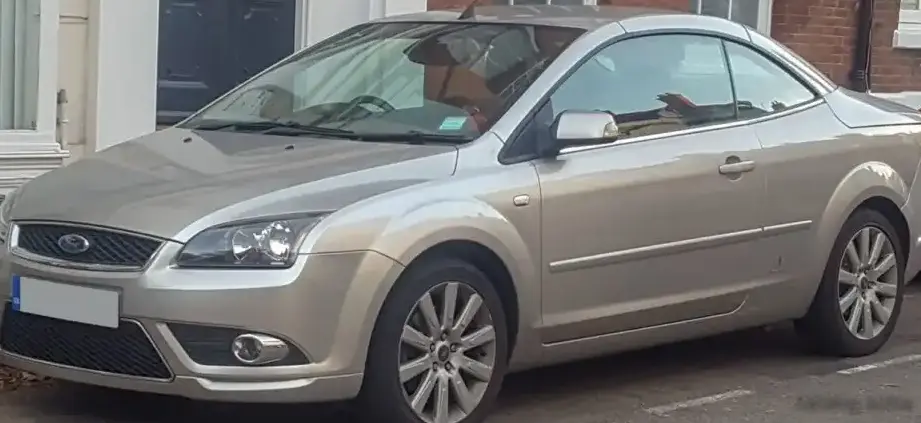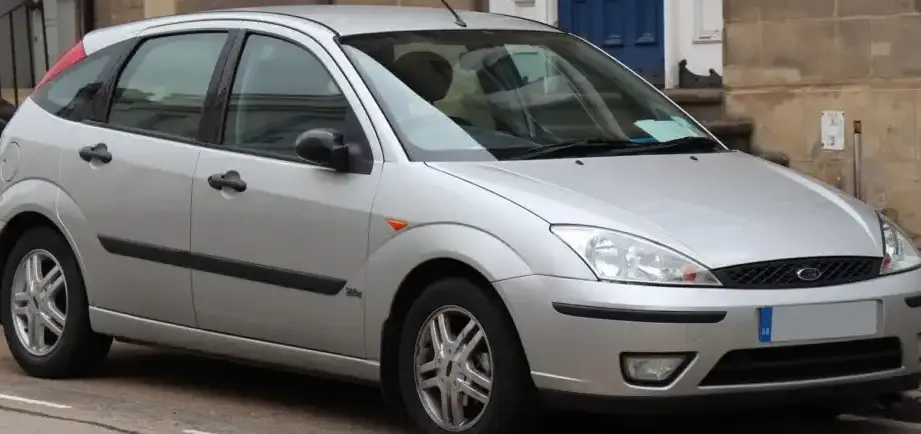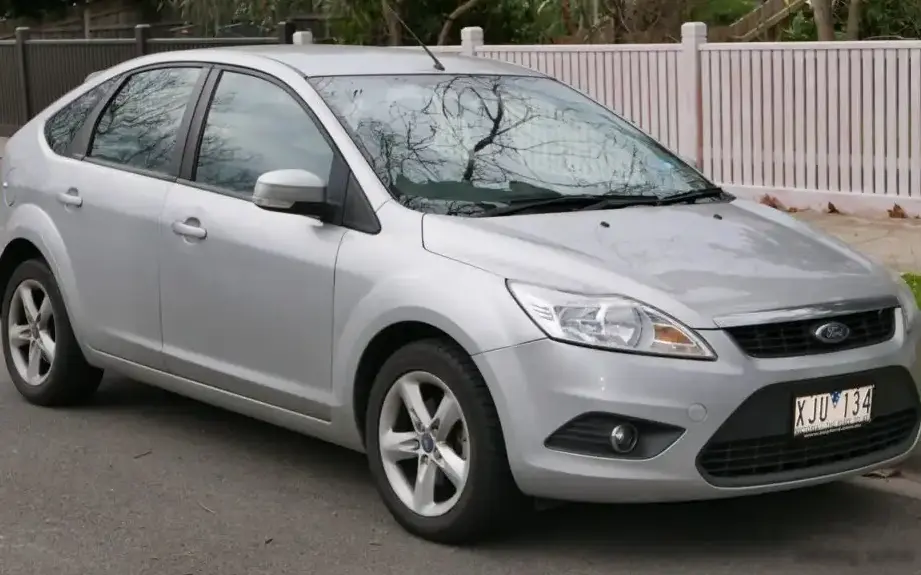
The Ford Focus II Hatchback 1.6 TDCi, produced from 2005 to 2012, represented a significant step forward for Ford’s compact offering in the European market. Positioned as an efficient and practical choice, the 1.6 TDCi variant, generating 109 horsepower, aimed to balance fuel economy with everyday usability. This model fell into the mid-range of the Focus II lineup, offering a diesel option for buyers who prioritized running costs over outright performance, slotting below the more powerful TDCi variants and above the base petrol engines. It was a key component of Ford’s strategy to appeal to a broader customer base seeking a modern, well-equipped hatchback.
Technical Specifications
| Brand | Ford |
| Model | Focus |
| Generation | Focus II Hatchback |
| Type (Engine) | 1.6 TDCi HP (109 Hp) |
| Start of production | 2005 |
| End of production | 2012 |
| Powertrain Architecture | Internal Combustion engine |
| Body type | Hatchback |
| Seats | 5 |
| Doors | 3/5 |
| Fuel consumption (urban) | 5.9 l/100 km (39.9 US mpg, 47.9 UK mpg, 16.9 km/l) |
| Fuel consumption (extra urban) | 4.2 l/100 km (56 US mpg, 67.3 UK mpg, 23.8 km/l) |
| Fuel consumption (combined) | 5.2 l/100 km (45.2 US mpg, 54.3 UK mpg, 19.2 km/l) |
| Fuel Type | Diesel |
| Acceleration 0 – 100 km/h | 10.9 sec |
| Acceleration 0 – 62 mph | 10.9 sec |
| Acceleration 0 – 60 mph | 10.4 sec |
| Maximum speed | 188 km/h (116.82 mph) |
| Weight-to-power ratio | 11.9 kg/Hp, 84.2 Hp/tonne |
| Weight-to-torque ratio | 5.4 kg/Nm, 185.3 Nm/tonne |
| Power | 109 Hp @ 4000 rpm |
| Power per litre | 69.9 Hp/l |
| Torque | 240 Nm @ 1750 rpm (177.01 lb.-ft. @ 1750 rpm) |
| Engine layout | Front, Transverse |
| Engine Model/Code | G8DA, G8DB, G8DD, G8DE, G8DF |
| Engine displacement | 1560 cm3 (95.2 cu. in.) |
| Number of cylinders | 4 |
| Engine configuration | Inline |
| Cylinder Bore | 75 mm (2.95 in.) |
| Piston Stroke | 88.3 mm (3.48 in.) |
| Compression ratio | 18.3:1 |
| Number of valves per cylinder | 4 |
| Fuel injection system | Diesel Commonrail |
| Engine aspiration | Turbocharger, Intercooler |
| Engine oil capacity | 3.8 l (4.02 US qt | 3.34 UK qt) |
| Coolant | 7.3 l (7.71 US qt | 6.42 UK qt) |
| Kerb Weight | 1295 kg (2854.99 lbs.) |
| Max. weight | 1795 kg (3957.3 lbs.) |
| Max load | 500 kg (1102.31 lbs.) |
| Trunk (boot) space – minimum | 385 l (13.6 cu. ft.) |
| Trunk (boot) space – maximum | 1247 l (44.04 cu. ft.) |
| Fuel tank capacity | 52 l (13.74 US gal | 11.44 UK gal) |
| Length | 4342 mm (170.94 in.) |
| Width | 1840 mm (72.44 in.) |
| Height | 1497 mm (58.94 in.) |
| Wheelbase | 2640 mm (103.94 in.) |
| Front track | 1535 mm (60.43 in.) |
| Rear (Back) track | 1531 mm (60.28 in.) |
| Drivetrain Architecture | The Internal combustion engine (ICE) drives the front wheels of the vehicle. |
| Drive wheel | Front wheel drive |
| Number of gears and type of gearbox | 5 gears, manual transmission |
| Front suspension | Spring Strut |
| Rear suspension | Transverse stabilizer |
| Front brakes | Ventilated discs |
| Rear brakes | Disc |
| Steering type | Steering rack and pinion |
| Power steering | Electric Steering |
| Tires size | 195/65 R15 |
| Wheel rims size | 6J x 15 |
Powertrain & Engine Architecture
The heart of the Focus II 1.6 TDCi is the Duratorq engine family, specifically the 1.6-liter four-cylinder diesel. Engine codes such as G8DA, G8DB, G8DD, G8DE, and G8DF were used depending on the specific year and market. This engine utilizes a common rail direct injection system, delivering fuel at extremely high pressure for optimized combustion. A turbocharger with an intercooler is employed to increase power output and improve efficiency. The engine features four valves per cylinder and a robust engine block designed for durability. The 1.6 TDCi engine is a transverse-mounted unit, contributing to a compact engine bay layout. The five-speed manual transmission was the standard offering, chosen for its balance of cost and efficiency. The transmission’s gear ratios were tuned to maximize fuel economy and provide adequate acceleration for everyday driving.
Driving Characteristics
The 109 horsepower and 240 Nm (177 lb-ft) of torque provided by the 1.6 TDCi engine delivered adequate performance for typical commuting and highway driving. Acceleration from 0-60 mph took around 10.4 seconds, and top speed was approximately 116.82 mph. While not a sporty configuration, the engine’s torque peak at 1750 rpm meant that there was sufficient pulling power for overtaking maneuvers. Compared to the higher-output TDCi variants (like the 1.8 TDCi), the 1.6 felt less responsive, particularly at higher engine speeds. The manual transmission offered precise shifts, but the gear ratios were geared towards economy rather than outright performance. The 1.6 TDCi provided a comfortable and refined driving experience, prioritizing fuel efficiency and ease of use over exhilarating performance.
Equipment & Trim Levels
The 1.6 TDCi typically came equipped with features such as air conditioning, power steering, electric front windows, and a basic audio system. Higher trim levels, such as Ghia or Titanium, added features like alloy wheels, upgraded upholstery, automatic climate control, and a more sophisticated audio system. Optional extras included a sunroof, parking sensors, and a trip computer. Interior upholstery was typically cloth, with higher trims offering partial leather options. The dashboard layout was functional and well-designed, with clear instrumentation and intuitive controls.
Chassis & Braking
The Focus II utilized a MacPherson strut front suspension and a multi-link rear suspension, providing a good balance of ride comfort and handling. The 1.6 TDCi models typically featured ventilated front disc brakes and solid rear disc brakes. Electric power steering was standard, offering light and precise steering feel. Stabilizer bars were fitted to both the front and rear axles to reduce body roll during cornering. The suspension setup was tuned to prioritize comfort and stability, making it well-suited for everyday driving conditions.
Market Reception & Comparison
The Ford Focus II 1.6 TDCi was generally well-received by automotive critics for its fuel efficiency, practicality, and comfortable ride. It was often praised as a sensible and economical choice for buyers seeking a compact hatchback. Compared to the more powerful TDCi variants, the 1.6 offered lower running costs but sacrificed some performance. Against competitors like the Volkswagen Golf and Opel/Vauxhall Astra, the Focus II 1.6 TDCi offered a competitive package in terms of price, features, and fuel economy. Reliability was generally good, although some owners reported issues with the diesel particulate filter (DPF) and the common rail injection system.
Legacy
The 1.6 TDCi engine proved to be a reliable and durable powertrain, although preventative maintenance, particularly regarding the DPF, is crucial. In the used car market, the Focus II 1.6 TDCi remains a popular choice for buyers seeking an affordable and economical hatchback. Its fuel efficiency and practicality continue to appeal to a wide range of drivers. While not a performance icon, the 1.6 TDCi variant played a vital role in establishing the Focus II as a successful and well-regarded compact car.