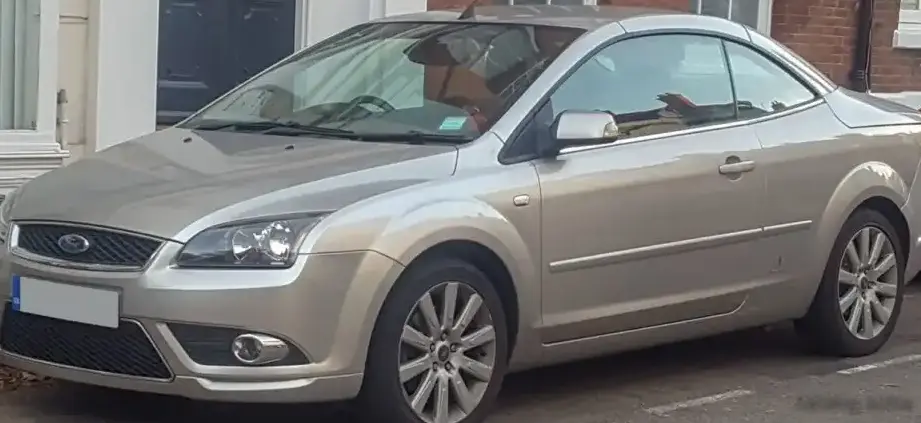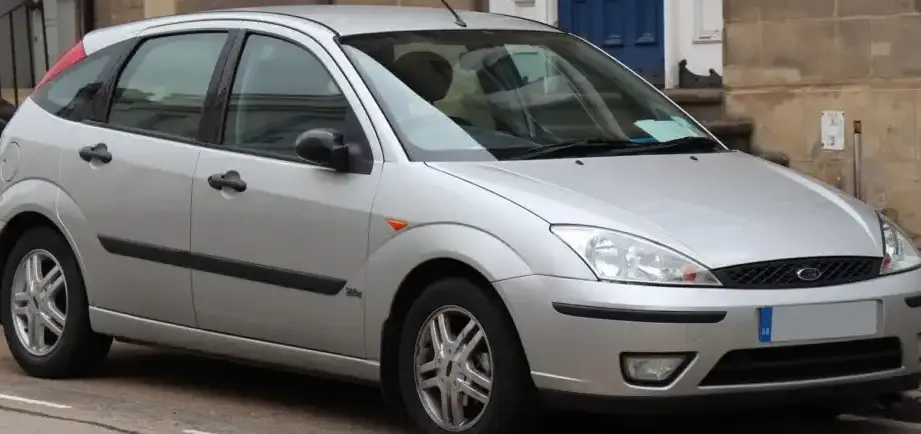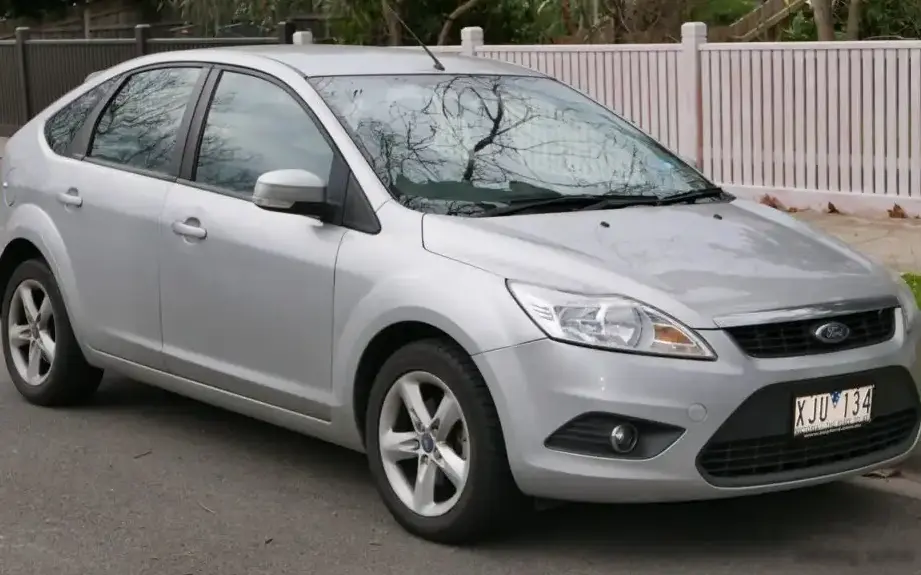
The Ford Focus II Hatchback 1.8i 16V, produced between 2005 and 2010, represented a significant step forward for Ford’s compact offering in the European market and beyond. Positioned as a mid-range trim level within the second-generation Focus (internally designated the 1HX0/A3 platform), this variant aimed to balance affordability with a reasonable level of performance and equipment. It served as a popular alternative to the base models, offering a noticeable power upgrade without the higher price tag of the more potent ST or RS versions. The 1.8i 16V was primarily sold in Europe, but also found its way to other markets, including parts of Asia and South America.
Technical Specifications
| Brand | Ford |
| Model | Focus |
| Generation | Focus II Hatchback |
| Type (Engine) | 1.8 i 16V (125 Hp) |
| Start of production | 2005 |
| End of production | 2010 |
| Powertrain Architecture | Internal Combustion engine |
| Body type | Hatchback |
| Seats | 5 |
| Doors | 3/5 |
| Fuel consumption (urban) | 9.6 l/100 km (24.5 US mpg) |
| Fuel consumption (extra urban) | 5.6 l/100 km (42 US mpg) |
| Fuel Type | Petrol (Gasoline) |
| Acceleration 0 – 100 km/h | 10.5 sec |
| Acceleration 0 – 62 mph | 10.5 sec |
| Acceleration 0 – 60 mph | 10 sec |
| Maximum speed | 193 km/h (119.92 mph) |
| Weight-to-power ratio | 10.1 kg/Hp |
| Weight-to-torque ratio | 7.7 kg/Nm |
| Power | 125 Hp @ 6000 rpm |
| Power per litre | 69.5 Hp/l |
| Torque | 165 Nm @ 4000 rpm (121.7 lb.-ft. @ 4000 rpm) |
| Engine layout | Front, Transverse |
| Engine Model/Code | QQDB |
| Engine displacement | 1798 cm3 (109.72 cu. in.) |
| Number of cylinders | 4 |
| Engine configuration | Inline |
| Cylinder Bore | 83 mm (3.27 in.) |
| Piston Stroke | 83.1 mm (3.27 in.) |
| Compression ratio | 10.8:1 |
| Number of valves per cylinder | 4 |
| Fuel injection system | Multi-port manifold injection |
| Engine aspiration | Naturally aspirated engine |
| Engine oil capacity | 4.3 l (4.54 US qt | 3.78 UK qt) |
| Coolant capacity | 6.5 l (6.87 US qt | 5.72 UK qt) |
| Kerb Weight | 1265 kg (2788.85 lbs.) |
| Max. weight | 1795 kg (3957.3 lbs.) |
| Max load | 530 kg (1168.45 lbs.) |
| Trunk (boot) space – minimum | 282 l (9.96 cu. ft.) |
| Trunk (boot) space – maximum | 1144 l (40.4 cu. ft.) |
| Fuel tank capacity | 55 l (14.53 US gal | 12.1 UK gal) |
| Length | 4342 mm (170.94 in.) |
| Width | 1840 mm (72.44 in.) |
| Height | 1497 mm (58.94 in.) |
| Wheelbase | 2640 mm (103.94 in.) |
| Front track | 1535 mm (60.43 in.) |
| Rear track | 1531 mm (60.28 in.) |
| Drivetrain Architecture | Front wheel drive |
| Number of gears | 5 |
| Gearbox type | Manual transmission |
| Front suspension | Independent, McPherson with coil spring and anti-roll bar |
| Rear suspension | Independent multi-link spring suspension with stabilizer |
| Front brakes | Disc |
| Rear brakes | Drum |
| Steering type | Steering rack and pinion |
| Tires size | 195/65 R15 |
| Wheel rims size | 6J x 15 |
Powertrain & Engine Architecture
The heart of the Focus II 1.8i 16V is the QQDB engine, a 1.8-liter inline-four cylinder gasoline engine. This engine belongs to Ford’s Duratec family, known for its relatively simple design and durability. The “16V” designation indicates the engine features four valves per cylinder, enhancing breathing and contributing to its power output. The QQDB utilizes a multi-port fuel injection system, delivering fuel directly into the intake ports just before the intake valves. This system, while not as advanced as direct injection, proved reliable and efficient for its time. The engine’s valvetrain employs a single overhead camshaft (SOHC) design, simplifying maintenance and reducing complexity. The 125 horsepower and 165 Nm (121.7 lb-ft) of torque were delivered to the front wheels through a five-speed manual transmission, although a four-speed automatic transmission was also available. The automatic transmission, while offering convenience, generally resulted in slightly reduced fuel economy and acceleration compared to the manual.
Driving Characteristics
The 1.8i 16V Focus offered a balanced driving experience. While not particularly sporty, it provided adequate power for everyday driving and highway cruising. Acceleration from 0-60 mph took around 10 seconds, which was competitive for its class. The five-speed manual transmission allowed drivers to keep the engine in its optimal power band, providing responsive acceleration. The automatic transmission, while smooth, felt somewhat sluggish in comparison, requiring more frequent downshifts for overtaking maneuvers. The gear ratios were tuned for fuel efficiency, prioritizing comfortable cruising over outright performance. Compared to the higher-output 2.0-liter Duratec engine, the 1.8i felt less eager to rev, but it offered better fuel economy. The handling was typical of the Focus II, with precise steering and a well-controlled chassis.
Equipment & Trim Levels
The 1.8i 16V trim typically included features such as air conditioning, power windows, power door locks, and a basic audio system. Higher trim levels, such as the Ghia, added features like alloy wheels, upgraded upholstery, and a more sophisticated audio system. Optional extras included a sunroof, rear parking sensors, and a trip computer. Interior upholstery was generally cloth, with higher trims offering partial leather options. The dashboard layout was functional and straightforward, with easy-to-read gauges and intuitive controls.
Chassis & Braking
The Focus II utilized an independent front suspension with McPherson struts and a multi-link independent rear suspension. This setup provided a comfortable ride and good handling characteristics. The 1.8i models typically featured disc brakes on the front wheels and drum brakes on the rear. Anti-lock Braking System (ABS) was standard equipment. Stabilizer bars were fitted to both the front and rear axles to reduce body roll during cornering. The suspension tuning was geared towards comfort and everyday usability, rather than outright sportiness.
Market Reception & Comparison
The Ford Focus II 1.8i 16V was generally well-received by automotive critics. It was praised for its comfortable ride, good handling, and fuel efficiency. However, some critics noted that the engine lacked the punch of its rivals, particularly the Volkswagen Golf 1.6 FSI. Compared to the 1.6-liter base model Focus, the 1.8i offered a noticeable performance improvement, making it a more appealing option for drivers who frequently drove on highways or carried passengers. The automatic transmission version, while convenient, was often criticized for its sluggishness and reduced fuel economy. In terms of reliability, the 1.8i Duratec engine proved to be quite robust, with few major issues reported.
Legacy
The Ford Focus II 1.8i 16V remains a popular choice in the used car market today, particularly in Europe. Its reputation for reliability and affordability has made it a desirable option for budget-conscious buyers. The Duratec engine is known for its longevity, and with proper maintenance, it can provide many years of reliable service. While not a performance icon, the 1.8i 16V represents a well-rounded and practical compact car that offered a good balance of performance, fuel efficiency, and comfort. Parts availability remains good, making maintenance relatively straightforward and inexpensive.