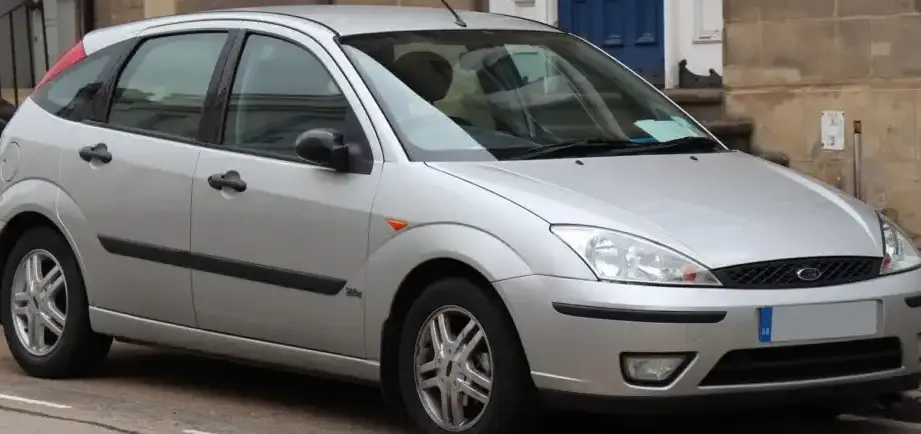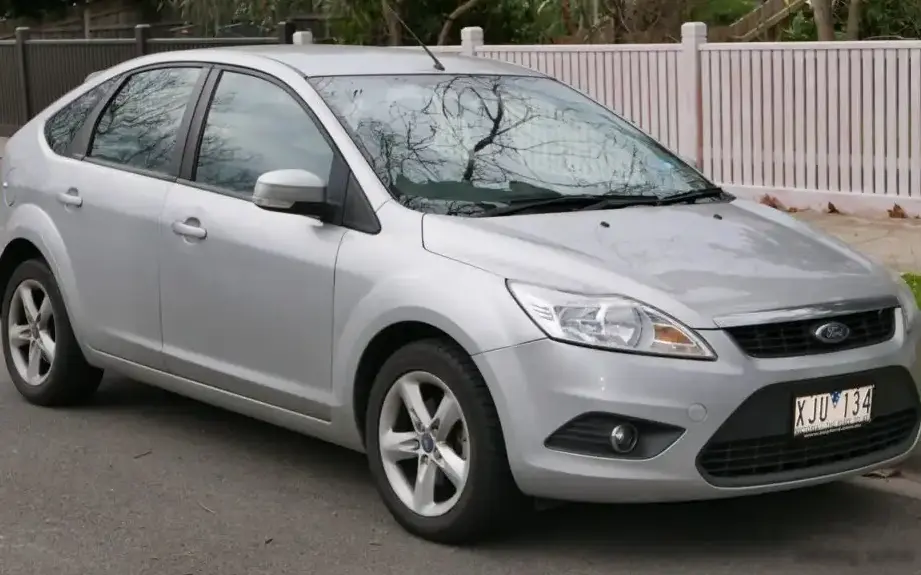
The Ford Focus II Hatchback 1.8 TDCi, produced from 2005 to 2006, represented a significant step forward for Ford’s compact offering in the European market. Positioned as a fuel-efficient and practical option within the second-generation Focus (internally designated the 2HX0/A3 platform), this variant aimed to appeal to buyers prioritizing economy and everyday usability. It served as a diesel alternative to the gasoline-powered models, offering a blend of reasonable performance and low running costs. While not available in the North American market, the Focus II was a key player in the competitive European C-segment.
Technical Specifications
| Brand | Ford |
| Model | Focus |
| Generation | Focus II Hatchback |
| Type (Engine) | 1.8 TDCi (116 Hp) |
| Start of production | 2005 |
| End of production | 2006 |
| Powertrain Architecture | Internal Combustion engine |
| Body type | Hatchback |
| Seats | 5 |
| Doors | 3/5 |
| Fuel consumption (urban) | 6.7 l/100 km (35.1 US mpg, 42.2 UK mpg, 14.9 km/l) |
| Fuel consumption (extra urban) | 4.3 l/100 km (54.7 US mpg, 65.7 UK mpg, 23.3 km/l) |
| Fuel consumption (combined) | 5.2 l/100 km (45.2 US mpg, 54.3 UK mpg, 19.2 km/l) |
| Fuel Type | Diesel |
| Acceleration 0 – 100 km/h | 10.8 sec |
| Acceleration 0 – 62 mph | 10.8 sec |
| Acceleration 0 – 60 mph | 10.3 sec |
| Maximum speed | 190 km/h (118.06 mph) |
| Emission standard | Euro 4 |
| Weight-to-power ratio | 11.7 kg/Hp, 85.5 Hp/tonne |
| Weight-to-torque ratio | 5.4 kg/Nm, 184.2 Nm/tonne |
| Power | 116 Hp @ 3800 rpm |
| Power per litre | 66.2 Hp/l |
| Torque | 250 Nm @ 2000 rpm (184.39 lb.-ft. @ 2000 rpm) |
| Engine layout | Front, Transverse |
| Engine Model/Code | BHPA |
| Engine displacement | 1753 cm3 (106.97 cu. in.) |
| Number of cylinders | 4 |
| Engine configuration | Inline |
| Cylinder Bore | 82.5 mm (3.25 in.) |
| Piston Stroke | 82 mm (3.23 in.) |
| Compression ratio | 18.5:1 |
| Number of valves per cylinder | 2 |
| Fuel injection system | Diesel Commonrail |
| Engine aspiration | Turbocharger, Intercooler |
| Valvetrain | OHC |
| Engine oil capacity | 5.6 l (5.92 US qt | 4.93 UK qt) |
| Coolant capacity | 8.1 l (8.56 US qt | 7.13 UK qt) |
| Kerb Weight | 1357 kg (2991.67 lbs.) |
| Max. weight | 1775 kg (3913.21 lbs.) |
| Max load | 418 kg (921.53 lbs.) |
| Trunk (boot) space – minimum | 385 l (13.6 cu. ft.) |
| Trunk (boot) space – maximum | 1247 l (44.04 cu. ft.) |
| Fuel tank capacity | 53 l (14 US gal | 11.66 UK gal) |
| Length | 4342 mm (170.94 in.) |
| Width | 1840 mm (72.44 in.) |
| Height | 1497 mm (58.94 in.) |
| Wheelbase | 2640 mm (103.94 in.) |
| Front track | 1535 mm (60.43 in.) |
| Rear track | 1531 mm (60.28 in.) |
| Drivetrain Architecture | Front wheel drive |
| Number of gears | 5 |
| Gearbox type | Manual transmission |
| Front suspension | Spring Strut |
| Rear suspension | Transverse stabilizer |
| Front brakes | Ventilated discs |
| Rear brakes | Disc |
| Assisting systems | ABS (Anti-lock braking system) |
| Steering type | Steering rack and pinion |
| Tires size | 195/65 R15 |
| Wheel rims size | 6J x 15 |
Powertrain & Engine Architecture
The 1.8 TDCi engine, identified by the code BHPA, was a four-cylinder diesel powerplant utilizing a common rail direct injection system. This system, a significant advancement over older mechanical diesel injection, allowed for finer control of fuel delivery, resulting in improved combustion efficiency, reduced noise, and lower emissions. The engine featured an overhead camshaft (OHC) valvetrain operating two valves per cylinder. A turbocharger with an intercooler was employed to boost power output and improve torque across the rev range. The 1.8L engine produced 116 horsepower at 3800 rpm and 250 Nm (184 lb-ft) of torque at 2000 rpm. This engine was paired with a five-speed manual transmission, providing a balance between fuel economy and drivability. The transverse engine layout was typical for front-wheel-drive vehicles of this class.
Driving Characteristics
The 1.8 TDCi with the five-speed manual transmission offered a practical and economical driving experience. Acceleration to 100 km/h (62 mph) took approximately 10.8 seconds, which was adequate for everyday driving but not particularly sporty. The engine’s torque peak at 2000 rpm provided good responsiveness in typical driving situations, making overtaking and hill climbing manageable. Compared to the higher-output versions of the Focus II, such as those equipped with the 2.0-liter gasoline engine, the 1.8 TDCi felt less powerful, but it compensated with significantly better fuel economy. The gear ratios were tuned for efficiency, prioritizing fuel savings over outright performance. The manual transmission provided a more engaging driving experience than the optional automatic, offering greater control over the engine’s power delivery.
Equipment & Trim Levels
The 1.8 TDCi variant of the Focus II was typically offered in mid-range trim levels, such as LX or Trend. Standard equipment generally included power steering, central locking, electric front windows, and an audio system. Air conditioning was often an optional extra. Interior upholstery was typically cloth, with a functional and durable design. Higher trim levels added features like alloy wheels, fog lights, and upgraded audio systems. Safety features included ABS brakes and driver and passenger airbags. The overall interior design was focused on practicality and ergonomics, providing a comfortable and user-friendly environment for both driver and passengers.
Chassis & Braking
The Focus II utilized a MacPherson strut front suspension and a multi-link rear suspension, providing a good balance between ride comfort and handling. The 1.8 TDCi models typically featured ventilated disc brakes at the front and solid disc brakes at the rear. ABS (Anti-lock Braking System) was standard, enhancing braking performance and stability. The suspension was tuned to provide a comfortable ride without sacrificing handling precision. Stabilizer bars were fitted to both the front and rear axles to reduce body roll during cornering. The chassis was designed to be lightweight yet rigid, contributing to the car’s overall handling characteristics.
Market Reception & Comparison
The Ford Focus II 1.8 TDCi was generally well-received by automotive critics for its fuel efficiency, practicality, and comfortable ride. It was often praised as a sensible and economical choice for everyday driving. Compared to other diesel-powered compact cars in its class, the Focus II offered a competitive combination of performance, fuel economy, and price. However, some critics noted that the engine could be somewhat noisy and that the acceleration was not particularly brisk. Against the gasoline-powered Focus models, the 1.8 TDCi offered superior fuel economy but less overall performance. The 1.8 TDCi was a popular choice for fleet buyers and private individuals seeking a reliable and economical vehicle.
Legacy
The BHPA 1.8 TDCi engine proved to be a relatively reliable powertrain, although, like all diesel engines, it was susceptible to issues related to the fuel injection system and turbocharger. Regular maintenance, including oil changes and filter replacements, was crucial for ensuring long-term reliability. In the used car market, the Focus II 1.8 TDCi remains a popular choice for buyers seeking an affordable and fuel-efficient vehicle. Its reputation for reliability and practicality has helped it maintain a strong resale value. While newer cars offer more advanced technology and features, the Focus II 1.8 TDCi continues to provide a dependable and economical transportation option.