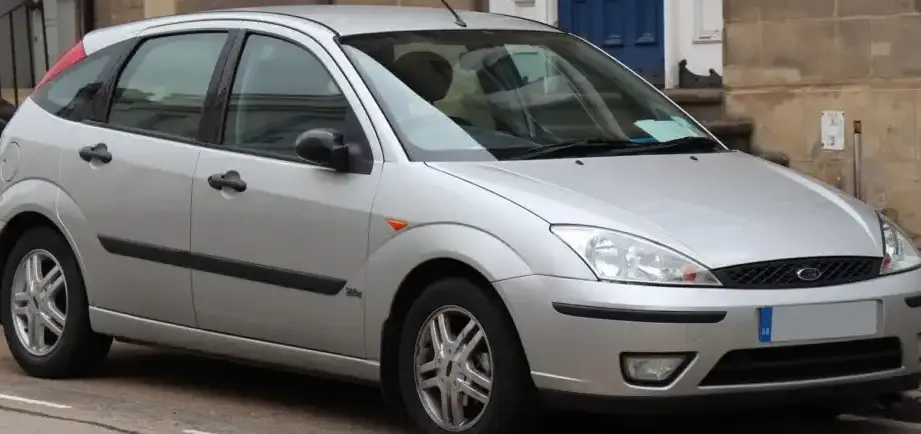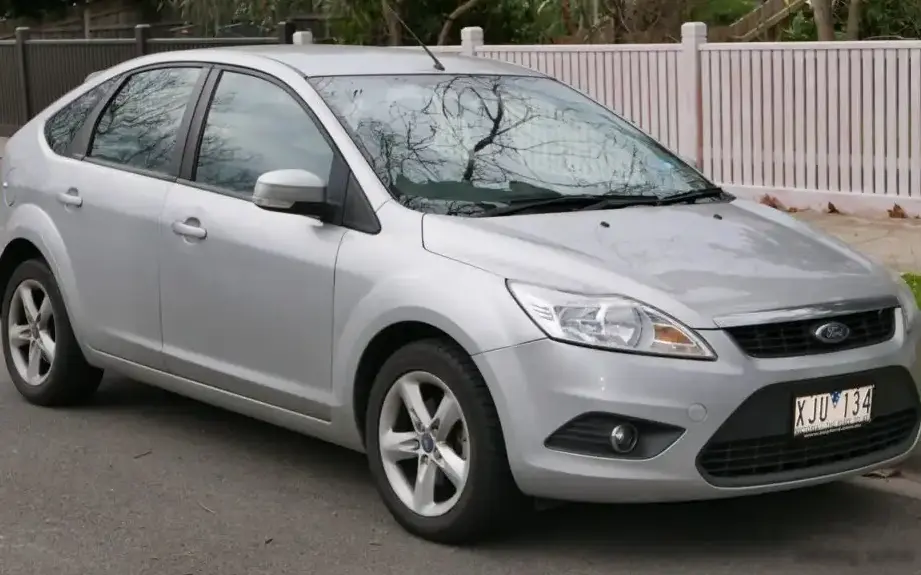
The Ford Focus II Hatchback 2.0 TDCi, producing 136 horsepower, was a significant offering in the European Ford lineup from 2005 to 2010. Positioned as a mid-range option within the second-generation Focus (internally designated the 2HX/A3 platform), it aimed to balance fuel efficiency with respectable performance for drivers needing more than the base engine could provide. This variant was primarily sold in Europe, where diesel engines held a much larger market share than in the United States, and represented a key component of Ford of Europe’s strategy to offer a diverse range of powertrains to suit varying customer needs. It was available in both 3-door and 5-door hatchback configurations.
Technical Specifications
| Brand | Ford |
| Model | Focus |
| Generation | Focus II Hatchback |
| Type (Engine) | 2.0 TDCi (136 Hp) |
| Start of production | 2005 |
| End of production | 2010 |
| Powertrain Architecture | Internal Combustion engine |
| Body type | Hatchback |
| Seats | 5 |
| Doors | 3/5 |
| Fuel consumption (urban) | 7.4 l/100 km (31.8 US mpg) |
| Fuel consumption (extra urban) | 4.6 l/100 km (51.1 US mpg) |
| Fuel Type | Diesel |
| Acceleration 0 – 100 km/h | 9.3 sec |
| Acceleration 0 – 62 mph | 9.3 sec |
| Acceleration 0 – 60 mph | 8.8 sec |
| Maximum speed | 203 km/h (126.14 mph) |
| Weight-to-power ratio | 9.8 kg/Hp |
| Weight-to-torque ratio | 4.2 kg/Nm |
| Power | 136 Hp @ 4000 rpm |
| Torque | 320 Nm @ 2000 rpm (236.02 lb.-ft. @ 2000 rpm) |
| Engine layout | Front, Transverse |
| Engine Model/Code | G6DA, G6DB, G6DD |
| Engine displacement | 1997 cm3 (121.86 cu. in.) |
| Number of cylinders | 4 |
| Engine configuration | Inline |
| Cylinder Bore | 85 mm (3.35 in.) |
| Piston Stroke | 88 mm (3.46 in.) |
| Compression ratio | 18:1 |
| Number of valves per cylinder | 4 |
| Fuel injection system | Diesel Commonrail |
| Engine aspiration | Turbocharger, Intercooler |
| Engine oil capacity | 5.5 l (5.81 US qt | 4.84 UK qt) |
| Coolant capacity | 8.4 l (8.88 US qt | 7.39 UK qt) |
| Kerb Weight | 1335 kg (2943.17 lbs.) |
| Max. weight | 1875 kg (4133.67 lbs.) |
| Max load | 540 kg (1190.5 lbs.) |
| Trunk (boot) space – minimum | 385 l (13.6 cu. ft.) |
| Trunk (boot) space – maximum | 1247 l (44.04 cu. ft.) |
| Fuel tank capacity | 53 l (14 US gal | 11.66 UK gal) |
| Length | 4342 mm (170.94 in.) |
| Width | 1840 mm (72.44 in.) |
| Height | 1497 mm (58.94 in.) |
| Wheelbase | 2640 mm (103.94 in.) |
| Front track | 1535 mm (60.43 in.) |
| Rear track | 1531 mm (60.28 in.) |
| Drivetrain Architecture | Front wheel drive |
| Number of gears | 5 |
| Gearbox type | Manual transmission |
| Front suspension | Spring Strut |
| Rear suspension | Transverse stabilizer |
| Front brakes | Ventilated discs |
| Rear brakes | Drum |
| Steering type | Steering rack and pinion |
| Tires size | 205/55 R16 |
Powertrain & Engine Architecture
The heart of the Focus II 2.0 TDCi was the G6DA/G6DB/G6DD series of 2.0-liter inline-four diesel engines. These engines were a product of Ford and PSA Peugeot Citroën’s joint venture, representing a common platform used across several models from both manufacturers. The 136 horsepower variant utilized a turbocharger with an intercooler to boost power and torque. Fuel was delivered via a common rail direct injection system, allowing for precise fuel metering and contributing to both performance and fuel efficiency. The engine featured four valves per cylinder and a robust bottom end designed for durability. The 5-speed manual transmission was the standard offering, providing a balance between fuel economy and driver engagement. The engine’s architecture prioritized low-end torque, making it well-suited for everyday driving and overtaking maneuvers.
Driving Characteristics
The 2.0 TDCi 136 hp Focus II offered a noticeable step up in performance compared to the lower-powered 1.6-liter diesel or gasoline options. While not a sports car, it provided ample power for comfortable cruising and confident acceleration. The turbocharger provided a noticeable boost in the mid-range, making overtaking on highways relatively effortless. The 5-speed manual transmission was well-matched to the engine’s characteristics, with gear ratios optimized for both fuel economy and performance. Compared to the higher-output 2.0 TDCi variants (often exceeding 150 hp), this version felt less stressed and potentially more reliable, though it lacked the outright punch of its more powerful siblings. The gear ratios were slightly taller, favoring fuel efficiency over rapid acceleration.
Equipment & Trim Levels
The 2.0 TDCi 136 hp model typically fell into the mid-range of the Focus II lineup. Standard equipment generally included air conditioning, power windows, power mirrors, a CD player, and ABS brakes. Higher trim levels, such as the Ghia or Titanium, added features like alloy wheels, upgraded interior trim, automatic climate control, and a trip computer. Optional extras included a sunroof, parking sensors, and a premium sound system. Interior upholstery was typically cloth, with leather options available on higher trims. The dashboard layout was functional and straightforward, prioritizing usability over flashy design.
Chassis & Braking
The Focus II utilized a MacPherson strut front suspension and a multi-link rear suspension, providing a good balance of ride comfort and handling. The 2.0 TDCi models, due to their increased weight, often featured slightly stiffer springs and dampers compared to the lower-powered variants. Front brakes were ventilated discs, providing ample stopping power, while rear brakes were typically drum brakes on the base and mid-range trims. Higher-spec models sometimes featured rear disc brakes. A stabilizer bar was fitted to both the front and rear axles to reduce body roll during cornering. The steering was a rack and pinion system, offering precise and responsive handling.
Market Reception & Comparison
The Ford Focus II 2.0 TDCi 136 hp was generally well-received by automotive critics. It was praised for its fuel efficiency, comfortable ride, and respectable performance. Compared to the 1.6 TDCi, the 2.0-liter engine offered a significant improvement in power and torque, making it a more suitable choice for drivers who frequently traveled long distances or carried passengers. However, some critics noted that the engine could be somewhat noisy compared to some of its competitors. In terms of reliability, the G6DA/G6DB/G6DD engine family proved to be generally robust, although issues with the fuel injectors and turbocharger were occasionally reported. Fuel economy was a strong point, consistently achieving figures in the range of 4.6-7.4 l/100km depending on driving conditions.
Legacy
The Ford Focus II 2.0 TDCi 136 hp remains a popular choice in the used car market, particularly in Europe. Its combination of fuel efficiency, practicality, and reliability has made it a durable and affordable option for many drivers. While newer models offer more advanced technology and features, the Focus II continues to be valued for its solid engineering and straightforward design. The G6DA/G6DB/G6DD engine, despite some potential issues, has proven to be a long-lasting powertrain when properly maintained. Parts availability remains good, making it relatively easy and affordable to keep these vehicles on the road. The 2.0 TDCi variant, in particular, is often sought after by those who prioritize performance and fuel economy over the base engine options.