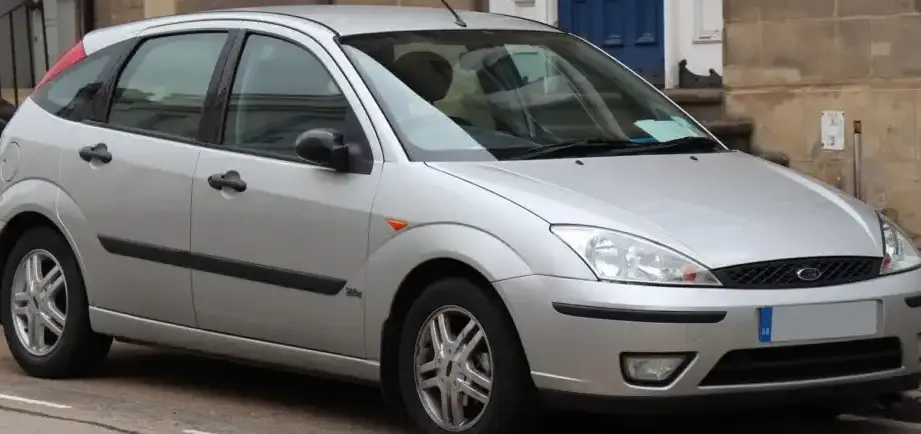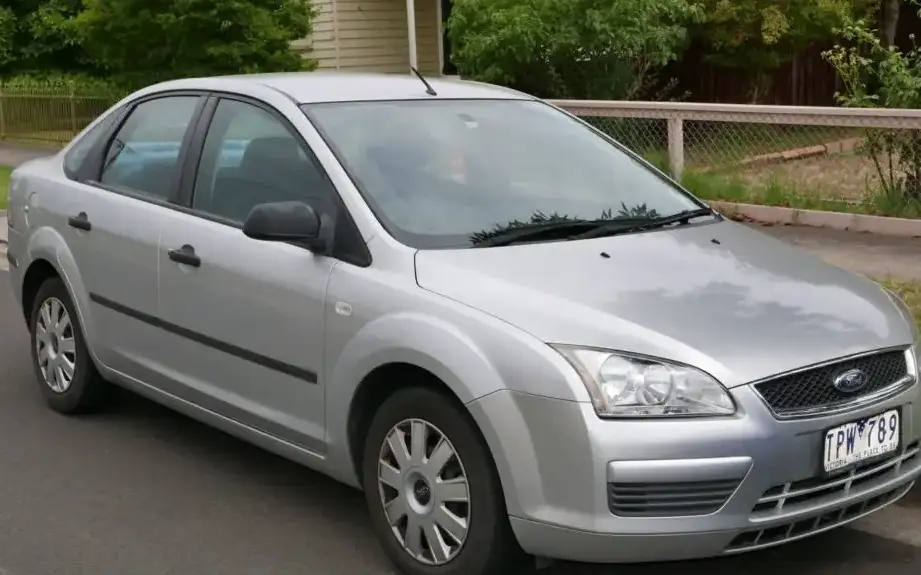
The Ford Focus II Sedan 1.6 TDCi 90 hp MCA TREND, produced between 2005 and 2010, represented an entry-level diesel offering within the second generation of the globally successful Focus range. Positioned as a fuel-efficient and practical option, this variant catered to buyers prioritizing economy over outright performance. It was a key model in European markets, where diesel sedans were highly popular, and offered a more affordable route into the Focus II lineup. The Focus II itself, built on the C170 platform (internally designated as the 1HX0 for the sedan), aimed to improve upon the first generation’s already strong reputation for handling and build quality.
Technical Specifications
| Brand | Ford |
| Model | Focus |
| Generation | Focus II Sedan |
| Type (Engine) | 1.6 TDCi (90 Hp) MCA TREND |
| Start of production | 2005 |
| End of production | 2010 |
| Powertrain Architecture | Internal Combustion engine |
| Body type | Sedan |
| Seats | 5 |
| Doors | 4 |
| Fuel consumption (urban) | 5.9 l/100 km (39.9 US mpg, 47.9 UK mpg, 16.9 km/l) |
| Fuel consumption (extra urban) | 4 l/100 km (58.8 US mpg, 70.6 UK mpg, 25 km/l) |
| Fuel Type | Diesel |
| Acceleration 0 – 100 km/h | 12.7 sec |
| Acceleration 0 – 62 mph | 12.7 sec |
| Acceleration 0 – 60 mph | 12.1 sec |
| Maximum speed | 179 km/h (111.23 mph) |
| Weight-to-power ratio | 15.3 kg/Hp, 65.4 Hp/tonne |
| Weight-to-torque ratio | 6.8 kg/Nm, 148.1 Nm/tonne |
| Power | 90 Hp @ 4000 rpm |
| Power per litre | 57.7 Hp/l |
| Torque | 204 Nm @ 1750 rpm (150.46 lb.-ft. @ 1750 rpm) |
| Engine layout | Front, Transverse |
| Engine Model/Code | HHDA, HHDB, GPDA, GPDC |
| Engine displacement | 1560 cm3 (95.2 cu. in.) |
| Number of cylinders | 4 |
| Engine configuration | Inline |
| Cylinder Bore | 75 mm (2.95 in.) |
| Piston Stroke | 88.3 mm (3.48 in.) |
| Compression ratio | 18.3:1 |
| Number of valves per cylinder | 4 |
| Fuel injection system | Diesel Commonrail |
| Engine aspiration | Turbocharger, Intercooler |
| Engine oil capacity | 3.8 l (4.02 US qt | 3.34 UK qt) |
| Coolant capacity | 7.3 l (7.71 US qt | 6.42 UK qt) |
| Kerb Weight | 1377 kg (3035.77 lbs.) |
| Max. weight | 1880 kg (4144.69 lbs.) |
| Max load | 503 kg (1108.93 lbs.) |
| Trunk (boot) space – minimum | 467 l (16.49 cu. ft.) |
| Trunk (boot) space – maximum | 931 l (32.88 cu. ft.) |
| Fuel tank capacity | 53 l (14 US gal | 11.66 UK gal) |
| Length | 4488 mm (176.69 in.) |
| Width | 1840 mm (72.44 in.) |
| Height | 1497 mm (58.94 in.) |
| Wheelbase | 2640 mm (103.94 in.) |
| Front track | 1535 mm (60.43 in.) |
| Rear track | 1531 mm (60.28 in.) |
| Drivetrain Architecture | Front wheel drive |
| Number of gears | 5 |
| Gearbox type | Manual transmission |
| Front suspension | Spring Strut |
| Rear suspension | Transverse stabilizer |
| Front brakes | Disc |
| Rear brakes | Disc |
| Steering type | Steering rack and pinion |
| Tires size | 195/65 R15 |
| Wheel rims size | 15 |
Powertrain & Engine Architecture
The heart of the Focus II 1.6 TDCi 90 was the Duratorq engine family. Specifically, it utilized the 1.6-liter HHDA, HHDB, GPDA, or GPDC engine code, depending on the specific market and year of production. This engine was a four-cylinder, inline diesel featuring a turbocharger with intercooling. The common-rail direct injection system, supplied by Bosch, delivered fuel at extremely high pressure, optimizing combustion efficiency and reducing emissions. The engine employed four valves per cylinder, enhancing breathing and contributing to its torque output. The 90 hp output was achieved at 4000 rpm, while peak torque of 204 Nm (150 lb-ft) was available from a low 1750 rpm, prioritizing drivability over outright speed. The five-speed manual transmission was the standard offering, chosen for its efficiency and cost-effectiveness. While an automatic transmission was available on other Focus II variants, it was not typically paired with this specific 1.6 TDCi engine.
Driving Characteristics
The 1.6 TDCi 90 hp engine, coupled with the five-speed manual gearbox, provided adequate, though not exhilarating, performance. Acceleration from 0-100 km/h (0-62 mph) took approximately 12.7 seconds, and top speed was around 179 km/h (111 mph). The engine’s strength lay in its low-end torque, making it suitable for everyday driving and overtaking maneuvers. However, it lacked the punch of higher-powered versions like the 1.8 TDCi or the petrol-powered 1.6 Ti-VCT. The gear ratios were tuned for fuel economy, meaning the engine could feel strained at higher speeds or when carrying a full load. Compared to the more powerful diesels, the 90 hp variant offered a more relaxed driving experience, prioritizing comfort and efficiency over sporty performance.
Equipment & Trim Levels
The MCA TREND trim level represented a mid-range offering in the Focus II lineup. Standard equipment typically included air conditioning, power steering, electric front windows, a basic audio system (usually a CD player with AM/FM radio), and central locking. Safety features such as ABS brakes and front airbags were also standard. The interior featured cloth upholstery, and the dashboard was constructed from durable plastics. Optional extras available for the MCA TREND included alloy wheels, rear electric windows, a more advanced audio system, and parking sensors. The overall interior ambiance was functional and practical, rather than luxurious.
Chassis & Braking
The Focus II sedan featured independent front suspension with MacPherson struts and a multi-link rear suspension. This setup provided a good balance between ride comfort and handling. The 1.6 TDCi variant typically used disc brakes on all four wheels, offering adequate stopping power for its weight class. The steering was a rack-and-pinion system, providing precise and responsive control. Stabilizer bars were fitted to both the front and rear axles to reduce body roll during cornering. Tire size was commonly 195/65 R15, providing a good compromise between comfort and grip.
Market Reception & Comparison
The Ford Focus II 1.6 TDCi 90 hp MCA TREND was generally well-received by critics as a practical and economical choice. It was praised for its fuel efficiency, comfortable ride, and decent handling. However, some reviewers noted its lack of outright performance compared to higher-powered variants. Compared to the 1.8 TDCi, the 1.6 offered lower running costs but sacrificed some performance. Against petrol-powered models, the 1.6 TDCi provided significantly better fuel economy, but the diesel engine came with a higher purchase price and potentially higher maintenance costs. Its main competitors included the Volkswagen Golf, Opel Astra, and Peugeot 308, all of which offered similar diesel engine options.
Legacy
The 1.6 TDCi engine, while not known for being exceptionally robust, proved to be reasonably reliable with regular maintenance. Common issues included turbocharger wear, injector problems, and occasional issues with the dual-mass flywheel. However, these issues were not widespread and could often be prevented with proper servicing. In the used car market, the Focus II 1.6 TDCi 90 hp MCA TREND remains a popular choice for buyers seeking an affordable and fuel-efficient sedan. Its relatively low running costs and practical nature continue to appeal to a wide range of drivers. While it may not offer the excitement of more powerful models, it represents a solid and dependable option for everyday transportation.