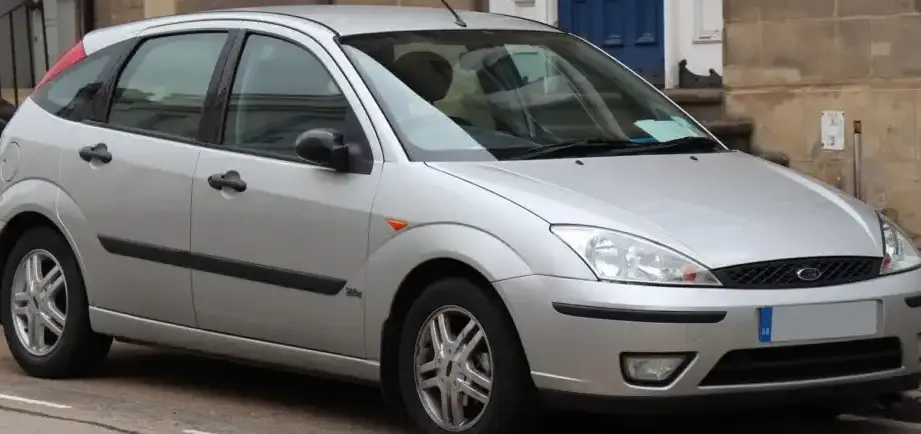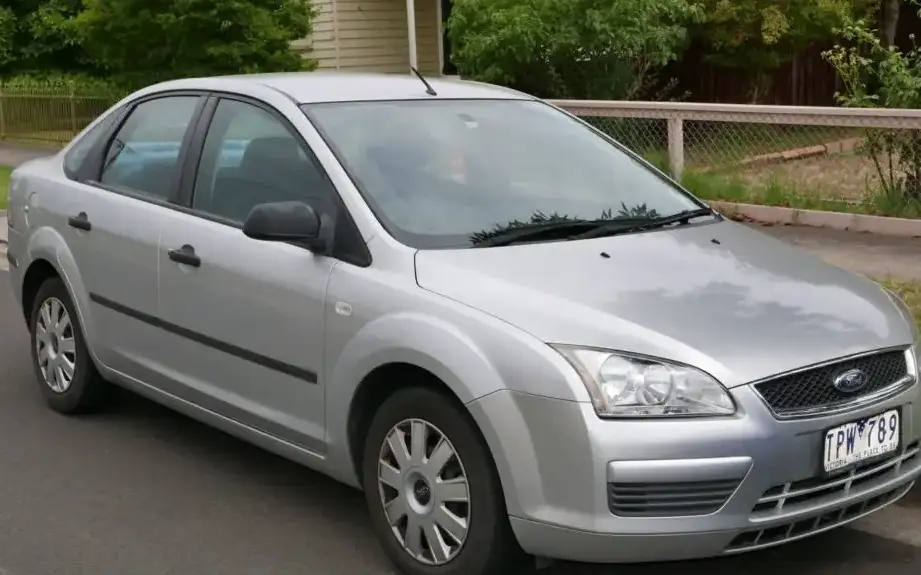
The Ford Focus II Sedan 1.6 TDCi, producing 109 horsepower, was a significant variant within the second generation Focus range, manufactured between 2005 and 2010. Positioned as an economy-focused option, it aimed to deliver reasonable performance with excellent fuel efficiency. This model played a crucial role in Ford’s European lineup, offering a diesel-powered sedan alternative in a market increasingly favoring fuel-conscious vehicles. While the Focus II was sold globally, the 1.6 TDCi variant was particularly prominent in Europe where diesel engines held a larger market share. This version offered a balance between affordability and practicality for everyday drivers.
Technical Specifications
| Brand | Ford |
| Model | Focus |
| Generation | Focus II Sedan |
| Type (Engine) | 1.6 TDCi HP (109 Hp) |
| Start of production | 2005 |
| End of production | 2010 |
| Powertrain Architecture | Internal Combustion engine |
| Body type | Sedan |
| Seats | 5 |
| Doors | 4 |
| Fuel consumption (urban) | 6.2 l/100 km (37.9 US mpg, 45.6 UK mpg, 16.1 km/l) |
| Fuel consumption (extra urban) | 4 l/100 km (58.8 US mpg, 70.6 UK mpg, 25 km/l) |
| Fuel Type | Diesel |
| Acceleration 0 – 100 km/h | 11 sec |
| Acceleration 0 – 62 mph | 11 sec |
| Acceleration 0 – 60 mph | 10.5 sec |
| Maximum speed | 190 km/h (118.06 mph) |
| Weight-to-power ratio | 12 kg/Hp, 83.2 Hp/tonne |
| Weight-to-torque ratio | 5.5 kg/Nm, 183.2 Nm/tonne |
| Power | 109 Hp @ 4000 rpm |
| Power per litre | 69.9 Hp/l |
| Torque | 240 Nm @ 1750 rpm (177.01 lb.-ft. @ 1750 rpm) |
| Engine layout | Front, Transverse |
| Engine Model/Code | G8DA, G8DB, G8DD, G8DE, G8DF |
| Engine displacement | 1560 cm3 (95.2 cu. in.) |
| Number of cylinders | 4 |
| Engine configuration | Inline |
| Cylinder Bore | 75 mm (2.95 in.) |
| Piston Stroke | 88.3 mm (3.48 in.) |
| Compression ratio | 18.3:1 |
| Number of valves per cylinder | 4 |
| Fuel injection system | Diesel Commonrail |
| Engine aspiration | Turbocharger, Intercooler |
| Engine oil capacity | 3.8 l (4.02 US qt | 3.34 UK qt) |
| Coolant | 7.3 l (7.71 US qt | 6.42 UK qt) |
| Kerb Weight | 1310 kg (2888.06 lbs.) |
| Max. weight | 1820 kg (4012.41 lbs.) |
| Max load | 510 kg (1124.36 lbs.) |
| Trunk (boot) space – minimum | 467 l (16.49 cu. ft.) |
| Trunk (boot) space – maximum | 931 l (32.88 cu. ft.) |
| Fuel tank capacity | 53 l (14 US gal | 11.66 UK gal) |
| Length | 4488 mm (176.69 in.) |
| Width | 1840 mm (72.44 in.) |
| Height | 1497 mm (58.94 in.) |
| Wheelbase | 2640 mm (103.94 in.) |
| Front track | 1535 mm (60.43 in.) |
| Rear (Back) track | 1531 mm (60.28 in.) |
| Drivetrain Architecture | The Internal combustion engine (ICE) drives the front wheels of the vehicle. |
| Drive wheel | Front wheel drive |
| Number of gears and type of gearbox | 5 gears, manual transmission |
| Front suspension | Spring Strut |
| Rear suspension | Transverse stabilizer |
| Front brakes | Disc |
| Rear brakes | Disc |
| Assisting systems | ABS (Anti-lock braking system) |
| Steering type | Steering rack and pinion |
| Power steering | Electric Steering |
| Tires size | 195/65 R15 |
Powertrain & Engine Architecture
The heart of the Focus II 1.6 TDCi was the Duratorq engine family, specifically the 1.6-liter inline-four cylinder diesel. Engine codes such as G8DA, G8DB, G8DD, G8DE, and G8DF were used depending on the specific calibration and market. This engine utilized a common rail direct injection system, delivering fuel at extremely high pressures for optimized combustion. A turbocharger with an intercooler was employed to boost power and torque, enhancing responsiveness. The engine featured four valves per cylinder and a robust engine block designed for durability. The 1.6 TDCi engine was known for its relatively quiet operation compared to some earlier diesel engines. The 5-speed manual transmission was the standard offering, chosen for its efficiency and cost-effectiveness.
Driving Characteristics
The 109 hp output of the 1.6 TDCi, coupled with 240 Nm (177 lb-ft) of torque, provided adequate performance for everyday driving. Acceleration from 0-60 mph took around 10.5 seconds, and top speed was approximately 118 mph. While not a sporty configuration, the engine’s torque delivery made it feel more responsive than its horsepower figure might suggest, particularly in the mid-range. The 5-speed manual transmission was well-matched to the engine’s characteristics, offering smooth shifts and a reasonable spread of gears. Compared to the higher-output 1.8L petrol versions, the 1.6 TDCi prioritized fuel economy over outright performance. It also offered a more refined driving experience than the earlier 1.8 TDCi engines.
Equipment & Trim Levels
The 1.6 TDCi variant of the Focus II Sedan typically came equipped with a base level of features, including power steering, air conditioning, electric front windows, and an audio system. Higher trim levels, such as LX or Ghia, added features like alloy wheels, upgraded upholstery, a multi-function steering wheel, and optional extras like a sunroof or parking sensors. Interior upholstery was generally cloth, with higher trims offering partial leather options. The dashboard layout was functional and straightforward, prioritizing usability over luxury. Safety features included ABS brakes and front airbags as standard equipment.
Chassis & Braking
The Focus II Sedan featured a MacPherson strut front suspension and a multi-link rear suspension, providing a good balance of ride comfort and handling. The 1.6 TDCi models typically used disc brakes on all four wheels, offering adequate stopping power for the vehicle’s weight and performance. The steering was a rack-and-pinion system with electric power assistance, providing a light and precise feel. Stabilizer bars were fitted to both the front and rear axles to reduce body roll during cornering. Tire size was commonly 195/65 R15, offering a good compromise between comfort and grip.
Market Reception & Comparison
The Ford Focus II 1.6 TDCi was generally well-received by automotive critics as a practical and fuel-efficient option. It was praised for its comfortable ride, decent handling, and economical diesel engine. However, some critics noted that the engine could feel strained when fully loaded or driving uphill. Compared to the petrol-powered versions, the 1.6 TDCi offered significantly better fuel economy, making it a popular choice for drivers covering long distances. In terms of reliability, the Duratorq engine proved to be generally robust, although issues with the fuel injection system and turbocharger could occasionally occur.
Legacy
The Ford Focus II 1.6 TDCi remains a relatively common sight on used car markets today. Its reputation for fuel efficiency and reliability has helped it maintain a reasonable resale value. While not a particularly exciting vehicle, it represents a solid and dependable choice for those seeking an affordable and practical sedan. The Duratorq engine family continued to be used in subsequent Ford models, demonstrating its overall success and longevity. Common maintenance items for these vehicles include regular oil changes, filter replacements, and inspection of the fuel injection system and turbocharger. Overall, the 1.6 TDCi variant of the Focus II Sedan stands as a testament to Ford’s commitment to providing fuel-efficient and reliable transportation.