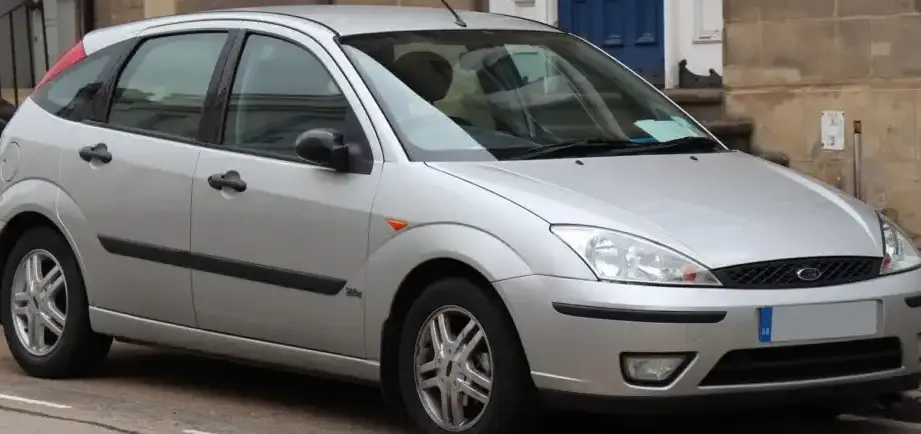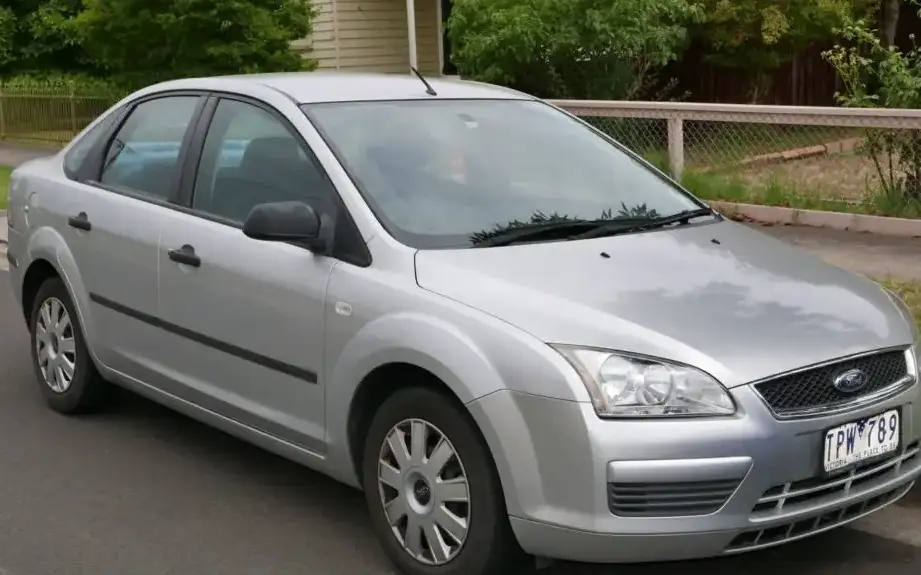
The Ford Focus II Sedan 2.0 16V Automatic, produced between 2005 and 2010, represented a significant step forward for Ford’s compact offerings in the North American and European markets. Part of the second generation Focus (internally designated the 2HX0), this variant aimed to provide a comfortable and practical sedan experience with a balance of performance and fuel efficiency. Positioned as a mid-range trim, it offered a step up from the base 2.0L manual transmission models, appealing to buyers prioritizing ease of driving over outright sportiness. The Focus II sedan, in general, was designed to address criticisms of the first-generation Focus, focusing on improved interior space, build quality, and refinement.
Technical Specifications
| Brand | Ford |
| Model | Focus |
| Generation | Focus II Sedan |
| Type (Engine) | 2.0 16V (145 Hp) Automatic |
| Start of production | 2005 |
| End of production | 2010 |
| Powertrain Architecture | Internal Combustion engine |
| Body type | Sedan |
| Seats | 5 |
| Doors | 4 |
| Fuel consumption (urban) | 11.2 l/100 km (21 US mpg) |
| Fuel consumption (extra urban) | 6.1 l/100 km (38.6 US mpg) |
| Fuel consumption (combined) | 8.9 l/100 km (26.4 US mpg) |
| Fuel Type | Petrol (Gasoline) |
| Acceleration 0 – 100 km/h | 10.7 sec |
| Acceleration 0 – 62 mph | 10.7 sec |
| Acceleration 0 – 60 mph | 10.2 sec |
| Maximum speed | 195 km/h (121.17 mph) |
| Emission standard | Euro 4 |
| Weight-to-power ratio | 9 kg/Hp |
| Weight-to-torque ratio | 6.8 kg/Nm |
| Power | 145 Hp @ 6000 rpm |
| Torque | 190 Nm @ 4500 rpm (140.14 lb.-ft. @ 4500 rpm) |
| Engine layout | Front, Transverse |
| Engine Model/Code | AODA, AODB |
| Engine displacement | 1999 cm3 (121.99 cu. in.) |
| Number of cylinders | 4 |
| Engine configuration | Inline |
| Cylinder Bore | 87.5 mm (3.44 in.) |
| Piston Stroke | 83.1 mm (3.27 in.) |
| Compression ratio | 10.8:1 |
| Number of valves per cylinder | 4 |
| Fuel injection system | Multi-port manifold injection |
| Engine aspiration | Naturally aspirated engine |
| Valvetrain | DOHC |
| Engine oil capacity | 4.3 l (4.54 US qt | 3.78 UK qt) |
| Coolant capacity | 6.3 l (6.66 US qt | 5.54 UK qt) |
| Kerb Weight | 1300 kg (2866.01 lbs.) |
| Max. weight | 1810 kg (3990.37 lbs.) |
| Max load | 510 kg (1124.36 lbs.) |
| Trunk (boot) space – minimum | 467 l (16.49 cu. ft.) |
| Trunk (boot) space – maximum | 931 l (32.88 cu. ft.) |
| Fuel tank capacity | 55 l (14.53 US gal | 12.1 UK gal) |
| Length | 4488 mm (176.69 in.) |
| Width | 1840 mm (72.44 in.) |
| Height | 1497 mm (58.94 in.) |
| Wheelbase | 2640 mm (103.94 in.) |
| Front track | 1535 mm (60.43 in.) |
| Rear track | 1531 mm (60.28 in.) |
| Drivetrain Architecture | Front wheel drive |
| Number of gears | 4 |
| Gearbox type | Automatic transmission |
| Front suspension | Spring Strut |
| Rear suspension | Transverse stabilizer |
| Front brakes | Disc |
| Rear brakes | Disc |
| Steering type | Steering rack and pinion |
| Tires size | 205/55 R16 |
Powertrain & Engine Architecture
The heart of the Focus II Sedan 2.0 16V Automatic is the Duratec 2.0L inline-four cylinder engine. Engine codes AODA and AODB were commonly used, with minor variations depending on the specific market. This engine featured a dual overhead camshaft (DOHC) valvetrain with four valves per cylinder, contributing to its relatively high output for its displacement. Fuel delivery was handled by a multi-port fuel injection system, providing precise fuel metering for improved efficiency and reduced emissions. The engine’s 10.8:1 compression ratio was a compromise between performance and the ability to run on readily available gasoline grades. Paired with this engine was a four-speed automatic transmission. While not the most modern transmission available at the time, it provided smooth shifts and ease of use, catering to drivers who preferred a less involved driving experience. The transmission was designed to handle the engine’s 190 Nm (140 lb-ft) of torque, delivering power to the front wheels.
Driving Characteristics
The 2.0L automatic Focus Sedan offered a comfortable and predictable driving experience. Acceleration from 0-60 mph took around 10.2 seconds, which was adequate for everyday driving but noticeably slower than the manual transmission or higher-output variants. The four-speed automatic transmission, while smooth, lacked the responsiveness of a manual or more modern automatic with additional gears. Gear ratios were tuned for fuel economy and comfort rather than outright performance. Power delivery was linear, with peak torque available at 4500 rpm. This meant that the engine felt reasonably responsive in everyday driving situations, but required downshifting for quicker acceleration when overtaking or merging onto highways. Compared to the more sporty Focus ST or the fuel-efficient diesel models, the 2.0L automatic was positioned as a practical and accessible option.
Equipment & Trim Levels
The 2.0 16V Automatic trim typically included standard features such as air conditioning, power windows and locks, a basic audio system (often with CD player), and standard safety equipment like airbags and ABS brakes. Interior upholstery was typically cloth, with options for upgraded materials available. Dashboard configuration was functional and straightforward, prioritizing usability over aesthetic flair. Optional extras included alloy wheels, a sunroof, upgraded audio systems, and rear parking sensors. The specific features available varied depending on the market and package selected.
Chassis & Braking
The Focus II Sedan utilized a MacPherson strut front suspension and a multi-link rear suspension, providing a good balance of ride comfort and handling. The front suspension incorporated a stabilizer bar to reduce body roll during cornering. Braking duties were handled by disc brakes on all four wheels, providing adequate stopping power for the vehicle’s weight and performance. The steering system employed a rack and pinion setup, offering precise and responsive steering feel. Tire size was typically 205/55 R16, providing a good compromise between comfort and grip.
Market Reception & Comparison
The Ford Focus II Sedan 2.0 16V Automatic was generally well-received by critics as a practical and comfortable family sedan. However, the automatic transmission was often criticized for its lack of responsiveness compared to the manual transmission. Fuel economy was considered average for its class, with combined figures around 26.4 US mpg. Compared to the 1.8L models, the 2.0L offered a noticeable performance improvement, while the diesel variants provided superior fuel economy. Reliability was generally good, although some owners reported minor issues with the automatic transmission over time.
Legacy
The Ford Focus II Sedan 2.0 16V Automatic remains a relatively common sight on used car markets today. The Duratec 2.0L engine is known for its durability and relatively low maintenance costs. While the four-speed automatic transmission is not as sophisticated as modern transmissions, it has proven to be reasonably reliable. These vehicles represent a good value for buyers seeking an affordable and practical sedan with a proven track record. However, potential buyers should be aware of the possibility of age-related wear and tear on components such as the suspension and brakes.