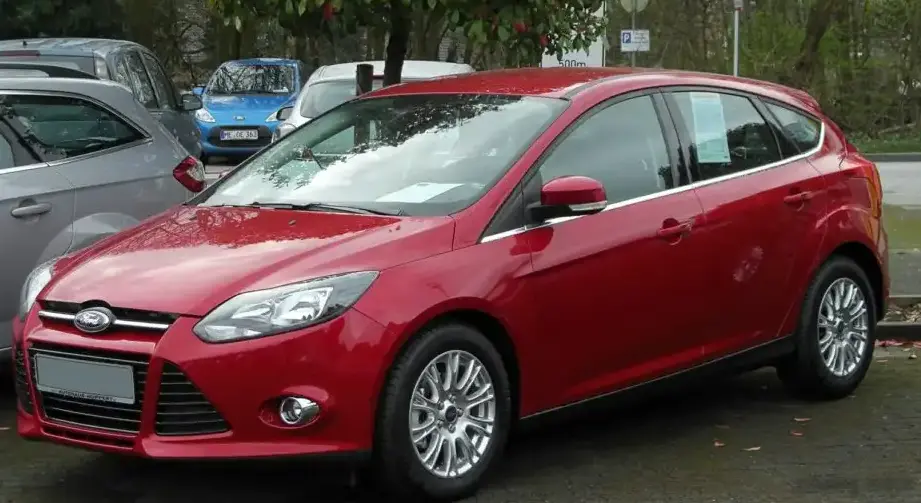
The Ford Focus III Hatchback 1.6 TDCi, producing 95 horsepower, was a mainstay of the European Ford lineup from 2010 to 2014. Representing a key entry point into the third-generation Focus range (internally designated as the Mk3), this variant aimed to deliver fuel efficiency and practicality to a broad customer base. While not offered in the North American market during this generation, the Focus III was a significant competitor in the compact hatchback segment across Europe, offering a blend of affordability and modern features. This specific engine and transmission combination was positioned as the fuel-economy leader within the Focus III range, appealing to drivers prioritizing cost-effectiveness over outright performance.
Technical Specifications
| Brand | Ford |
| Model | Focus |
| Generation | Focus III Hatchback |
| Type (Engine) | 1.6 TDCi (95 Hp) |
| Start of production | 2010 |
| End of production | 2014 |
| Powertrain Architecture | Internal Combustion engine |
| Body type | Hatchback |
| Seats | 5 |
| Doors | 5 |
| Fuel consumption (urban) | 5.7 l/100 km (41.3 US mpg, 49.6 UK mpg, 17.5 km/l) |
| Fuel consumption (extra urban) | 3.7 l/100 km (63.6 US mpg, 76.3 UK mpg, 27 km/l) |
| Fuel consumption (combined) | 4.5 l/100 km (52.3 US mpg, 62.8 UK mpg, 22.2 km/l) |
| Fuel Type | Diesel |
| Acceleration 0 – 100 km/h | 12.5 sec |
| Acceleration 0 – 62 mph | 12.5 sec |
| Acceleration 0 – 60 mph | 11.9 sec |
| Maximum speed | 180 km/h (111.85 mph) |
| Power | 95 Hp |
| Engine layout | Front, Transverse |
| Engine Model/Code | TZJA, T3DA, T3DB |
| Engine configuration | Inline |
| Fuel injection system | Diesel Commonrail |
| Engine aspiration | Turbocharger, Intercooler |
| Engine oil capacity | 3.8 l (4.02 US qt, 3.34 UK qt) |
| Coolant capacity | 7.3 l (7.71 US qt, 6.42 UK qt) |
| Drivetrain Architecture | Front wheel drive |
| Number of gears | 6 |
| Gearbox type | Manual transmission |
| Assisting systems | ABS (Anti-lock braking system) |
| Steering type | Steering rack and pinion |
Powertrain & Engine Architecture
The heart of this Focus variant is the 1.6-liter TDCi diesel engine, utilizing the Duratorq engine family. Engine codes TZJA, T3DA, and T3DB were commonly used, with minor variations depending on the specific market and year of production. This engine is a four-cylinder, inline configuration, employing a turbocharger with intercooling to enhance power and efficiency. The fuel injection system is a common rail direct injection system, delivering fuel at high pressure for optimized combustion. The engine features a single overhead camshaft (SOHC) valvetrain, operating four valves per cylinder. The 6-speed manual transmission was the standard offering, chosen for its balance of fuel economy and driver engagement. The transmission’s gear ratios were tuned to maximize fuel efficiency at cruising speeds while still providing adequate acceleration.
Driving Characteristics
The 95 horsepower output of the 1.6 TDCi, coupled with the 6-speed manual transmission, resulted in a driving experience focused on economy rather than outright performance. Acceleration from 0-60 mph took approximately 11.9 seconds, and top speed was limited to 111.85 mph. While not particularly quick, the engine provided sufficient torque for everyday driving situations, including highway merging and overtaking. The turbocharger provided a noticeable boost in power at higher RPMs, but the engine felt somewhat strained when pushed hard. Compared to the higher-output 1.6 TDCi variants (typically around 115 hp) or the petrol-powered options, this version prioritized fuel efficiency and lower running costs. The manual transmission offered a more engaging driving experience than the optional automatic, allowing drivers to better control the engine’s power delivery.
Equipment & Trim Levels
The 1.6 TDCi 95 hp model typically served as the entry-level or mid-range trim within the Focus III Hatchback lineup. Standard equipment generally included air conditioning, power steering, electric front windows, and a basic audio system. Higher trim levels added features such as alloy wheels, fog lights, cruise control, and a more advanced infotainment system. Interior upholstery was typically cloth, with a functional and durable design. Optional extras included parking sensors, a sunroof, and upgraded audio systems. The dashboard layout was consistent across the Focus III range, featuring a clear and intuitive design. Safety features such as ABS, electronic stability control, and multiple airbags were standard across all trims.
Chassis & Braking
The Focus III Hatchback utilized a MacPherson strut front suspension and a multi-link rear suspension, providing a comfortable and controlled ride. The suspension was tuned to balance handling and ride comfort, making it suitable for a variety of road conditions. Braking systems varied depending on the trim level. Lower trims typically featured disc brakes on the front wheels and drum brakes on the rear, while higher trims offered disc brakes all around. The anti-lock braking system (ABS) was standard, enhancing braking performance and stability. Stabilizer bars were fitted to both the front and rear axles, reducing body roll during cornering.
Market Reception & Comparison
The Ford Focus III 1.6 TDCi 95 hp was generally well-received by automotive critics for its fuel efficiency and practicality. It was praised for its comfortable ride, spacious interior, and well-equipped standard features. However, some critics noted that the engine lacked power, particularly when fully loaded or driving uphill. Compared to other trims in the Focus III lineup, this variant offered the best fuel economy but the lowest performance. Against competitors such as the Volkswagen Golf, Opel Astra, and Peugeot 308, the Focus III 1.6 TDCi offered a competitive package in terms of price, fuel efficiency, and features. The 1.6 TDCi engine was considered relatively reliable, although regular maintenance was essential to prevent issues with the turbocharger and fuel injection system.
Legacy
The Ford Focus III 1.6 TDCi 95 hp remains a popular choice in the used car market, particularly for buyers seeking an affordable and fuel-efficient compact hatchback. The Duratorq engine, while not known for being exceptionally powerful, has proven to be reasonably durable with proper maintenance. Common issues include turbocharger failure, fuel injector problems, and diesel particulate filter (DPF) clogging. However, these issues are often preventable with regular servicing and careful driving habits. The Focus III’s reputation for handling and practicality has ensured its continued popularity, making it a sensible and economical option for everyday transportation. The 1.6 TDCi engine, in this configuration, represents a pragmatic choice within the Focus III range, prioritizing efficiency and affordability over outright performance.