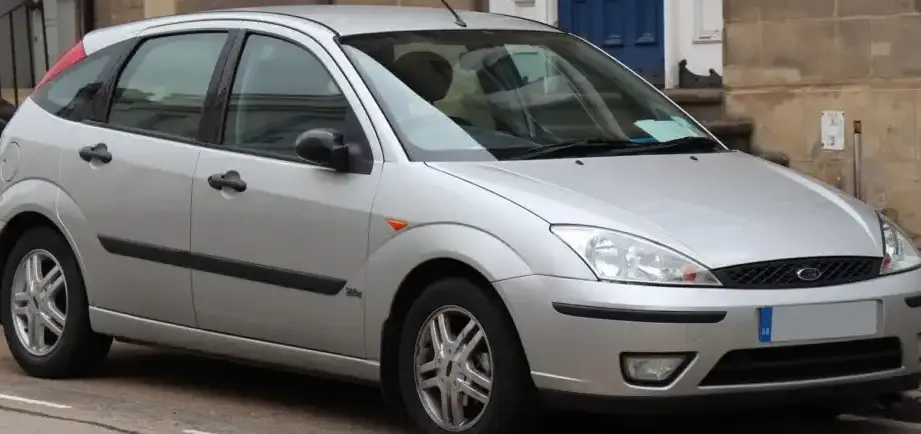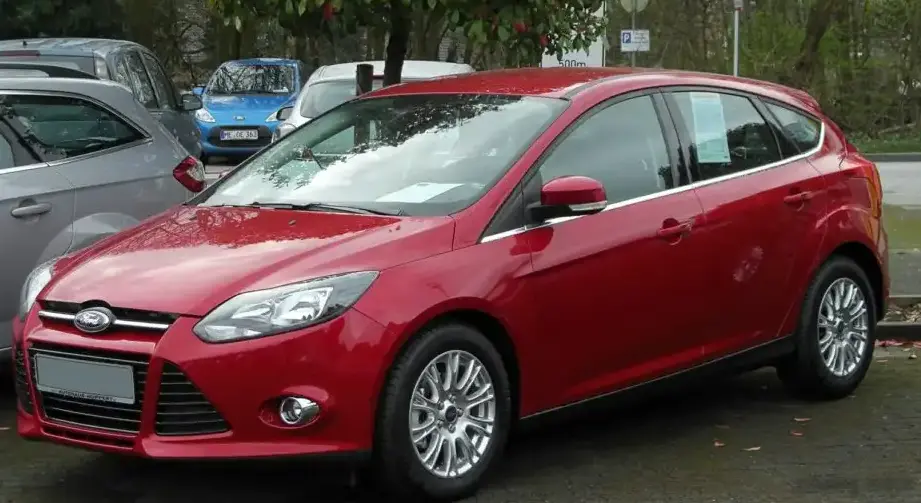
The Ford Focus III Hatchback 1.6 Ti-VCT (120 hp) Flex Fuel, produced from January 2011 to December 2012, represented a key offering in Ford’s European and South American compact car lineup. Positioned as a mid-range option within the third-generation Focus (Mk3) range, this variant aimed to balance affordability with reasonable performance and the added versatility of flex-fuel capability. It was built on the global C-segment platform, known internally as the 1HX0/A3, shared with other Ford models and Mazda vehicles. The 1.6 Ti-VCT engine, coupled with a five-speed manual transmission, provided a practical and efficient choice for buyers seeking a versatile hatchback.
Technical Specifications
| Brand | Ford |
| Model | Focus |
| Generation | Focus III Hatchback |
| Type (Engine) | 1.6 Ti-VCT (120 Hp) Flex Fuel |
| Start of production | January, 2011 |
| End of production | December, 2012 |
| Powertrain Architecture | Internal Combustion engine |
| Body type | Hatchback |
| Seats | 5 |
| Doors | 5 |
| Fuel consumption (economy) – urban | 8 l/100 km (29.4 US mpg, 35.3 UK mpg, 12.5 km/l) |
| Fuel consumption (economy) – urban (Ethanol – E85) | 10.9 l/100 km |
| Fuel consumption (economy) – extra urban | 4.7 l/100 km (50 US mpg, 60.1 UK mpg, 21.3 km/l) |
| Fuel consumption (economy) – extra urban (Ethanol – E85) | 6.4 l/100 km |
| Fuel consumption (economy) – combined | 5.9 l/100 km (39.9 US mpg, 47.9 UK mpg, 16.9 km/l) |
| Fuel consumption (economy) – combined (Ethanol – E85) | 8.1 l/100 km |
| CO2 emissions | 136 g/km |
| CO2 emissions (Ethanol – E85) | 132 g/km |
| Fuel Type | Petrol / Ethanol – E85 |
| Acceleration 0 – 100 km/h | 11.1 sec |
| Acceleration 0 – 62 mph | 11.1 sec |
| Acceleration 0 – 60 mph | 10.5 sec |
| Maximum speed | 193 km/h (119.92 mph) |
| Emission standard | Euro 5 |
| Weight-to-power ratio | 10 kg/Hp, 99.9 Hp/tonne |
| Weight-to-torque ratio | 7.6 kg/Nm, 132.4 Nm/tonne |
| Power | 120 Hp @ 6300 rpm |
| Power per litre | 75.2 Hp/l |
| Torque | 159 Nm @ 4000 rpm (117.27 lb.-ft. @ 4000 rpm) |
| Engine layout | Front, Transverse |
| Engine Model/Code | MUDA, MUDD |
| Engine displacement | 1596 cm3 (97.39 cu. in.) |
| Number of cylinders | 4 |
| Engine configuration | Inline |
| Cylinder Bore | 79 mm (3.11 in.) |
| Piston Stroke | 81.4 mm (3.2 in.) |
| Compression ratio | 11:1 |
| Number of valves per cylinder | 4 |
| Fuel injection system | Multi-port manifold injection |
| Engine aspiration | Naturally aspirated engine |
| Valvetrain | DOHC |
| Engine oil capacity | 4.1 l (4.33 US qt | 3.61 UK qt) |
| Coolant | 5.8 l (6.13 US qt | 5.1 UK qt) |
| Kerb Weight | 1201 kg (2647.75 lbs.) |
| Max. weight | 1825 kg (4023.44 lbs.) |
| Max load | 624 kg (1375.68 lbs.) |
| Trunk (boot) space – minimum | 316 l (11.16 cu. ft.) |
| Trunk (boot) space – maximum | 1101 l (38.88 cu. ft.) |
| Fuel tank capacity | 55 l (14.53 US gal | 12.1 UK gal) |
| Permitted trailer load with brakes (12%) | 800 kg (1763.7 lbs.) |
| Permitted trailer load without brakes | 635 kg (1399.94 lbs.) |
| Length | 4358 mm (171.57 in.) |
| Width | 1823 mm (71.77 in.) |
| Width with mirrors folded | 1858 mm (73.15 in.) |
| Width including mirrors | 2010 mm (79.13 in.) |
| Height | 1484 mm (58.43 in.) |
| Wheelbase | 2648 mm (104.25 in.) |
| Front track | 1544-1559 mm (60.79 – 61.38 in.) |
| Rear (Back) track | 1534-1549 mm (60.39 – 60.98 in.) |
| Minimum turning circle (turning diameter) | 11 m (36.09 ft.) |
| Drivetrain Architecture | The Internal combustion engine (ICE) drives the front wheels of the vehicle. |
| Drive wheel | Front wheel drive |
| Number of gears and type of gearbox | 5 gears, manual transmission |
| Front suspension | Independent, type McPherson with coil spring and anti-roll bar |
| Rear suspension | Independent multi-link spring suspension with stabilizer |
| Front brakes | Ventilated discs |
| Rear brakes | Drum |
| Assisting systems | ABS (Anti-lock braking system) |
| Steering type | Steering rack and pinion |
| Power steering | Electric Steering |
| Tires size | 205/55 R16; 215/55 R16; 215/50 R17 |
| Wheel rims size | 6.5J x 16; 7J x 16; 7J x 17 |
Powertrain & Engine Architecture
The heart of this Focus variant is the 1.6-liter Ti-VCT inline-four cylinder engine, designated MUDA or MUDD depending on the specific calibration for the target market. “Ti-VCT” stands for Twin Independent Variable Camshaft Timing, a key feature that optimizes engine breathing for improved performance and fuel efficiency. The engine utilizes a multi-point fuel injection system, delivering fuel directly to the intake ports. The 120 horsepower output is achieved at 6300 rpm, with a torque peak of 159 Nm (117.27 lb-ft) at 4000 rpm. The five-speed manual transmission was the standard offering, providing a relatively conventional gear ratio spread. The flex-fuel capability allowed the engine to run on gasoline, ethanol (E85), or any blend of the two, offering drivers a choice based on price and availability.
Driving Characteristics
The 1.6 Ti-VCT engine, while not exceptionally powerful, provided adequate performance for everyday driving. Acceleration from 0-60 mph took around 10.5 seconds, and top speed was approximately 119.92 mph. Compared to higher-output versions of the Focus III, such as those equipped with the 2.0-liter GDI engine, this variant felt noticeably less responsive, particularly during overtaking maneuvers. However, the five-speed manual transmission allowed drivers to keep the engine in its optimal power band. The gear ratios were tuned for fuel economy rather than outright performance. The flex-fuel capability did slightly impact performance when running on E85, as ethanol has a lower energy density than gasoline.
Equipment & Trim Levels
The 1.6 Ti-VCT model typically served as a mid-level trim, offering a balance of features and affordability. Standard equipment generally included air conditioning, power windows, power door locks, a basic audio system with CD player, and ABS brakes. Higher trim levels added features such as alloy wheels, a more advanced audio system with Bluetooth connectivity, cruise control, and automatic climate control. Interior upholstery was typically cloth, with options for upgraded materials available. Safety features included driver and passenger airbags, side airbags, and curtain airbags.
Chassis & Braking
The Focus III utilized an independent McPherson strut suspension in the front and an independent multi-link suspension in the rear, providing a comfortable ride and good handling characteristics. The front brakes were ventilated discs, while the rear brakes were drums. This configuration was typical for vehicles in this weight class and price range. A stabilizer bar was included on both the front and rear axles to reduce body roll during cornering. The electric power steering provided light and precise steering feel.
Market Reception & Comparison
The 1.6 Ti-VCT Flex Fuel variant of the Focus III was generally well-received by critics as a practical and economical choice. Fuel economy was a strong point, with combined fuel consumption figures around 39.9 US mpg on gasoline. The flex-fuel capability was also seen as a positive, offering drivers the flexibility to choose the most cost-effective fuel. Compared to the higher-output engines, this variant was considered less refined and less engaging to drive. However, it offered a lower price point and better fuel economy, making it an attractive option for budget-conscious buyers. The 1.6L engine was also generally considered more reliable than some of the more complex engine options available in the Focus III range.
Legacy
The 1.6 Ti-VCT engine proved to be a relatively reliable powertrain, and well-maintained examples of the Focus III 1.6 Ti-VCT continue to be found on the used car market. While not known for exceptional performance, the engine’s simplicity and durability have contributed to its longevity. Common maintenance items include regular oil changes, timing belt replacement (typically around 100,000 miles), and spark plug replacement. The availability of flex-fuel capability has also helped to preserve the value of these vehicles in regions where ethanol is readily available and affordable. Overall, the Ford Focus III 1.6 Ti-VCT (120 hp) Flex Fuel remains a practical and affordable option for those seeking a reliable and fuel-efficient compact hatchback.