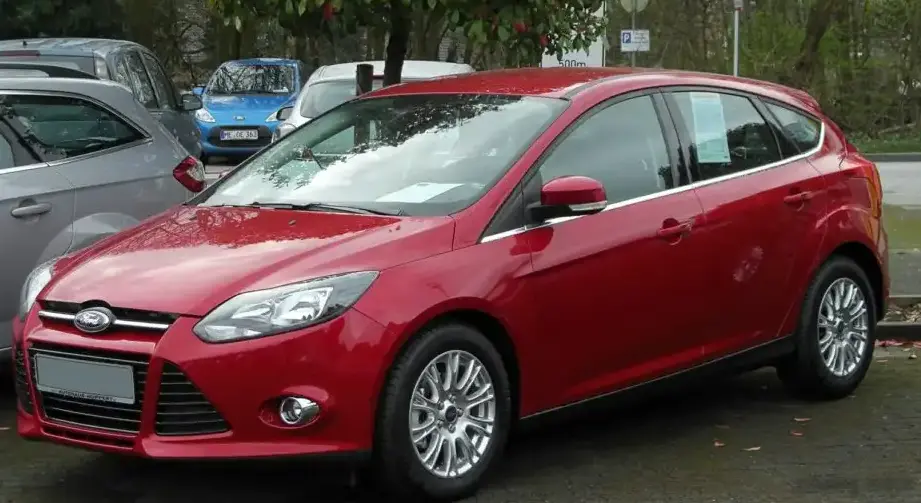
The Ford Focus III Hatchback 2.0 TDCi, producing 163 horsepower, was a significant variant within the third generation of Ford’s globally successful Focus model. Introduced in 2010 and continuing through 2014, this version represented a compelling blend of fuel efficiency and performance, aimed at buyers seeking a practical yet engaging driving experience. It occupied a mid-to-upper position in the Focus III lineup, offering a step up in power and refinement compared to the lower-displacement engines, while remaining more accessible than the performance-oriented ST model. The Focus III, built on the C170 platform, was a crucial model for Ford in Europe and increasingly in North America, representing a move towards more sophisticated and globally-harmonized vehicle designs.
Technical Specifications
| Brand | Ford |
| Model | Focus |
| Generation | Focus III Hatchback |
| Type (Engine) | 2.0 TDCi (163 Hp) |
| Start of production | 2010 |
| End of production | 2014 |
| Powertrain Architecture | Internal Combustion engine |
| Body type | Hatchback |
| Seats | 5 |
| Doors | 5 |
| Fuel consumption (urban) | 6.1 l/100 km (38.6 US mpg) |
| Fuel consumption (extra urban) | 4.1 l/100 km (57.4 US mpg) |
| Fuel consumption (combined) | 4.9 l/100 km (48 US mpg) |
| Fuel Type | Diesel |
| Acceleration 0 – 100 km/h | 8.6 sec |
| Acceleration 0 – 62 mph | 8.6 sec |
| Acceleration 0 – 60 mph | 8.2 sec |
| Maximum speed | 218 km/h (135.46 mph) |
| Power | 163 Hp |
| Engine layout | Front, Transverse |
| Engine Model/Code | TXDB |
| Engine configuration | Inline |
| Fuel injection system | Diesel Commonrail |
| Engine aspiration | Turbocharger, Intercooler |
| Engine oil capacity | 5.7 l (6.02 US qt) |
| Coolant capacity | 8.5 l (8.98 US qt) |
| Drivetrain Architecture | Front wheel drive |
| Number of gears | 6 |
| Gearbox type | Manual transmission |
| Assisting systems | ABS (Anti-lock braking system) |
| Steering type | Steering rack and pinion |
Powertrain & Engine Architecture
The heart of the Focus III 2.0 TDCi was the TXDB engine, a four-cylinder diesel utilizing common-rail direct injection. This engine was part of Ford’s Duratorq family, known for its robustness and efficiency. The 2.0-liter displacement provided a substantial increase in torque compared to the smaller 1.6-liter TDCi options. The engine featured a turbocharger with an intercooler, enhancing power output and reducing turbo lag. The common-rail system, operating at very high pressures, allowed for precise fuel metering and optimized combustion. The engine employed four valves per cylinder, contributing to improved breathing and overall performance. The 6-speed manual transmission was the standard offering, providing well-spaced gear ratios designed to maximize both fuel economy and acceleration. The transmission was known for its relatively smooth shift action, although some units experienced minor wear in the synchromesh over time. The Duratorq engine family was a significant investment for Ford, aiming to provide a competitive diesel offering in the European market, where diesel engines held a substantial market share due to fuel economy and tax incentives.
Driving Characteristics
The 2.0 TDCi Focus III offered a noticeably more spirited driving experience than its lower-powered siblings. The 163 horsepower and substantial torque (approximately 258 lb-ft) provided ample power for both city driving and highway cruising. Acceleration from 0-60 mph in around 8.2 seconds was respectable for a diesel hatchback. The turbocharger provided a surge of power in the mid-range, making overtaking maneuvers relatively effortless. The 6-speed manual transmission allowed drivers to keep the engine in its optimal power band. Compared to the 1.6 TDCi, the 2.0 TDCi felt significantly less strained when fully loaded or climbing hills. While not a sports car, the Focus III 2.0 TDCi offered a good balance of performance and practicality, making it a versatile choice for a wide range of drivers. The gear ratios were tuned to prioritize fuel efficiency during normal driving, but provided enough punch for quicker acceleration when needed. The engine’s torque curve was relatively flat, meaning that usable power was available across a wide range of engine speeds.
Equipment & Trim Levels
The 2.0 TDCi variant was typically offered in mid-to-high trim levels, such as Titanium or Zetec. Standard equipment generally included air conditioning, power windows, power mirrors, a CD/MP3 stereo system, and alloy wheels. Higher trim levels added features like automatic climate control, a touchscreen infotainment system, rear parking sensors, and cruise control. Interior upholstery was typically cloth, with leather options available as an upgrade. The dashboard layout was modern and functional, with a focus on ergonomics. Optional extras included a panoramic sunroof, heated front seats, and a premium sound system. Safety features, such as ABS, ESP (Electronic Stability Program), and multiple airbags, were standard across the range. The Titanium trim, in particular, aimed to offer a more premium experience with enhanced interior materials and additional comfort features.
Chassis & Braking
The Focus III utilized an independent front suspension with MacPherson struts and a multi-link rear suspension. This setup provided a good balance of ride comfort and handling precision. The suspension was tuned to offer a slightly firmer ride than the lower-powered models, reflecting the increased performance capabilities. Braking systems varied slightly depending on the trim level, but generally consisted of ventilated front discs and either disc or drum brakes in the rear. ABS (Anti-lock Braking System) was standard, enhancing braking performance and stability. The steering was a rack-and-pinion system with hydraulic power assistance, providing precise and responsive steering feel. The chassis was designed to minimize body roll during cornering, contributing to a more confident driving experience. The use of high-strength steel in key areas of the chassis helped to reduce weight and improve rigidity.
Market Reception & Comparison
The Ford Focus III 2.0 TDCi was generally well-received by automotive critics. It was praised for its fuel efficiency, strong performance, and comfortable ride. Compared to competitors like the Volkswagen Golf and Opel Astra, the Focus offered a more engaging driving experience and a more modern interior design. The 2.0 TDCi offered a significant improvement in fuel economy compared to gasoline-powered alternatives, while still delivering respectable performance. However, some critics noted that the engine could be slightly noisy compared to some of its rivals. In terms of reliability, the Duratorq engine proved to be generally robust, although some owners reported issues with the diesel particulate filter (DPF) and the dual-mass flywheel. The Golf, while often considered the benchmark in the segment, was sometimes criticized for its higher price point. The Astra offered a more affordable alternative, but often lacked the Focus’s dynamic driving characteristics.
Legacy
The Ford Focus III 2.0 TDCi remains a popular choice in the used car market. Its combination of fuel efficiency, performance, and practicality makes it a compelling option for buyers seeking a versatile and reliable hatchback. The Duratorq engine, while requiring regular maintenance, has proven to be relatively durable. Common issues, such as DPF blockages and dual-mass flywheel failure, can be costly to repair, so prospective buyers should be aware of these potential problems. The Focus III generation, as a whole, helped solidify Ford’s position as a major player in the European compact car market. Overall, the Focus III 2.0 TDCi represents a well-engineered and capable vehicle that continues to offer good value for money. Its enduring popularity is a testament to its balanced design and reliable powertrain.