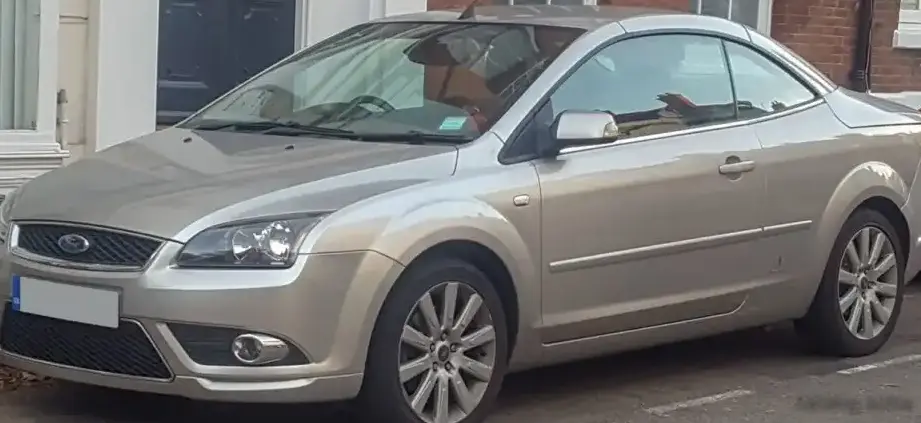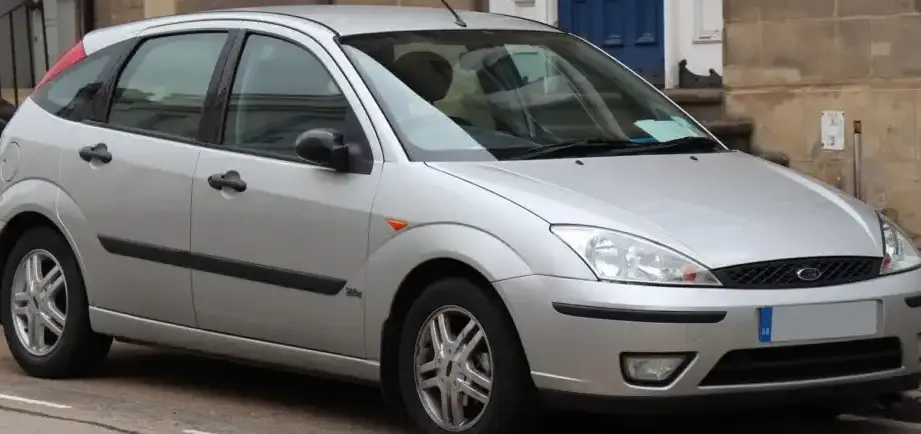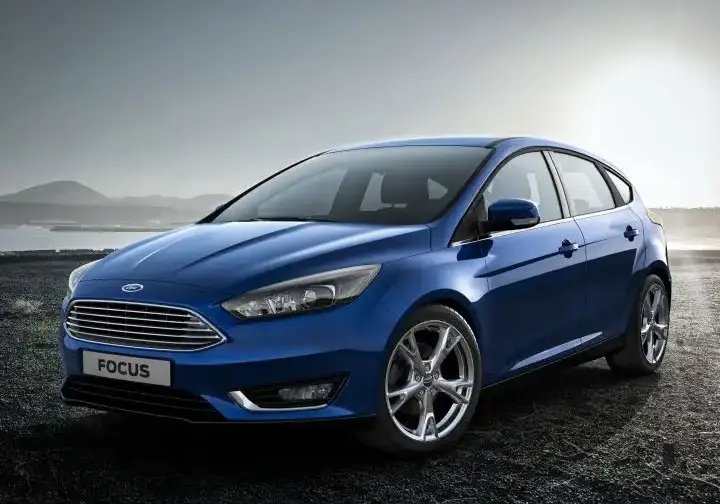
The Ford Focus III, specifically the facelifted model produced from 2014 to 2018, represented a significant evolution of Ford’s globally successful compact car. Within this generation, the 1.0 EcoBoost 100 horsepower variant with the six-speed automatic transmission (often marketed with the ‘S&S’ – Start/Stop – system) occupied an important position as an entry-level offering focused on fuel efficiency and affordability. This model aimed to provide a balance between practicality and running costs, appealing to buyers prioritizing economy over outright performance. It was a key component of Ford’s strategy to offer a diverse range of Focus models catering to varied consumer needs across Europe and, to a lesser extent, North America.
Technical Specifications
| Brand | Ford |
| Model | Focus |
| Generation | Focus III Hatchback (facelift 2014) |
| Type (Engine) | 1.0 EcoBoost (100 Hp) S&S |
| Start of production | 2014 |
| End of production | 2018 |
| Powertrain Architecture | Internal Combustion engine |
| Body type | Hatchback |
| Seats | 5 |
| Doors | 5 |
| Fuel consumption (urban) | 5.7 l/100 km (41.3 US mpg, 49.6 UK mpg, 17.5 km/l) |
| Fuel consumption (extra urban) | 3.9 l/100 km (60.3 US mpg, 72.4 UK mpg, 25.6 km/l) |
| Fuel consumption (combined) | 4.6 l/100 km (51.1 US mpg, 61.4 UK mpg, 21.7 km/l) |
| CO2 emissions | 105 g/km |
| Fuel Type | Petrol (Gasoline) |
| Acceleration 0 – 100 km/h | 12.5 sec |
| Acceleration 0 – 62 mph | 12.5 sec |
| Acceleration 0 – 60 mph | 11.9 sec |
| Maximum speed | 187 km/h (116.2 mph) |
| Emission standard | Euro 6 |
| Weight-to-power ratio | 12.8 kg/Hp, 78.4 Hp/tonne |
| Weight-to-torque ratio | 7.5 kg/Nm, 133.2 Nm/tonne |
| Power | 100 Hp @ 6000 rpm |
| Power per litre | 100.2 Hp/l |
| Torque | 170 Nm @ 1400-4000 rpm (125.39 lb.-ft. @ 1400-4000 rpm) |
| Engine layout | Front, Transverse |
| Engine Model/Code | M2DB, M2DC, SFDB |
| Engine displacement | 998 cm3 (60.9 cu. in.) |
| Number of cylinders | 3 |
| Engine configuration | Inline |
| Cylinder Bore | 71.9 mm (2.83 in.) |
| Piston Stroke | 82 mm (3.23 in.) |
| Compression ratio | 10:1 |
| Number of valves per cylinder | 4 |
| Fuel injection system | Direct injection |
| Engine aspiration | Turbocharger, Intercooler |
| Valvetrain | DOHC |
| Engine oil capacity | 4.1 l (4.33 US qt | 3.61 UK qt) |
| Coolant | 5.8 l (6.13 US qt | 5.1 UK qt) |
| Kerb Weight | 1276 kg (2813.1 lbs.) |
| Max. weight | 1900 kg (4188.78 lbs.) |
| Max load | 624 kg (1375.68 lbs.) |
| Trunk (boot) space – minimum | 277 l (9.78 cu. ft.) |
| Trunk (boot) space – maximum | 1062 l (37.5 cu. ft.) |
| Fuel tank capacity | 55 l (14.53 US gal | 12.1 UK gal) |
| Length | 4358 mm (171.57 in.) |
| Width | 1823 mm (71.77 in.) |
| Height | 1484 mm (58.43 in.) |
| Wheelbase | 2648 mm (104.25 in.) |
| Front track | 1544 mm (60.79 in.) |
| Rear (Back) track | 1559 mm (61.38 in.) |
| Minimum turning circle | 11 m (36.09 ft.) |
| Drivetrain | Front wheel drive |
| Number of gears | 6 (automatic) |
| Front suspension | Independent, McPherson with coil spring and anti-roll bar |
| Rear suspension | Independent multi-link suspension |
| Front brakes | Disc |
| Rear brakes | Disc |
| Tires size | 205/55 R16; 215/50 R17 |
| Wheel rims size | 6.5J x 16; 7.0J x 17 |
INTRODUCTION
The 1.0 EcoBoost engine, introduced in 2012, was a pivotal development for Ford, representing a shift towards smaller, turbocharged engines designed to deliver both performance and exceptional fuel economy. The 100 horsepower version, paired with a six-speed automatic transmission, debuted with the 2014 facelift of the third-generation Focus. This combination was positioned as a practical and affordable option within the Focus range, slotting below the more powerful 1.5 EcoBoost and diesel variants. The ‘S&S’ (Start/Stop) system further enhanced its efficiency, automatically shutting off the engine when the vehicle was stationary, contributing to lower emissions and fuel consumption. This variant was primarily marketed in Europe, where fuel costs are higher and demand for efficient vehicles is strong, though it was also available in limited quantities in North America.
Powertrain & Engine Architecture
The 1.0 EcoBoost engine (engine codes M2DB, M2DC, SFDB) is a three-cylinder, inline petrol engine featuring direct fuel injection and a single turbocharger with an intercooler. This configuration allowed for a compact engine size while still delivering a respectable power output. The engine utilizes a timing belt and a double overhead camshaft (DOHC) valvetrain with four valves per cylinder. The direct injection system precisely meters fuel into the combustion chamber, optimizing combustion efficiency and reducing emissions. The six-speed automatic transmission, a crucial component of this variant, was designed to provide smooth and efficient gear changes. It’s a conventional torque-converter automatic, prioritizing comfort and ease of use over the more aggressive shift patterns found in dual-clutch transmissions. The Start/Stop system relies on a reinforced starter motor and a robust battery to ensure reliable restarts.
Driving Characteristics
The 1.0 EcoBoost 100 hp automatic Focus delivers a comfortable, if not particularly exhilarating, driving experience. Acceleration from 0-60 mph takes around 11.9 seconds, and top speed is limited to 116.2 mph. The engine’s torque peak of 170 Nm (125 lb-ft) is available from 1400-4000 rpm, providing adequate pulling power for everyday driving situations. However, compared to the higher-output EcoBoost or diesel variants, this version feels noticeably less responsive, especially when accelerating at highway speeds or when carrying a full load. The automatic transmission contributes to a relaxed driving style, but it can sometimes feel hesitant during quick overtaking maneuvers. The gear ratios are tuned for fuel efficiency rather than outright performance.
Equipment & Trim Levels
The 1.0 EcoBoost 100 hp automatic typically came equipped with a reasonable level of standard features. These generally included air conditioning, power windows, power mirrors, a basic audio system with USB connectivity, and stability control. Higher trim levels, such as Titanium, added features like alloy wheels, a more advanced infotainment system with a touchscreen display, automatic headlights and wipers, and upgraded interior upholstery. Optional extras included a panoramic sunroof, parking sensors, and a premium sound system. Interior materials were generally durable and functional, though not particularly luxurious.
Chassis & Braking
The Focus III utilizes an independent front suspension with McPherson struts and a multi-link independent rear suspension. This setup provides a good balance between ride comfort and handling. The 1.0 EcoBoost variant typically featured disc brakes on all four wheels, providing adequate stopping power for its weight class. Anti-lock Braking System (ABS) and Electronic Stability Control (ESC) were standard safety features. The suspension tuning was generally softer than that of the higher-performance models, prioritizing comfort over sporty handling. Stabilizer bars were fitted to both the front and rear axles to reduce body roll during cornering.
Market Reception & Comparison
The 1.0 EcoBoost 100 hp automatic Focus was generally well-received by critics for its fuel efficiency and affordability. However, some reviewers noted its lack of outright performance compared to other variants. Fuel economy figures of around 51.1 US mpg (combined) were highly competitive for its class. Compared to the 1.5 EcoBoost, the 1.0 offered significantly lower running costs but sacrificed performance. The diesel variants provided even better fuel economy but came with a higher purchase price and potential maintenance concerns. The 1.0 EcoBoost appealed to buyers who prioritized economy and practicality over driving excitement.
Legacy
The 1.0 EcoBoost engine has proven to be a remarkably reliable powertrain, with relatively few reported issues. The automatic transmission, while not as sporty as some alternatives, has also demonstrated good durability. In the used car market, the 1.0 EcoBoost 100 hp automatic Focus represents a good value proposition for buyers seeking an affordable and fuel-efficient compact car. Regular maintenance, including oil changes and timing belt replacements, is crucial to ensure long-term reliability. The engine’s compact size and efficient design have cemented its place as a significant achievement in modern engine technology.