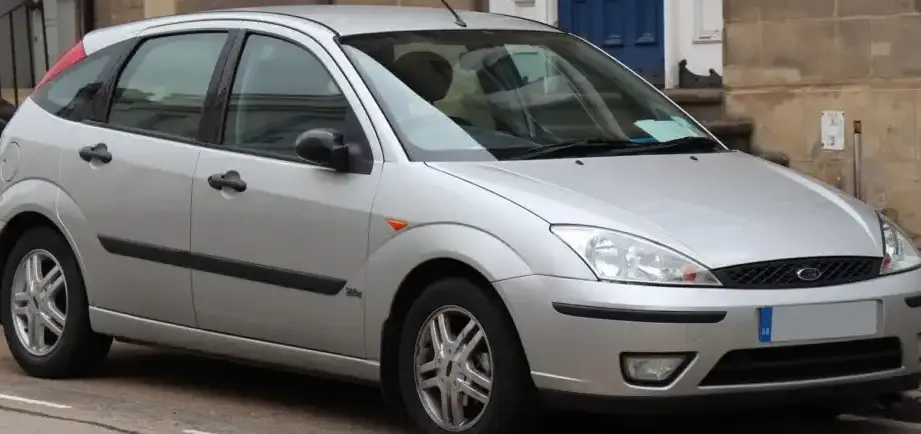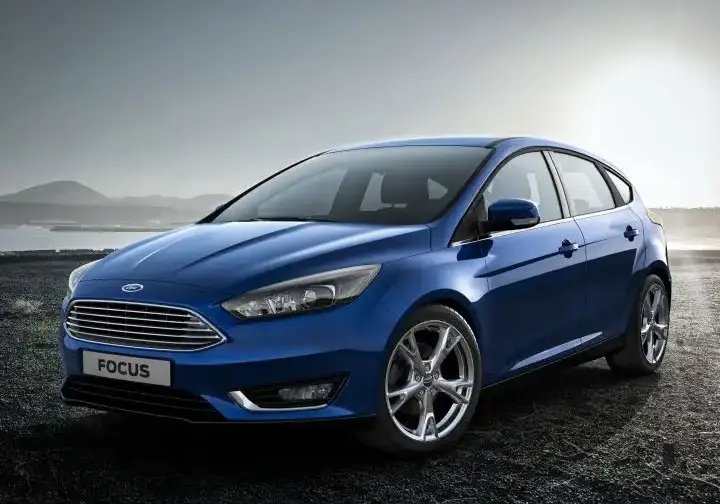
The Ford Focus III, particularly the facelifted version introduced in 2014, represented a significant step forward for Ford’s global compact car. Produced from 2014 to 2018, the 1.5 EcoBoost variant, generating 150 horsepower, occupied a key position in the lineup, bridging the gap between the more economical base engines and the performance-oriented ST model. This version was primarily aimed at the European and Asian markets, where fuel efficiency and a balance of performance were highly valued. In the United States, the Focus III was offered with different engine options, but the 1.5 EcoBoost was not a standard offering.
Technical Specifications
| Brand | Ford |
| Model | Focus |
| Generation | Focus III Hatchback (facelift 2014) |
| Type (Engine) | 1.5 EcoBoost (150 Hp) |
| Start of production | 2014 |
| End of production | 2018 |
| Powertrain Architecture | Internal Combustion engine |
| Body type | Hatchback |
| Seats | 5 |
| Doors | 5 |
| Fuel consumption (urban) | 8 l/100 km (29.4 US mpg, 35.3 UK mpg, 12.5 km/l) |
| Fuel consumption (extra urban) | 4.7 l/100 km (50 US mpg, 60.1 UK mpg, 21.3 km/l) |
| Fuel consumption (combined) | 5.9 l/100 km (39.9 US mpg, 47.9 UK mpg, 16.9 km/l) |
| CO2 emissions | 137 g/km |
| Fuel Type | Petrol (Gasoline) |
| Acceleration 0 – 100 km/h | 8.9 sec |
| Acceleration 0 – 62 mph | 8.9 sec |
| Acceleration 0 – 60 mph | 8.5 sec |
| Maximum speed | 212 km/h (131.73 mph) |
| Emission standard | Euro 6 |
| Weight-to-power ratio | 8.8 kg/Hp, 113.2 Hp/tonne |
| Weight-to-torque ratio | 5.5 kg/Nm, 181.1 Nm/tonne |
| Power | 150 Hp @ 6000 rpm |
| Power per litre | 100.1 Hp/l |
| Torque | 240 Nm @ 1600-4000 rpm (177.01 lb.-ft. @ 1600-4000 rpm) |
| Engine layout | Front, Transverse |
| Engine Model/Code | M8DA, M8DB |
| Engine displacement | 1499 cm3 (91.47 cu. in.) |
| Number of cylinders | 4 |
| Engine configuration | Inline |
| Cylinder Bore | 79 mm (3.11 in.) |
| Piston Stroke | 76.4 mm (3.01 in.) |
| Compression ratio | 10:1 |
| Number of valves per cylinder | 4 |
| Fuel injection system | Direct injection |
| Engine aspiration | Turbocharger, Intercooler |
| Valvetrain | DOHC |
| Engine oil capacity | 4.1 l (4.33 US qt | 3.61 UK qt) |
| Coolant | 5.8 l (6.13 US qt | 5.1 UK qt) |
| Kerb Weight | 1325 kg (2921.12 lbs.) |
| Max. weight | 1900 kg (4188.78 lbs.) |
| Max load | 575 kg (1267.66 lbs.) |
| Trunk (boot) space – minimum | 277 l (9.78 cu. ft.) |
| Trunk (boot) space – maximum | 1062 l (37.5 cu. ft.) |
| Fuel tank capacity | 55 l (14.53 US gal | 12.1 UK gal) |
| Length | 4358 mm (171.57 in.) |
| Width | 1823 mm (71.77 in.) |
| Height | 1484 mm (58.43 in.) |
| Wheelbase | 2648 mm (104.25 in.) |
| Front track | 1544 mm (60.79 in.) |
| Rear (Back) track | 1559 mm (61.38 in.) |
| Minimum turning circle | 11 m (36.09 ft.) |
| Drivetrain Architecture | The Internal combustion engine (ICE) drives the front wheels of the vehicle. |
| Drive wheel | Front wheel drive |
| Number of gears | 6 gears, manual transmission |
| Front suspension | Independent, type McPherson with coil spring and anti-roll bar |
| Rear suspension | Independent multi-link suspension |
| Front brakes | Disc |
| Rear brakes | Disc |
| Assisting systems | ABS (Anti-lock braking system) |
| Steering type | Steering rack and pinion |
| Tires size | 205/55 R16; 215/50 R17 |
| Wheel rims size | 6.5J x 16; 7.0J x 17 |
INTRODUCTION
The 1.5 EcoBoost engine, introduced in the facelifted Ford Focus III in 2014, was a key component of Ford’s strategy to offer a range of efficient and capable powertrains. This engine, part of Ford’s EcoBoost family, utilized direct injection and turbocharging to deliver a balance of performance and fuel economy. The 150 horsepower variant was positioned as a mid-range option, appealing to drivers who wanted more than the base engine’s output but didn’t require the higher performance of the ST model. It was available in various trim levels, offering a degree of customization to suit different budgets and preferences. The Focus III, in general, was a critical and commercial success for Ford in Europe, competing directly with models like the Volkswagen Golf, Opel Astra, and Peugeot 308.
Powertrain & Engine Architecture
The 1.5 EcoBoost engine (engine codes M8DA and M8DB) is a 1499cc inline-four cylinder engine. It features direct fuel injection, a single scroll turbocharger, and a variable valve timing system (Ti-VCT) on both intake and exhaust camshafts. The direct injection system allows for precise fuel delivery, improving combustion efficiency and reducing emissions. The turbocharger provides a boost in power and torque, particularly at lower engine speeds. The engine’s block is constructed from aluminum, contributing to its relatively lightweight design. The 6-speed manual transmission was the standard offering, providing precise gear changes and a direct connection to the engine. The transmission’s gear ratios were tuned to optimize both acceleration and fuel economy.
Driving Characteristics
The 1.5 EcoBoost-equipped Focus offered a noticeable improvement in performance compared to the lower-powered 1.0 EcoBoost engine. While not as quick as the Focus ST, the 150 hp engine provided ample power for everyday driving and overtaking maneuvers. The turbocharger delivers a noticeable surge of torque at around 1600 rpm, providing good responsiveness. The 6-speed manual transmission allowed drivers to keep the engine in its optimal power band. Compared to the higher-output versions, the 1.5 EcoBoost felt more relaxed and refined, making it a comfortable choice for long journeys. The steering was precise and well-weighted, providing a confident feel behind the wheel.
Equipment & Trim Levels
The 1.5 EcoBoost engine was available across several trim levels of the Focus III, including Trend, Titanium, and occasionally in higher-spec versions. The Trend trim typically included standard features such as air conditioning, power windows, a basic audio system, and steel wheels with wheel covers. The Titanium trim added features like alloy wheels, a more advanced infotainment system with a touchscreen display, automatic climate control, and fog lights. Optional extras included a panoramic sunroof, leather upholstery, and a premium sound system. Safety features such as ABS, ESP (Electronic Stability Program), and multiple airbags were standard across all trims.
Chassis & Braking
The Focus III utilized a McPherson strut front suspension and an independent multi-link rear suspension. This setup provided a good balance of ride comfort and handling precision. The suspension was tuned to be relatively compliant, absorbing bumps and imperfections in the road surface effectively. The front and rear brakes were both disc brakes, providing adequate stopping power. ABS (Anti-lock Braking System) was standard, enhancing safety during emergency braking situations. Stabilizer bars were fitted to both the front and rear axles, reducing body roll during cornering.
Market Reception & Comparison
The 1.5 EcoBoost engine was generally well-received by automotive critics. It was praised for its combination of performance, fuel economy, and refinement. Compared to the 1.0 EcoBoost, the 1.5 offered a more substantial power boost, making it a more enjoyable driving experience. Compared to the diesel variants, such as the 1.6 TDCi, the 1.5 EcoBoost offered a smoother and quieter driving experience, although it typically achieved slightly lower fuel economy. The 1.5 EcoBoost was considered a strong all-rounder, offering a good balance of attributes for a wide range of drivers.
Legacy
The 1.5 EcoBoost engine has proven to be a relatively reliable powertrain, although some owners have reported issues with the turbocharger and direct injection system. Regular maintenance, including oil changes and timely replacement of wear items, is crucial for ensuring long-term reliability. On the used car market, the 1.5 EcoBoost-equipped Focus III remains a popular choice, offering a good value proposition for buyers seeking a practical and efficient compact hatchback. Its blend of performance, fuel economy, and features continues to make it a competitive option in its segment.