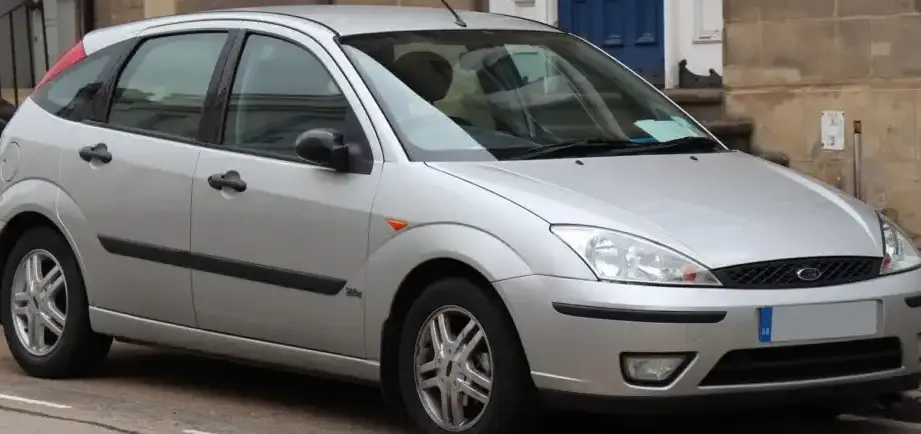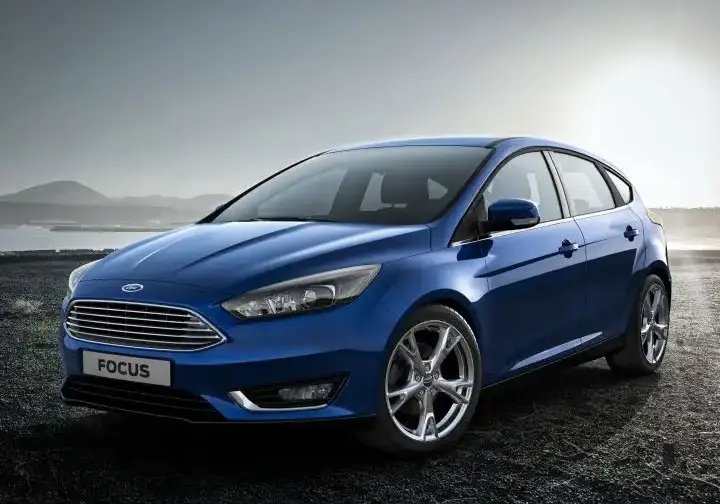
The Ford Focus III, particularly the facelifted version introduced in 2014, represented a significant step forward for Ford’s global compact car. The 1.5 EcoBoost 150 horsepower variant with the Start/Stop system (S&S) was a key offering in the European and increasingly, North American markets, positioned as a mid-range option balancing fuel efficiency with respectable performance. Production of this specific configuration ran from 2014 to 2018, falling within the broader lifespan of the Mk3 Focus (2011-2018). This model aimed to appeal to buyers seeking a modern, well-equipped hatchback with a downsized, turbocharged engine.
Technical Specifications
| Brand | Ford |
| Model | Focus |
| Generation | Focus III Hatchback (facelift 2014) |
| Type (Engine) | 1.5 EcoBoost (150 Hp) S&S |
| Start of production | 2014 |
| End of production | 2018 |
| Powertrain Architecture | Internal Combustion engine |
| Body type | Hatchback |
| Seats | 5 |
| Doors | 5 |
| Fuel consumption (urban) | 7 l/100 km (33.6 US mpg, 40.4 UK mpg, 14.3 km/l) |
| Fuel consumption (extra urban) | 4.6 l/100 km (51.1 US mpg, 61.4 UK mpg, 21.7 km/l) |
| Fuel consumption (combined) | 5.5 l/100 km (42.8 US mpg, 51.4 UK mpg, 18.2 km/l) |
| CO2 emissions | 127 g/km |
| Fuel Type | Petrol (Gasoline) |
| Acceleration 0 – 100 km/h | 8.9 sec |
| Acceleration 0 – 62 mph | 8.9 sec |
| Acceleration 0 – 60 mph | 8.5 sec |
| Maximum speed | 212 km/h (131.73 mph) |
| Emission standard | Euro 6 |
| Weight-to-power ratio | 9.1 kg/Hp, 110 Hp/tonne |
| Weight-to-torque ratio | 5.7 kg/Nm, 176 Nm/tonne |
| Power | 150 Hp @ 6000 rpm |
| Power per litre | 100.1 Hp/l |
| Torque | 240 Nm @ 1600-4000 rpm (177.01 lb.-ft. @ 1600-4000 rpm) |
| Engine layout | Front, Transverse |
| Engine Model/Code | M8DA, M8DB |
| Engine displacement | 1499 cm3 (91.47 cu. in.) |
| Number of cylinders | 4 |
| Engine configuration | Inline |
| Cylinder Bore | 79 mm (3.11 in.) |
| Piston Stroke | 76.4 mm (3.01 in.) |
| Compression ratio | 10:1 |
| Number of valves per cylinder | 4 |
| Fuel injection system | Direct injection |
| Engine aspiration | Turbocharger, Intercooler |
| Valvetrain | DOHC |
| Engine oil capacity | 4.1 l (4.33 US qt | 3.61 UK qt) |
| Coolant | 5.8 l (6.13 US qt | 5.1 UK qt) |
| Kerb Weight | 1364 kg (3007.11 lbs.) |
| Max. weight | 1900 kg (4188.78 lbs.) |
| Max load | 536 kg (1181.68 lbs.) |
| Trunk (boot) space – minimum | 277 l (9.78 cu. ft.) |
| Trunk (boot) space – maximum | 1062 l (37.5 cu. ft.) |
| Fuel tank capacity | 55 l (14.53 US gal | 12.1 UK gal) |
| Length | 4358 mm (171.57 in.) |
| Width | 1823 mm (71.77 in.) |
| Height | 1484 mm (58.43 in.) |
| Wheelbase | 2648 mm (104.25 in.) |
| Front track | 1544 mm (60.79 in.) |
| Rear (Back) track | 1559 mm (61.38 in.) |
| Minimum turning circle | 11 m (36.09 ft.) |
| Drivetrain Architecture | Front wheel drive |
| Number of gears | 6 gears, manual transmission |
| Front suspension | Independent, type McPherson with coil spring and anti-roll bar |
| Rear suspension | Independent multi-link suspension |
| Front brakes | Disc |
| Rear brakes | Disc |
| Assisting systems | ABS (Anti-lock braking system) |
| Steering type | Steering rack and pinion |
| Tires size | 205/55 R16; 215/50 R17 |
| Wheel rims size | 6.5J x 16; 7.0J x 17 |
Powertrain & Engine Architecture
At the heart of this Focus variant lies the 1.5-liter EcoBoost engine, specifically the M8DA or M8DB engine code depending on the exact specification. This engine is a member of Ford’s EcoBoost family, characterized by direct fuel injection and turbocharging. The 1.5L engine utilizes a single-scroll turbocharger and an integrated exhaust manifold to improve responsiveness and reduce turbo lag. The direct injection system, operating at pressures up to 200 bar, ensures precise fuel delivery and optimized combustion. The engine features a double overhead camshaft (DOHC) valvetrain with four valves per cylinder, contributing to its efficient breathing. The Start/Stop system, denoted by the ‘S&S’ designation, automatically shuts off the engine when the vehicle is stationary (e.g., at traffic lights) to conserve fuel and reduce emissions. The engine is transversely mounted, driving the front wheels. The 6-speed manual transmission was the standard offering, providing a balance between fuel economy and driver engagement.
Driving Characteristics
The 150 horsepower and 240 Nm (177 lb-ft) of torque delivered by the 1.5 EcoBoost engine provided adequate performance for everyday driving. Acceleration from 0-60 mph took around 8.5 seconds, making it competitive within its class. The turbocharger provides a noticeable boost in power from around 1600 rpm, offering good mid-range acceleration for overtaking. However, compared to higher-output versions of the Focus, such as those equipped with the 2.0-liter EcoBoost or even the diesel variants, the 1.5L felt less potent, particularly at higher speeds. The 6-speed manual transmission was well-matched to the engine’s characteristics, with gear ratios designed to maximize fuel efficiency while still providing reasonable acceleration. The gear ratios were slightly taller than those found in the more powerful models, prioritizing economy over outright performance.
Equipment & Trim Levels
The 1.5 EcoBoost 150 S&S typically came equipped as a mid-range trim level. Standard features often included air conditioning, power windows and mirrors, a basic audio system with USB connectivity, and alloy wheels. Higher trim levels added features like Ford’s SYNC infotainment system with touchscreen display, automatic climate control, rear parking sensors, and cruise control. Interior upholstery was typically cloth, with options for partial leather trim. Safety features included ABS, electronic stability control, and multiple airbags. Optional extras included a panoramic sunroof, upgraded audio systems, and various driver assistance technologies.
Chassis & Braking
The Focus Mk3 utilized an independent front suspension with McPherson struts and a multi-link independent rear suspension. This setup provided a good balance between ride comfort and handling. The 1.5 EcoBoost models generally featured a slightly softer suspension setup compared to the higher-performance ST models, prioritizing comfort over ultimate handling precision. Brakes were disc brakes all around, providing adequate stopping power for the vehicle’s weight and performance. ABS (Anti-lock Braking System) was standard, enhancing safety during emergency braking situations.
Market Reception & Comparison
The 1.5 EcoBoost 150 S&S was generally well-received by automotive critics. It was praised for its fuel efficiency, refined engine, and comfortable ride. However, some reviewers noted that the engine lacked the outright punch of its larger counterparts. Compared to the 1.0 EcoBoost, the 1.5 offered more power and torque, making it a better choice for drivers who frequently carry passengers or travel on highways. Compared to the diesel variants, the 1.5 EcoBoost offered a smoother and quieter driving experience, but typically at the expense of fuel economy. The 1.5L engine also generally proved more reliable than some of the earlier EcoBoost engines, benefiting from Ford’s ongoing refinement of the technology.
Legacy
The 1.5 EcoBoost engine has proven to be a relatively reliable powertrain, although, like any turbocharged engine, it requires regular maintenance, including oil changes with the correct specification oil. The Focus Mk3, including the 1.5 EcoBoost variant, remains a popular choice in the used car market due to its practicality, fuel efficiency, and relatively affordable price. While not as sought-after as the higher-performance ST models, the 1.5 EcoBoost offers a compelling blend of economy and usability, making it a sensible choice for everyday drivers.