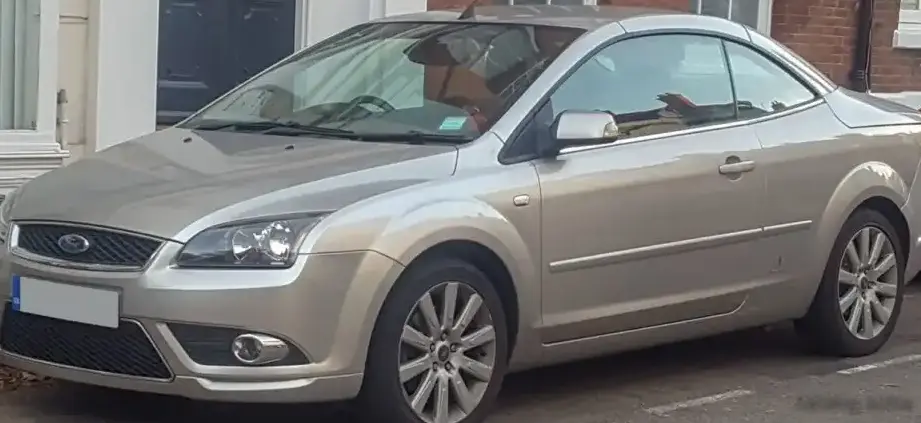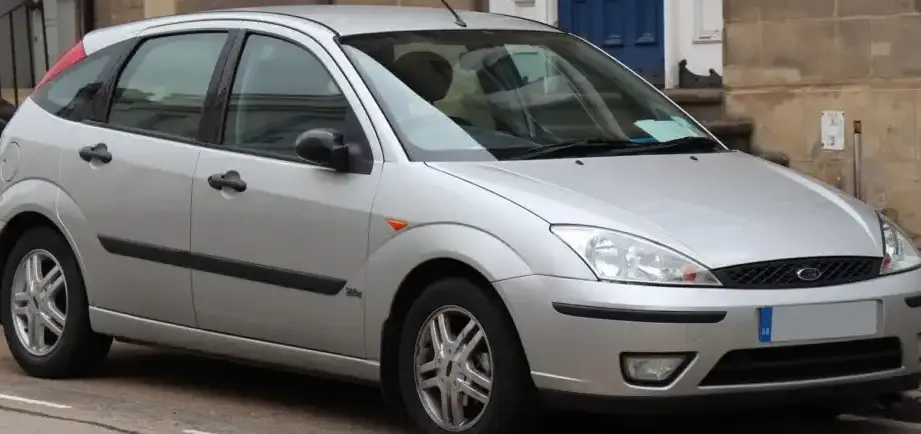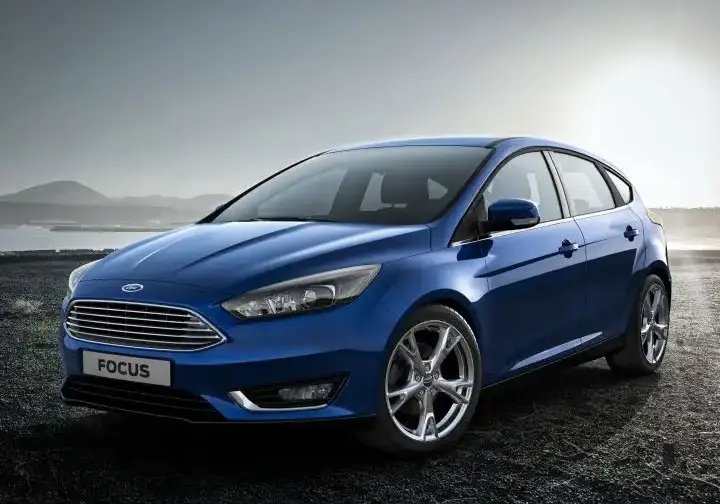
The Ford Focus III, particularly the facelifted version introduced in 2014, represented a significant step forward for Ford’s global compact car. Among the various engine and transmission options offered, the 1.5 EcoBoost 182 horsepower variant with a six-speed manual transmission occupied a compelling middle ground in the lineup. Produced from 2014 through 2018, this configuration aimed to balance performance, fuel efficiency, and affordability, appealing to drivers seeking a more engaging experience than the base models but without the higher cost of the performance-oriented ST. This version was primarily marketed in Europe and other global markets, offering a sophisticated and relatively efficient option within the competitive C-segment.
Technical Specifications
| Brand | Ford |
| Model | Focus |
| Generation | Focus III Hatchback (facelift 2014) |
| Type (Engine) | 1.5 EcoBoost (182 Hp) |
| Start of production | 2014 |
| End of production | 2018 |
| Powertrain Architecture | Internal Combustion engine |
| Body type | Hatchback |
| Seats | 5 |
| Doors | 5 |
| Fuel consumption (urban) | 8 l/100 km (29.4 US mpg, 35.3 UK mpg, 12.5 km/l) |
| Fuel consumption (extra urban) | 4.7 l/100 km (50 US mpg, 60.1 UK mpg, 21.3 km/l) |
| Fuel consumption (combined) | 5.9 l/100 km (39.9 US mpg, 47.9 UK mpg, 16.9 km/l) |
| CO2 emissions | 137 g/km |
| Fuel Type | Petrol (Gasoline) |
| Acceleration 0 – 100 km/h | 8.6 sec |
| Acceleration 0 – 62 mph | 8.6 sec |
| Acceleration 0 – 60 mph | 8.2 sec |
| Maximum speed | 224 km/h (139.19 mph) |
| Emission standard | Euro 6 |
| Weight-to-power ratio | 7.3 kg/Hp, 137.4 Hp/tonne |
| Weight-to-torque ratio | 5.5 kg/Nm, 181.1 Nm/tonne |
| Power | 182 Hp @ 6000 rpm |
| Power per litre | 121.4 Hp/l |
| Torque | 240 Nm @ 1600-5000 rpm (177.01 lb.-ft. @ 1600-5000 rpm) |
| Engine layout | Front, Transverse |
| Engine Model/Code | M9DA, M9DB, M9DG, M9DH |
| Engine displacement | 1499 cm3 (91.47 cu. in.) |
| Number of cylinders | 4 |
| Engine configuration | Inline |
| Cylinder Bore | 79 mm (3.11 in.) |
| Piston Stroke | 76.4 mm (3.01 in.) |
| Compression ratio | 10:1 |
| Number of valves per cylinder | 4 |
| Fuel injection system | Direct injection |
| Engine aspiration | Turbocharger, Intercooler |
| Valvetrain | DOHC |
| Engine oil capacity | 4.1 l (4.33 US qt | 3.61 UK qt) |
| Coolant | 5.8 l (6.13 US qt | 5.1 UK qt) |
| Kerb Weight | 1325 kg (2921.12 lbs.) |
| Max. weight | 1900 kg (4188.78 lbs.) |
| Max load | 575 kg (1267.66 lbs.) |
| Trunk (boot) space – minimum | 277 l (9.78 cu. ft.) |
| Trunk (boot) space – maximum | 1062 l (37.5 cu. ft.) |
| Fuel tank capacity | 55 l (14.53 US gal | 12.1 UK gal) |
| Length | 4358 mm (171.57 in.) |
| Width | 1823 mm (71.77 in.) |
| Height | 1484 mm (58.43 in.) |
| Wheelbase | 2648 mm (104.25 in.) |
| Front track | 1544 mm (60.79 in.) |
| Rear (Back) track | 1559 mm (61.38 in.) |
| Minimum turning circle | 11 m (36.09 ft.) |
| Drivetrain Architecture | The Internal combustion engine (ICE) drives the front wheels of the vehicle. |
| Drive wheel | Front wheel drive |
| Number of gears and type of gearbox | 6 gears, manual transmission |
| Front suspension | Independent, type McPherson with coil spring and anti-roll bar |
| Rear suspension | Independent multi-link suspension |
| Front brakes | Disc |
| Rear brakes | Disc |
| Assisting systems | ABS (Anti-lock braking system) |
| Steering type | Steering rack and pinion |
| Tires size | 205/55 R16; 215/50 R17 |
| Wheel rims size | 6.5J x 16; 7.0J x 17 |
Powertrain & Engine Architecture
At the heart of this Focus variant lies the 1.5-liter EcoBoost inline-four cylinder engine. This engine, part of Ford’s EcoBoost family, utilizes direct fuel injection and a single turbocharger with an intercooler to deliver a compelling blend of power and efficiency. Engine codes such as M9DA, M9DB, M9DG, and M9DH identify specific calibrations and minor variations within the 1.5 EcoBoost range. The engine features a double overhead camshaft (DOHC) valvetrain with four valves per cylinder, optimizing airflow for improved performance. The six-speed manual transmission was the standard offering, providing drivers with greater control over the engine’s power delivery. The transmission’s gear ratios were tuned to maximize acceleration and fuel economy, with a relatively short final drive to enhance responsiveness.
Driving Characteristics
The 182 horsepower and 240 Nm (177 lb-ft) of torque provided by the 1.5 EcoBoost engine delivered a noticeable step up in performance compared to the lower-powered 1.0 EcoBoost variants. Acceleration from 0 to 60 mph took approximately 8.2 seconds, making it a competitive performer in its class. The turbocharger provided a noticeable boost in power at lower RPMs, offering good drivability in everyday situations. While not as overtly sporty as the Focus ST, the 1.5 EcoBoost offered a satisfying driving experience, particularly for those who enjoyed the engagement of a manual transmission. The six-speed gearbox allowed for precise gear selection, and the engine remained relatively smooth and refined even at higher speeds.
Equipment & Trim Levels
The 1.5 EcoBoost 182 hp model typically sat in the mid-range of the Focus III facelift lineup. Standard equipment often included air conditioning, power windows, power mirrors, a basic audio system with USB connectivity, and alloy wheels. Higher trim levels, such as Titanium, added features like automatic climate control, a more advanced infotainment system with touchscreen display, rear parking sensors, and upgraded interior upholstery. Optional extras included a panoramic sunroof, navigation system, and various driver assistance technologies.
Chassis & Braking
The Focus III utilized an independent McPherson strut front suspension and an independent multi-link rear suspension, providing a comfortable yet controlled ride. The suspension was tuned to balance handling and ride quality, making it suitable for both city driving and longer journeys. Brakes consisted of ventilated discs on all four wheels, providing ample stopping power. Anti-lock Braking System (ABS) was standard, enhancing safety and stability during emergency braking situations. Stabilizer bars were fitted to both the front and rear axles to reduce body roll during cornering.
Market Reception & Comparison
The 1.5 EcoBoost 182 hp Focus was generally well-received by automotive critics. It was praised for its strong performance, good fuel economy, and refined driving experience. Compared to the 1.0 EcoBoost models, it offered a significant power boost, while remaining more affordable and fuel-efficient than the Focus ST. The manual transmission was favored by enthusiasts for its engaging feel, although some reviewers noted that the clutch pedal could be slightly heavy. Fuel economy figures of around 39.9 US mpg combined were competitive for its class.
Legacy
The 1.5 EcoBoost engine proved to be a relatively reliable powertrain, although, like any turbocharged engine, it required regular maintenance and the use of high-quality oil. The Focus III, in general, has established a reputation for being a well-built and practical compact car. On the used car market, the 1.5 EcoBoost 182 hp variant represents a good value proposition, offering a balance of performance, efficiency, and features. However, potential buyers should be aware of the importance of checking the service history and ensuring that the turbocharger and fuel injection system are functioning correctly.