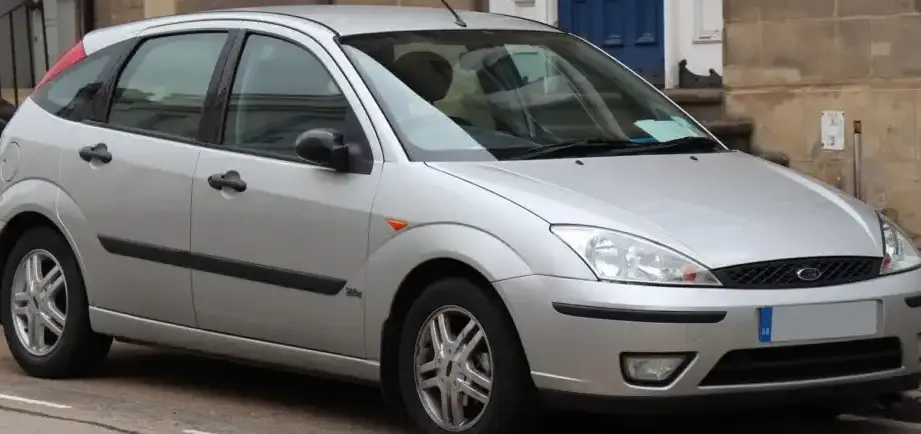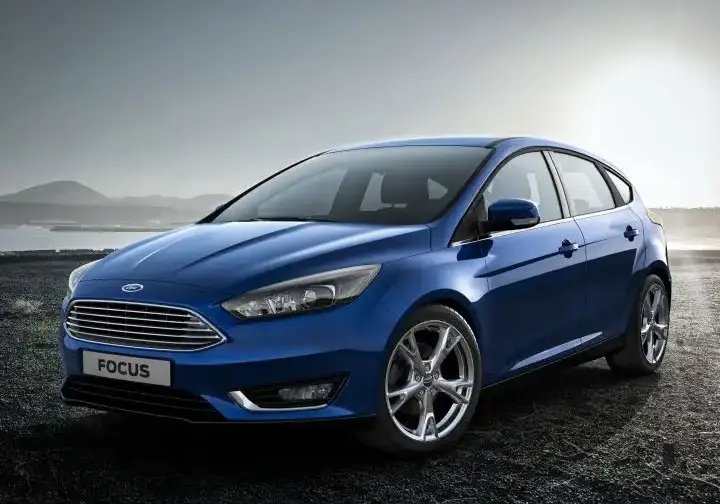
The Ford Focus III, specifically the facelifted model produced from 2014-2015, represented a significant evolution of Ford’s globally successful compact car. Within the third generation (2011-2018), the 1.6 TDCi 115 horsepower variant occupied a crucial position as a fuel-efficient and practical option for European buyers. This model aimed to balance affordability with reasonable performance and modern features, appealing to a broad customer base. It was positioned as a step up from the base engine options, offering improved torque and highway cruising ability, while remaining more accessible than the higher-powered diesel or petrol variants.
Technical Specifications
| Brand | Ford |
| Model | Focus |
| Generation | Focus III Hatchback (facelift 2014) |
| Type (Engine) | 1.6 TDCi (115 Hp) |
| Start of production | 2014 |
| End of production | 2015 |
| Powertrain Architecture | Internal Combustion engine |
| Body type | Hatchback |
| Seats | 5 |
| Doors | 5 |
| Fuel consumption (urban) | 5.7 l/100 km (41.3 US mpg, 49.6 UK mpg, 17.5 km/l) |
| Fuel consumption (extra urban) | 3.7 l/100 km (63.6 US mpg, 76.3 UK mpg, 27 km/l) |
| Fuel consumption (combined) | 4.5 l/100 km (52.3 US mpg, 62.8 UK mpg, 22.2 km/l) |
| CO2 emissions | 117 g/km |
| Fuel Type | Diesel |
| Acceleration 0 – 100 km/h | 10.8 sec |
| Acceleration 0 – 62 mph | 10.8 sec |
| Acceleration 0 – 60 mph | 10.3 sec |
| Maximum speed | 195 km/h (121.17 mph) |
| Emission standard | Euro 6 |
| Weight-to-power ratio | 11.6 kg/Hp, 86.1 Hp/tonne |
| Weight-to-torque ratio | 4.9 kg/Nm, 202.1 Nm/tonne |
| Power | 115 Hp @ 3600 rpm |
| Power per litre | 73.7 Hp/l |
| Torque | 270 Nm @ 1750-2500 rpm (199.14 lb.-ft. @ 1750-2500 rpm) |
| Engine layout | Front, Transverse |
| Engine Model/Code | T1DA, T1DB |
| Engine displacement | 1560 cm3 (95.2 cu. in.) |
| Number of cylinders | 4 |
| Engine configuration | Inline |
| Cylinder Bore | 75 mm (2.95 in.) |
| Piston Stroke | 88.3 mm (3.48 in.) |
| Compression ratio | 16:1 |
| Number of valves per cylinder | 2 |
| Fuel injection system | Diesel Commonrail |
| Engine aspiration | Turbocharger, Intercooler |
| Valvetrain | DOHC |
| Engine oil capacity | 3.85 l (4.07 US qt | 3.39 UK qt) |
| Coolant | 7.3 l (7.71 US qt | 6.42 UK qt) |
| Kerb Weight | 1336 kg (2945.38 lbs.) |
| Max. weight | 1900 kg (4188.78 lbs.) |
| Max load | 564 kg (1243.41 lbs.) |
| Trunk (boot) space – minimum | 277 l (9.78 cu. ft.) |
| Trunk (boot) space – maximum | 1062 l (37.5 cu. ft.) |
| Fuel tank capacity | 53 l (14 US gal | 11.66 UK gal) |
| Length | 4358 mm (171.57 in.) |
| Width | 1823 mm (71.77 in.) |
| Height | 1484 mm (58.43 in.) |
| Wheelbase | 2648 mm (104.25 in.) |
| Front track | 1544 mm (60.79 in.) |
| Rear (Back) track | 1559 mm (61.38 in.) |
| Minimum turning circle | 11 m (36.09 ft.) |
| Drivetrain Architecture | The Internal combustion engine (ICE) drives the front wheels of the vehicle. |
| Drive wheel | Front wheel drive |
| Number of gears and type of gearbox | 6 gears, manual transmission |
| Front suspension | Independent, type McPherson with coil spring and anti-roll bar |
| Rear suspension | Independent multi-link suspension |
| Front brakes | Disc |
| Rear brakes | Drum |
| Assisting systems | ABS (Anti-lock braking system) |
| Steering type | Steering rack and pinion |
| Tires size | 205/55 R16; 215/50 R17 |
| Wheel rims size | 6.5J x 16; 7.0J x 17 |
Powertrain & Engine Architecture
The heart of this Focus variant is the 1.6-liter TDCi diesel engine, specifically utilizing the T1DA or T1DB engine code. This engine is a four-cylinder, inline configuration, employing a common-rail direct injection system. This system, crucial for modern diesel engines, allows for precise fuel delivery and optimized combustion. The engine features a turbocharger with an intercooler, boosting power output and improving efficiency. The double overhead camshaft (DOHC) valvetrain, with two valves per cylinder, contributes to efficient gas exchange. The 16:1 compression ratio is typical for a diesel engine, maximizing thermal efficiency. The engine’s design prioritized fuel economy and low emissions, aligning with European regulations and consumer demand. The 6-speed manual transmission was the standard offering, chosen for its balance of efficiency and driver engagement.
Driving Characteristics
The 115 horsepower and 270 Nm (199 lb-ft) of torque provided by the 1.6 TDCi engine delivered a practical and usable driving experience. While not a performance-oriented setup, the engine offered sufficient power for everyday driving, including highway overtaking. The torque curve was relatively flat, providing good responsiveness from low engine speeds. The manual transmission’s gear ratios were tuned for fuel efficiency, with a taller final drive. Compared to the higher-output 1.6 TDCi variants or the petrol engines, this version felt less eager to rev, but offered superior fuel economy. The gear changes were smooth, and the clutch operation was light, making it easy to drive in urban environments.
Equipment & Trim Levels
The 1.6 TDCi 115 horsepower model typically came equipped with a reasonable level of standard features. These included air conditioning, power windows, power mirrors, a basic audio system with USB connectivity, and ABS brakes. Higher trim levels, such as Titanium, added features like alloy wheels, upgraded interior trim, automatic headlights and wipers, and a more advanced infotainment system. Optional extras included a sunroof, parking sensors, and a navigation system. Interior upholstery was typically cloth, with a focus on durability and practicality. The dashboard layout was functional and user-friendly, with clear instrumentation.
Chassis & Braking
The Focus III utilized an independent front suspension with McPherson struts and a multi-link independent rear suspension. This setup provided a good balance of ride comfort and handling. The front brakes were disc brakes, while the rear brakes were drum brakes – a cost-saving measure common in this segment. ABS (Anti-lock Braking System) was standard. The suspension tuning was geared towards comfort, but the car still offered decent body control in corners. Stabilizer bars were fitted to both the front and rear axles to reduce body roll.
Market Reception & Comparison
The 1.6 TDCi 115 horsepower Focus was well-received in the European market as a sensible and economical choice. Critics praised its fuel efficiency and low running costs. Compared to the more powerful diesel variants, it offered a lower purchase price and lower insurance costs. However, some reviewers noted that the performance was adequate but not exciting. Compared to petrol-powered Focus models, the diesel offered significantly better fuel economy, making it a popular choice for high-mileage drivers. The combination of fuel efficiency and practicality made it a strong competitor in the crowded compact car segment.
Legacy
The 1.6 TDCi engine, in various iterations, proved to be a reliable and durable powertrain. While some early versions of the engine experienced issues with diesel particulate filter (DPF) clogging, later revisions addressed these concerns. Today, used examples of the 2014-2015 Focus 1.6 TDCi are readily available and generally offer good value for money. Regular maintenance, including timely oil changes and DPF regeneration, is crucial for long-term reliability. The engine’s fuel efficiency and relatively low maintenance costs continue to make it an attractive option for budget-conscious buyers.